

















 Customer Dispute Resolution Page
 Help Center
 Affiliate Program




What is Baccarat?
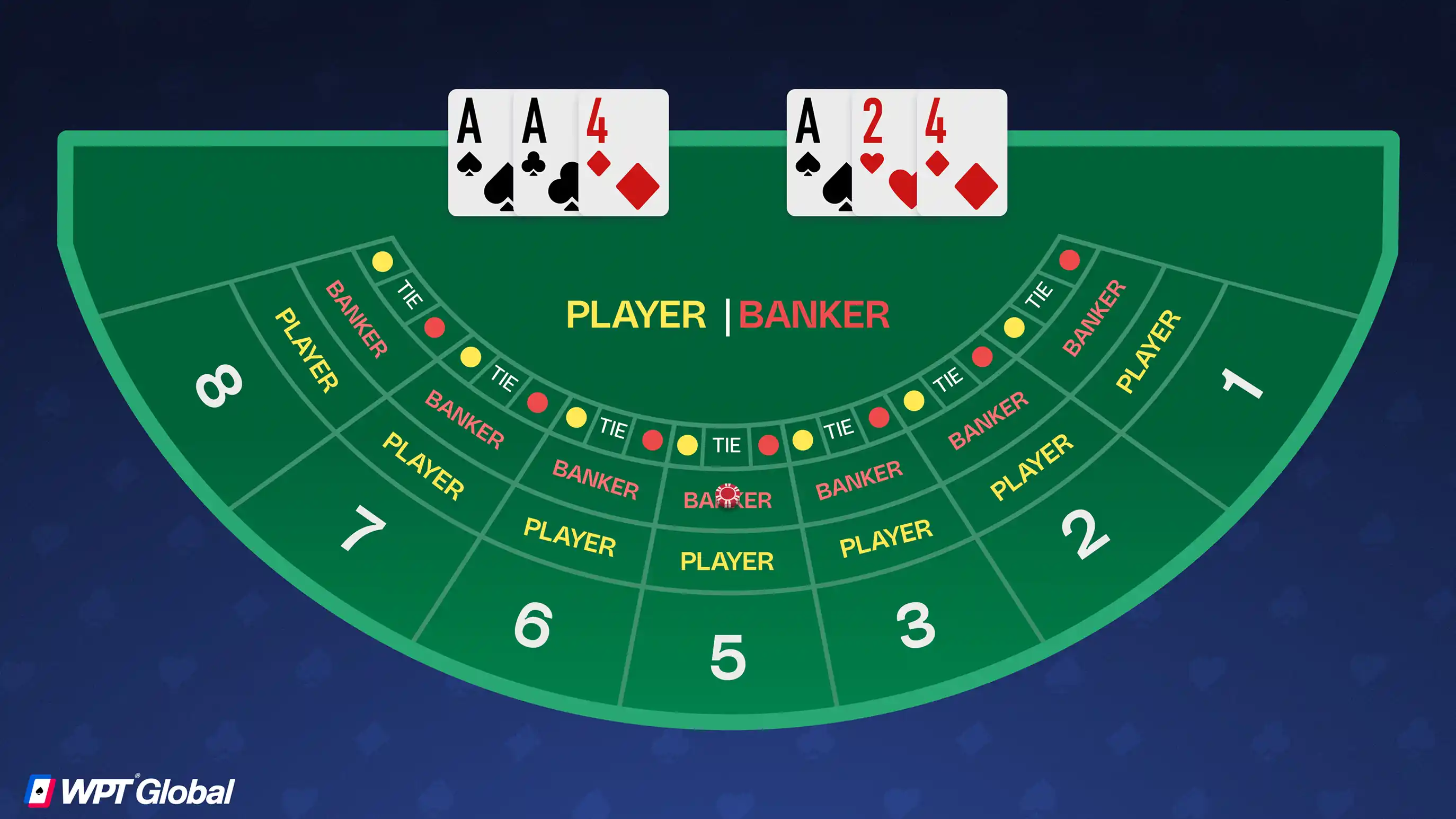
Baccarat is a casino game where players bet on which of two hands - the Player's or the Banker's - will have a total closest to 9, or if the round will end in a Tie.
A Brief History of Baccarat
The first instances of baccarat can be traced back to the 1400s in Italy. In Italian, “baccara” is the word for zero. It soon shot to prominence in neighboring France, as the French nobility conceived the game we now know as “Chemin de Fer”.
The game also exploded in popularity in Asia, since Asian culture has long had a fascination about luck, fortune, and fate. All of which play their part in the outcome of a game of baccarat.
If you like playing Asian influenced games, you should also try Sic Bo.
The Basic Rules of Baccarat for Beginners
We’ll run through the nuts and bolts of baccarat, along with the most important baccarat rules to master as a novice:
Your #1 Objective
It’s important to remember that, unlike poker games, you’re not necessarily playing against the dealer or any other players at your table. You’re just betting on either the Banker or Player hand to be as close to nine as possible – or a Tie (both hands holding the same value).
Understanding Card Values
To calculate hands, you’ll need to know how each card is valued in a game of baccarat. Card values are not the same as other casino games, such as Blackjack.
All 2-9 cards of any suit are assigned their face value. This means a three of clubs is worth three and a five of hearts is worth five, and so on.
All 10s and face cards (Jacks, Queens, and Kings) are worth zero points.
All Aces are worth one point.
Calculating a hand’s value can be confusing at first. That’s because only the final digit of the hand’s value counts. For example, if the total count for a hand is 14, it would actually be worth four.
How a Game of Baccarat Plays Out
Here's how a round of baccarat begins:
- Each active player bets on the Banker, Player, or the Tie.
- The Player and Banker hands are dealt two cards each.
- In some cases, a third card may be drawn from the deck (more on this shortly).
- The hand that’s value is closest to nine is declared the winner.
When Is a Third Card Drawn in Baccarat?
Baccarat has clear rules for when a third card is drawn. You don’t need to memorise them all — the dealer handles this — but it’s helpful to know what’s happening.
Natural Win
If either the Player or Banker hand totals 8 or 9 from the first two cards, no third card is drawn. This is called a "natural win" and the round ends immediately.
Player’s Third Card Rule
Player's First Two Cards Total | Action |
|---|---|
0–5 | Player draws a third card |
6–7 | Player stands (no third card) |
8–9 | Natural – no third card drawn for either side |
Banker’s Third Card Rule
(Only applies if the Player draws a third card)
Banker's Total | Banker Draws If Player's 3rd Card Is: | Banker Stands If Player's 3rd Card Is: |
|---|---|---|
0–2 | Always draws | — |
3 | 1–2–3–4–5–6–7–9–0 (10, J, Q, K) | 8 |
4 | 2–3–4–5–6–7 | 0–1–8–9 |
5 | 4–5–6–7 | 0–1–2–3–8–9 |
6 | 6–7 | 0–1–2–3–4–5–8–9–10 (10, J, Q, K, A) |
7 | Never draws | Always stands |
If the Player stands (has 6 or 7), the Banker follows a simpler rule:
- Banker draws on 0–5
- Banker stands on 6–7
This might look complex, but the dealer applies the rules for you automatically in online and live dealer games. Just place your bet, and let the cards fall where they may.
Different Types of Baccarat Games
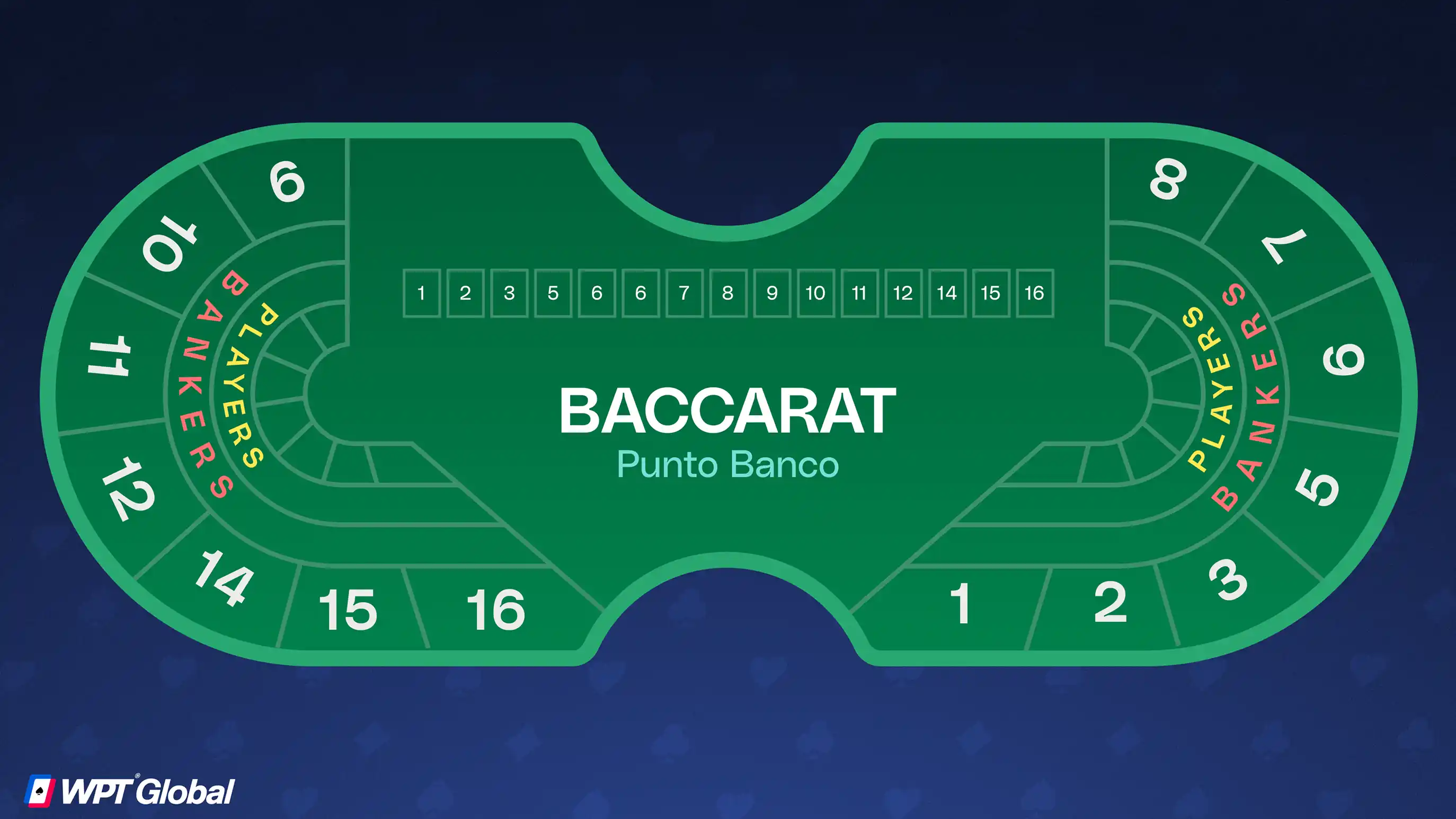
Punto Banco
This is the most common version of baccarat available online. It’s the American format of baccarat. In Punto Banco, you don’t get the opportunity to play as the Banker. Nor do you get a chance to take losing bets off other players at your table. You simply bet on either the Banker or the Player to win.
Chemin de Fer
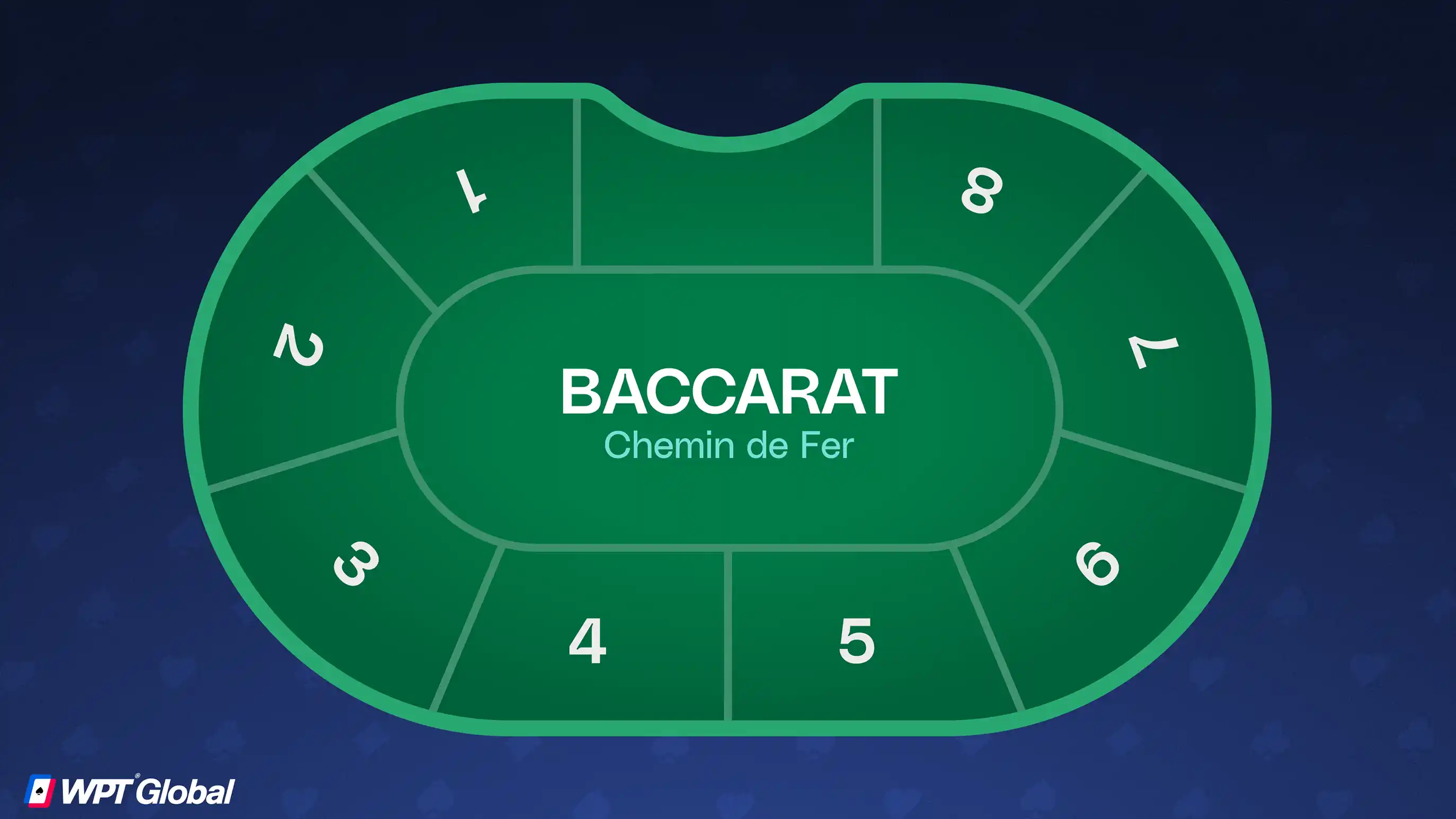
Chemin de Fer is known as the oldest baccarat game format. It originated in Europe and is still popular there in some brick-and-mortar casinos.
The biggest difference between Chemin de Fer and Punto Banco is that you can take it in turns to be the Banker yourself in the former. As the Banker, you’ll have decisions to make based on drawing cards. In fact, you also have the option to take extra cards when you’re the Player too in certain circumstances.
Being the Banker can be potentially lucrative when the Banker’s hand wins, since all losing Player bets are passed straight to the Banker. The 5% commission is already taken from the table by this point.
Mini Baccarat
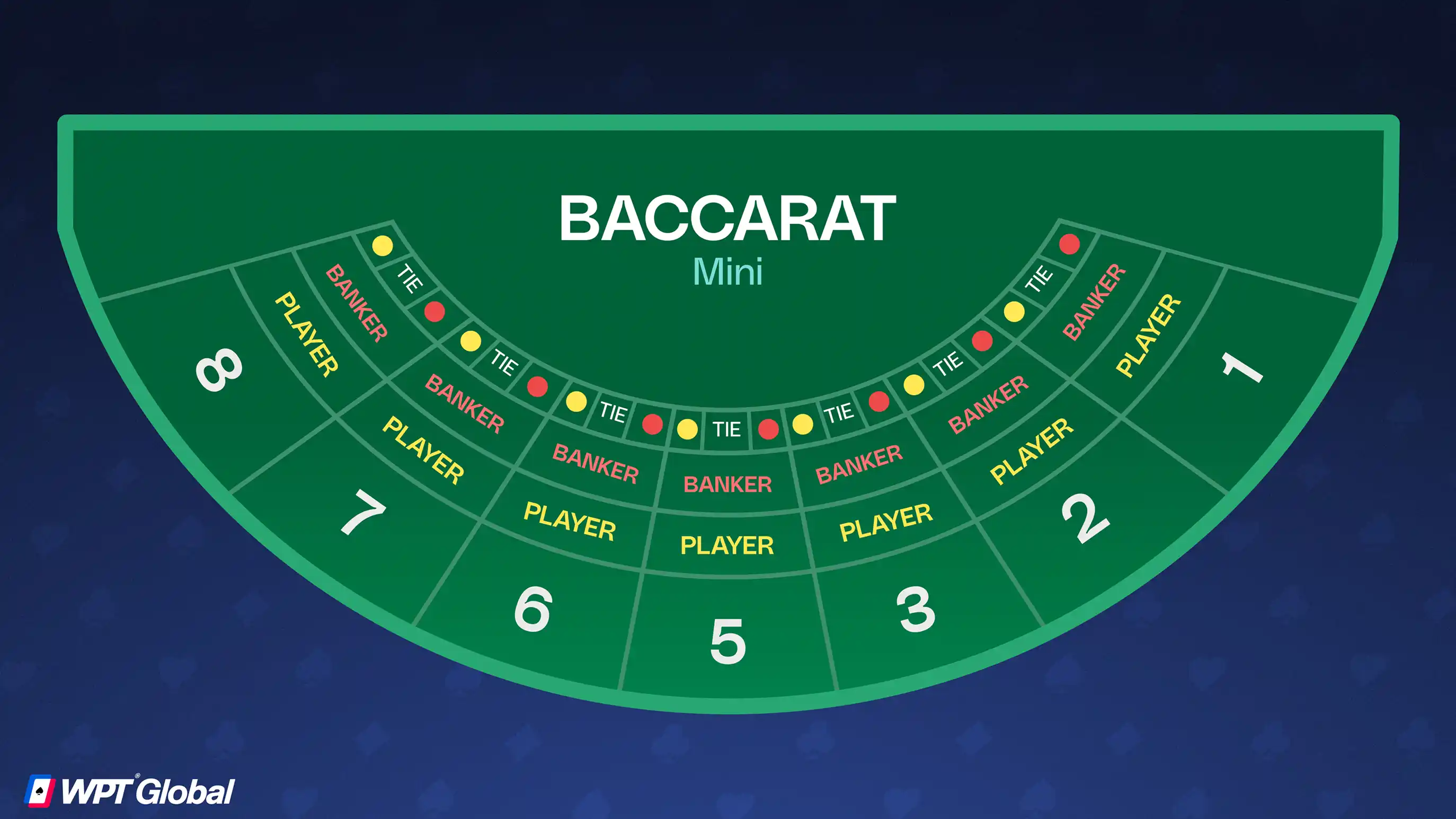
This is a simplified version of Punto Banco. The core gameplay remains faithful to Punto Banco, except that it’s played out on a smaller table with reduced betting limits.
Baccarat Odds and Bet Types
3 Baccarat Betting Options
There are three bets you can place in baccarat. Each carry different payout potential:
- Banker: 1:1 payout (less a 5% commission)
- Player: 1:1 payout
- Tie: 8:1 or 9:1 depending on your game provider
House Edge
Now let’s look at the house edge of each potential bet you can place at a baccarat table:
- Banker: 1.06%
- Player: 1.24%
- Tie: 14.4%
What’s the Best Beginner Bet in Baccarat?
It’s clear based on the house edge and potential returns that betting on the Banker carries the best risk-vs-reward balance.
Even accounting for the 5% commission applied to winning Banker bets, you’re likely to win more than 50% of the time.
Baccarat Strategy for Beginners
1. The Banker is Your Friend
Play safe – bet with the Banker hand the majority of the time. It’s statistically the best move, especially if you bet it consistently long-term.
2. Save Your Money and Avoid the Tie Bet
Although an 8:1 payout might sound tempting, it’s not a sensible bet. It carries a whopping 14.4% house edge every time you bet it. Save your money and focus on the Banker.
3. Be Consistent With Your Staking
Look at using a flat betting system, rather than chasing losses. Keep your staking level consistent to protect your bankroll and decelerate your long-term losses.
4. Don’t Place Any Weight on Past Results
Although you may be able to view past results and identify winning streaks on the Player or Banker, this shouldn’t influence your next bet. All baccarat outcomes are 100% random.
5 Expert Baccarat Tips to Play Even Smarter
1. Define Loss Limits
Know how much you’re prepared to lose before you begin. It’s always best to set limits. Only stake what you can afford to lose at the baccarat tables. Chasing losses never works either, especially since the game has a long-term house edge.
2. Get Your Head Around Commission Rules
If you take our advice and bet on the Banker hand consistently, you’ll need to familiarize yourself with the 5% commission rule. This is taken after winning Banker hands only, so for every $100 wagered, you’ll get $95 back.
3. Know When to Walk Away
Set a time limit for your baccarat sessions. As with all kinds of casino table games, the longer you play, the more likely it is you will lose. Take the opportunity to end baccarat sessions up wherever you can. Don’t let greed take hold and play for too long.
4. It’s Not Easy to Predict the Next Result
One of the biggest myths in baccarat gameplay is that you can predict the outcome of the next deal using previous results. Baccarat outcomes are random, especially online versions powered by random number generators (RNGs).
5. Your Chances of Winning Aren’t Influenced by the Size of Your Bet
Although baccarat is a game well-suited to high-rollers, betting big doesn’t give you a better chance of winning. The odds stay the same whether you bet the table minimum or maximum!