





 Customer Dispute Resolution Page
 Help Center
 Affiliate Program
In this article
Welcome to WPT Global
Welcome to WPT Global, the online home of the World Poker Tour®. Let us guide you through setting up your account and get you to the tables in no time.Social Media


How To Play
World Leading Tournaments
A huge player pool and everything from freerolls to high rollers – plus regular special events!Ambassadors
Get to know our ambassadors - world-class players from across the globe who embody the spirit of the game. Discover their stories and become part of the community.Your Hub for News
Explore stories, tips, and updates from the world of poker and casino. Learn from pros, discover new trends, and stay in the loop with everything happening at WPTGlobal.What are you looking for?
Close




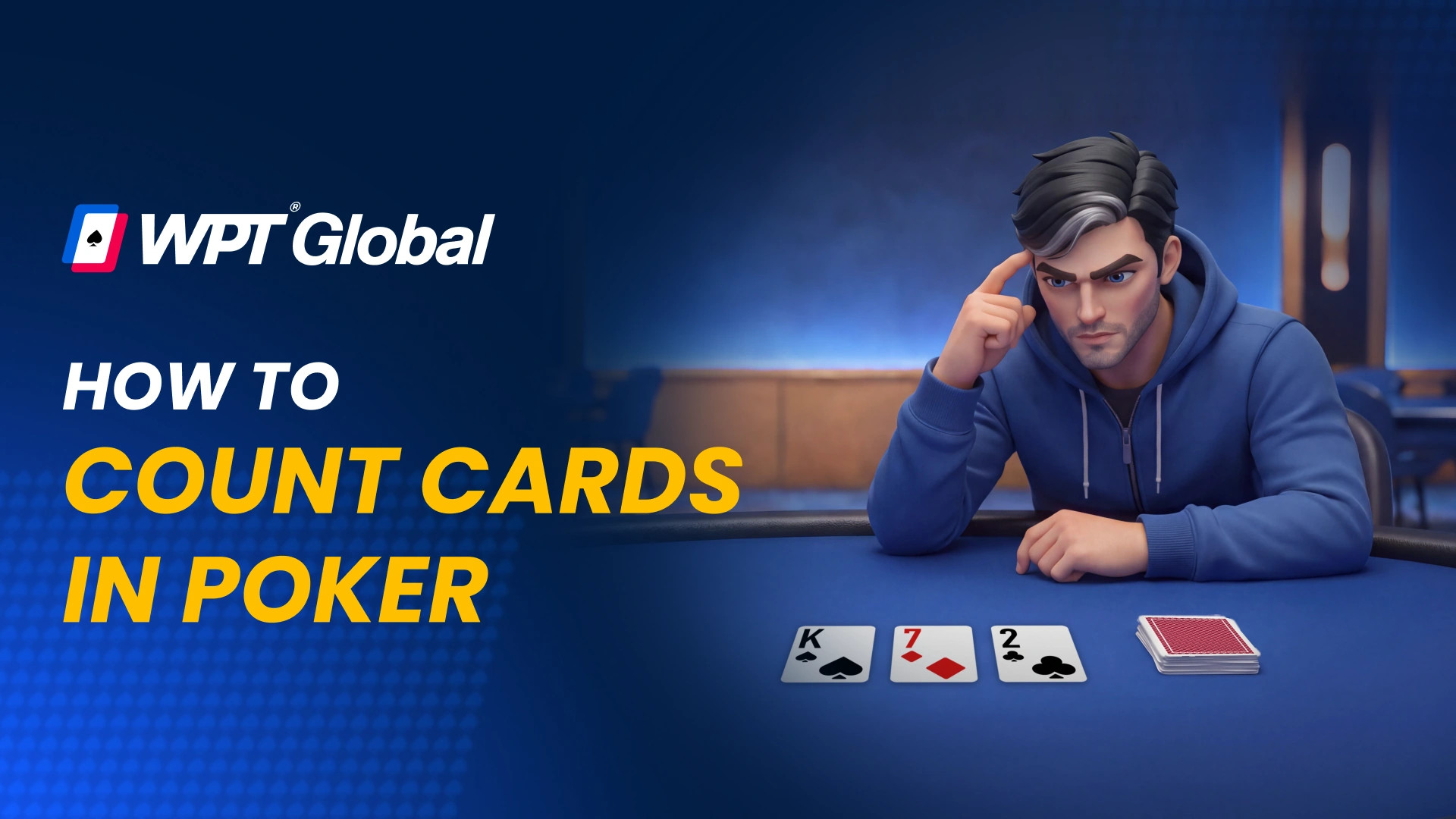
How To Count Cards In Poker: Strategy & Tips
Share



Key Takeaways
Card counting in poker is not the same as blackjack. It focuses on tracking known and unknown cards.
The goal is to estimate opponents’ likely hands and improve decision-making.
Counting cards is most effective in games with visible information like Stud.
Professional players use memory, logic, and probability rather than literal counting systems.
Card counting is legal in poker, but its effectiveness depends on the format being played.
When people hear the term “card counting,” they usually think of blackjack. A player sitting quietly, tracking numbers, waiting for the right moment to strike. Poker is different.
You are not playing against the house, and the deck is constantly being reshuffled. There is no simple system that gives you a guaranteed edge. However, that does not mean counting cards has no place in poker.
In reality, every strong player is constantly tracking information. Which cards are gone, which cards are likely still in play, and what combinations remain possible. This process is often misunderstood, but it is a core part of advanced poker strategy.
This guide explains what card counting in poker actually means, how it works across different formats, and how to use it to improve your decision-making.
What Is Card Counting In Poker?
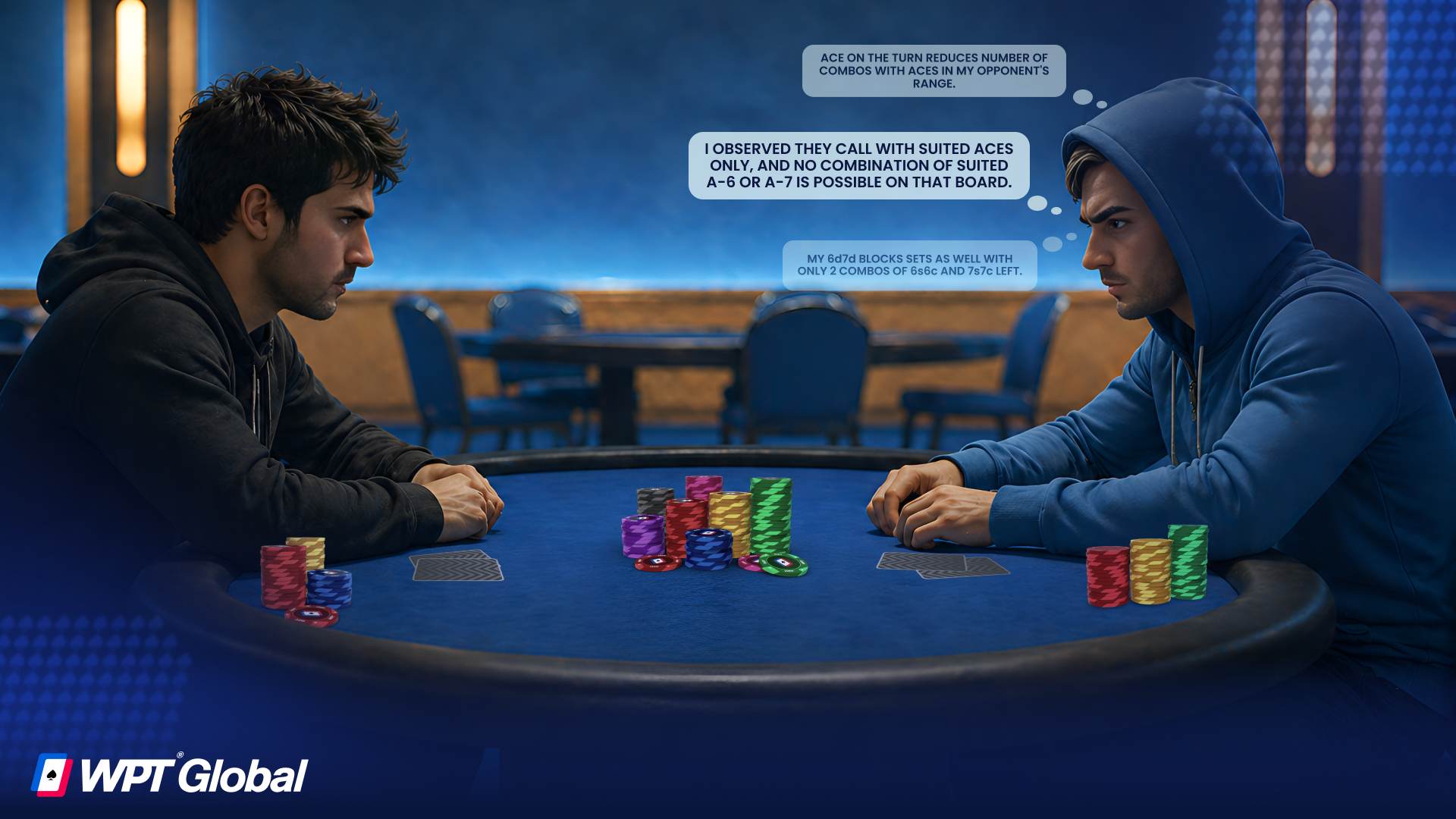
Card counting in poker is the process of tracking which cards have been seen and using that information to estimate what cards remain.
Unlike blackjack, you are not assigning numerical values to cards. Instead, you are observing exposed cards, remembering folded hands, and calculating probabilities based on what is left.
From a strategic perspective, this is better understood as card removal rather than traditional counting. Every card you see reduces the number of possible combinations your opponents can have. For example, if three aces are already visible, the likelihood that an opponent holds the fourth ace drops significantly, which should influence how you evaluate their range.
This concept becomes especially powerful in games with exposed cards, such as Stud, but it also applies in Hold’em when considering blockers and known cards. Strong players use this information to refine hand reading, narrow down opponent ranges, and make more accurate decisions in marginal spots.
Importantly, effective card counting in poker is not about perfect memory. It is about forming a reliable mental picture of key cards and adjusting your decisions accordingly. Over time, this skill improves your ability to estimate probabilities, identify unlikely holdings, and gain an edge in situations where small differences in information matter.
Do Professional Players Count Cards?
Yes, but not in the way most people think.
Professional players are not running structured counting systems at the table. Instead, they constantly track key cards, identify dead cards, and refine opponent ranges based on what is visible.
From an expert perspective, this is a natural extension of hand reading rather than a separate skill. By observing which cards have already appeared, professionals reduce the number of possible combinations their opponents can hold. This allows them to make more accurate decisions, especially in close or high-pressure situations.
For example, if multiple cards of the same suit are visible, the likelihood of an opponent completing a flush decreases. Similarly, if key cards needed for a straight are already out, drawing hands lose value and become less threatening.
This process happens continuously and often subconsciously. Strong players are not trying to remember every card, but they prioritise important ones that affect the hand. Over time, this awareness sharpens decision-making and creates a consistent edge by narrowing possibilities and improving accuracy in reading situations across all poker games.
Legality Surrounding Card Counting In Poker
A common question is whether counting cards is illegal. The short answer is no.
Card counting in poker is completely legal because you are using publicly available information, there is no manipulation of the game, and you are not gaining an unfair advantage through external tools. From a strategic standpoint, this is simply part of skilled play, similar to reading opponents or understanding probabilities.
Even in blackjack, while casinos may discourage or restrict card counters, the act itself is not illegal. In poker, it is even more clearly accepted, as tracking visible cards and adjusting decisions is a fundamental part of the game rather than a loophole.
However, the distinction becomes important in online environments. Using external software, real-time assistance, or tools that provide additional information beyond what is naturally available can violate platform rules. Strong players rely on observation and mental processing alone, ensuring their edge comes from skill rather than outside assistance.
How To Card Count In Poker Games
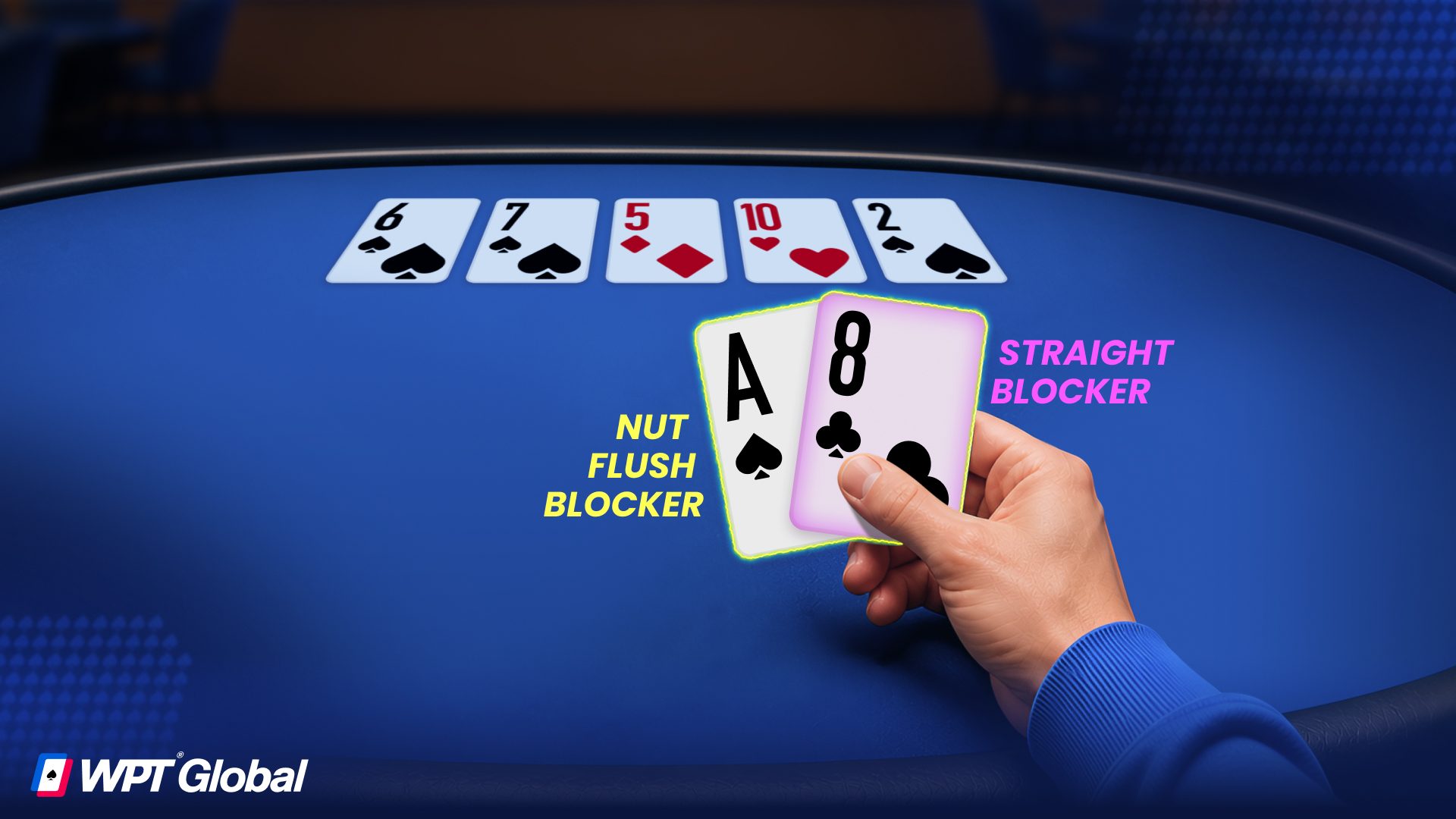
Card counting looks different depending on the poker variant, but the core idea is always the same: using visible information to reduce uncertainty and make more accurate decisions.
Card Counting in Texas Hold’em
In Texas Hold’em, card counting is more subtle because most cards are hidden and only five community cards are revealed. However, strong players still apply card removal concepts through blockers, board texture, and observed folds in live games.
Tracking which cards are less likely to be in an opponent’s range helps refine decisions, especially in marginal spots. For example, holding key cards that block strong hands makes your bluffs more credible, while seeing certain cards reduces the likelihood of opponents completing draws. The edge here is small but consistent, and over time it improves both bluffing and value betting accuracy.
Card Counting In Omaha
In Omaha, card tracking becomes significantly more important due to the number of hole cards in play. With four cards per player, the number of possible combinations increases dramatically, making it critical to understand which hands are still possible.
Players should pay close attention to suit distribution, straight blockers, and how the board interacts with likely ranges. Because equities run closer, small informational edges matter more. Knowing that key cards are already out can help you avoid dominated draws or identify when your hand has stronger nut potential than your opponent’s.
Card Counting In 7 Card Stud
Stud is where card counting becomes most powerful because many cards are dealt face-up. This allows players to track dead cards, follow opponent draws, and accurately estimate remaining outs.
From an expert perspective, this transforms the game into one of information management. If multiple cards you need are already visible, your drawing hands lose significant value. Conversely, if your key cards are still “live,” your hand becomes much stronger than it might appear at first glance.
Overall, effective card counting in poker is not about memorising every card. It is about focusing on the most relevant ones, understanding how they affect possible combinations, and using that information to make better decisions. This ability to narrow ranges and adjust probabilities is a key separator between average and advanced players.
Advanced Strategies & Tips
Focus on Key Cards, Not Every Card
Trying to remember every card is inefficient and unnecessary. Strong players prioritise key cards such as aces, high cards, and those directly relevant to their current hand or draw. This selective focus allows for better decision-making without overloading your memory, especially in fast-paced environments.
Understand Blockers
Blockers are a fundamental concept in advanced poker strategy. Holding certain cards reduces the likelihood that your opponent has specific strong hands. This directly impacts both value betting and bluffing decisions. For example, holding an ace makes it less likely your opponent has premium hands like AA or strong ace-high combinations, which can make aggressive plays more effective.
Combine Counting with Hand Reading
Card tracking on its own has limited value unless it is integrated with broader hand reading. You must also consider betting patterns, position, and opponent tendencies to build accurate ranges. From an expert perspective, the real edge comes from combining all available information into a coherent picture of what your opponent can realistically hold.
Pay Attention in Live Games
Live poker provides more opportunities to gather information, particularly when players expose cards after folding or at showdown. These moments offer valuable insight into what cards are no longer in play, allowing you to refine your decisions in future hands.
Practice Through Repetition
This skill improves with experience. Over time, tracking key cards and adjusting probabilities becomes more intuitive and less deliberate. What starts as a conscious effort gradually turns into instinct, allowing you to make faster and more accurate decisions without slowing down your play.
Mistakes To Avoid
Trying to Count Everything
Attempting to track every card leads to mental overload and mistakes. Strong players focus only on relevant information, such as key ranks, suits, and cards that directly impact the current hand. Efficiency matters more than completeness.
Ignoring Betting Patterns
Card tracking without context has limited value. Betting patterns, timing, and position provide essential information about an opponent’s range. Without combining these elements, card counting becomes incomplete and often misleading.
Overestimating Its Importance
Card counting is just one tool within a broader strategy. Relying on it too heavily can cause players to overlook more important factors like opponent tendencies and game flow. It should support decision-making, not replace it.
Applying Blackjack Logic
Poker does not follow fixed systems like blackjack. There is no consistent counting method that guarantees results. Each hand is situational, and decisions must adapt to changing variables rather than rigid formulas.
Forgetting Position and Stack Sizes
Even perfect card awareness cannot compensate for poor fundamentals. Position and stack size influence every decision, and ignoring them will lead to costly mistakes regardless of how well you track cards.


Promotions
For Customers
Safety & Security
Stay Connected
Follow us on social media to stay updated with the latest news, updates, and exclusive offers!


Promotions
For Customers
Safety & Security
Stay Connected
Follow us on social media to stay updated with the latest news, updates, and exclusive offers!
 Local Payment Methods
 Cards
 Crypto
 E-Wallets
 Apple Pay
 Google Pay
 Instant Bank Payments
*
Some methods may not be available in your region. Please contact support if you experience any issues.
This website is operated by Everstronglink Limited a company incorporated under the laws of Costa Rica having its registered address at Province 01 San Jose, Canton 02 Escazu, San Rafael, On La Ceiba Street, House No. 400, Costa Rica, and is licensed by the Tobique Gaming Commission under License Number 0000005. Kashxa Limited, a Cyprus company with registration number 427606, having its registered office at Strovolou, 12 Aigyptou, Nicosia, 1097, Cyprus, is acting as a payment agent on behalf of the license holder entity Everstronglink Limited.
Gambling can be addictive. Play responsibly. Everstronglink Limited only accepts customers over 18 years of age.
Copyright © 2026 WPT Global. All rights reserved