







 Customer Dispute Resolution Page
 Help Center
 Affiliate Program
In this article
Welcome to WPT Global
Welcome to WPT Global, the online home of the World Poker Tour®. Let us guide you through setting up your account and get you to the tables in no time.Social Media


How To Play
World Leading Tournaments
A huge player pool and everything from freerolls to high rollers – plus regular special events!Ambassadors
Get to know our ambassadors - world-class players from across the globe who embody the spirit of the game. Discover their stories and become part of the community.Your Hub for News
Explore stories, tips, and updates from the world of poker and casino. Learn from pros, discover new trends, and stay in the loop with everything happening at WPTGlobal.What are you looking for?
Close




How to Play Big O Poker: Rules & Strategy
Share




Big O Poker is an action-packed Omaha variant that takes your traditional Pot Limit Omaha to new heights by adding a fifth hole card to every single hand.
Another unique feature of Big O Poker is that it can be played as a split pot game as well as a high hand version, giving players two different ways to play.
This combination of features makes Big O Poker the perfect game for players who want more cards, more hand combinations, and more ways to win pots.
If you’re ready to play Big O Poker, this guide will explain the rules and hand rankings, along with the strategy you’ll need to master this five card Omaha game.
What is Big O Poker?
Big O Poker is a five card Omaha variant derived from Pot Limit Omaha, which is often called Five Card Omaha Hi-Lo. In the same way Pineapple Poker adds a third hole card to Texas Hold'em, Big O increases the number of hole cards from four to five, hence the game's full name: Five Card Pot Limit Omaha Hi-Lo 8-or-Better.
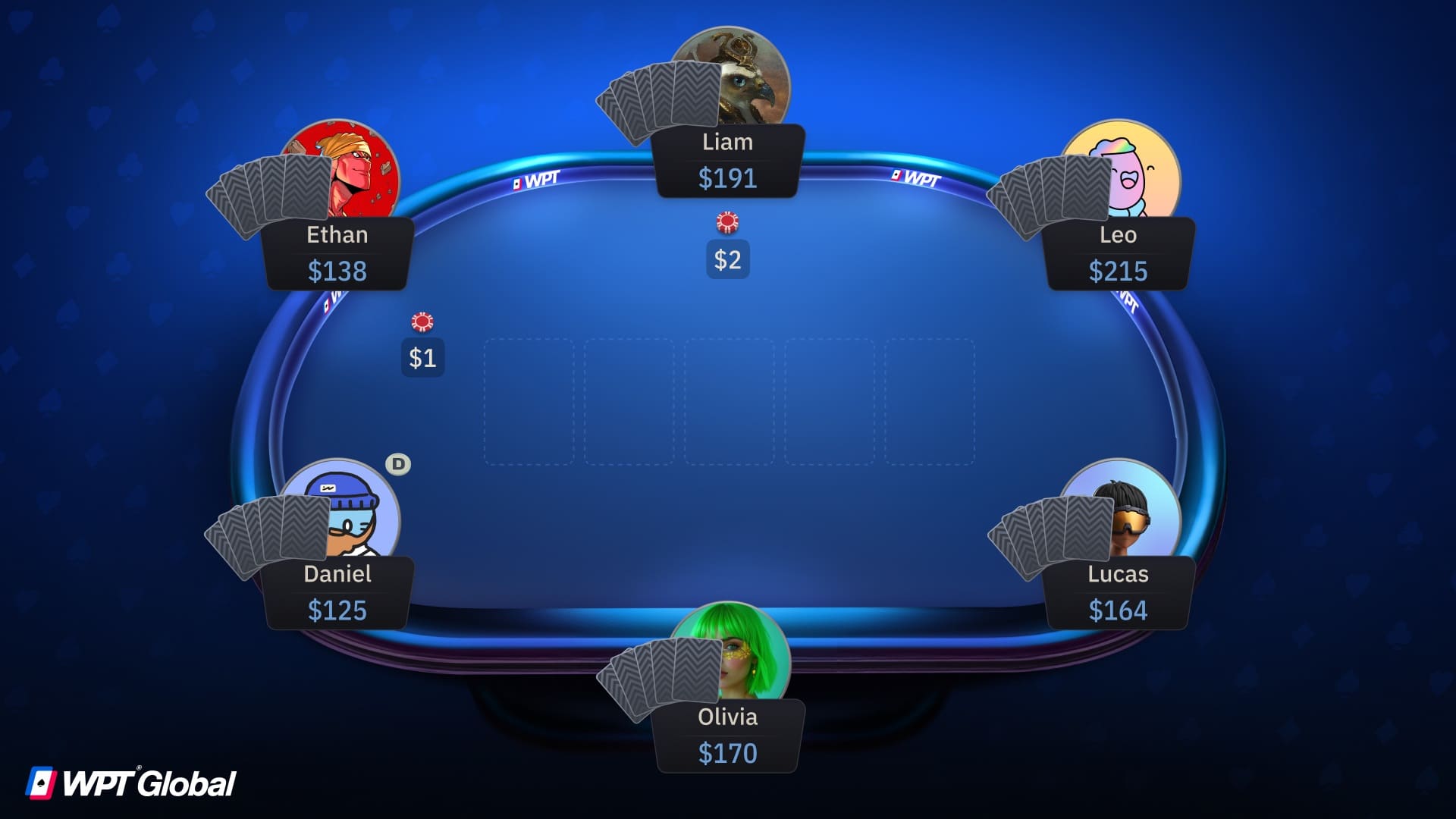
It’s a split pot game, which means that half the pot goes to the best high hand and the other half to the best possible low hand.
Most Big O games are typically played with a Fixed Limit betting structure if it's Hi-Lo and Pot Limit if it's the high-hand variant.
This limit betting structure keeps the action balanced while still allowing for big pots in multi way situations, especially in Hi-Lo games.
Either way, this game is popular with poker players who want more hand possibilities combined with two ways to win pots.
There's a caveat to the low hand portion of the pot, which you'll already know if you've played Omaha Hi-Lo. If not, we'll tell you in the next section when we run through the rules of Big O Poker.
Big-O Poker Rules
As in all Omaha variants, players must use exactly two hole cards along with three community cards to form the best five card hand they can. If you've never played Omaha, it's a good idea to master the basics before you move into Big O. You can learn how to play poker with our beginner's guide.
The only notable difference between this variant and the ones it's derived from is that you have five hole cards to choose from instead of four. Being dealt five hole cards instead of four can create more starting hand combinations and more potential nut hands, as well as deeper postflop betting rounds.
With this in mind, here is how to play Big O Poker Hi-Lo, and the rules that should be followed:
A new game begins with two players posting forced bets known as the big blind and small blind. The small blind costs 50% of the big blind. For example, if the big blind is $6, the small blind will be $3.
The player sitting immediately to the left of the big blind acts first. All players must call or raise the last biggest bet to remain active in the hand. A player can fold if they don't wish to call/raise the last biggest bet.
If, at any point, there is only one player who has made an active bet, the hand is over. That player wins the pot by default and doesn't have to show their cards.
Action moves clockwise around the table until two or more players have called the last biggest bet. At this point, three community cards, known as the flop, are dealt.
After the flop, two more cards are dealt over two betting rounds known as the turn and river.
Players can win pots by having the best hand or by making all other players fold.
A showdown takes place if two or more players complete the final betting round. The best high-hand and the best low-hand split the pot evenly.
Big O Poker can also be played as a high hand variant, which is known simply as Five Card Omaha Hi. This is where the best five card hand wins the entire pot. In those games, the rules mirror traditional Pot Limit Omaha, which means the highest-ranking five-card hand wins 100% of the pot.

All the rules we've outlined above apply to high-hand Big O Poker, except for the ones covering split pots and lowball hand rankings.
We'll explain how pots are won in the next section.
Big O Hand Rankings
Before we talk about the hand rankings in Big O Poker, we need to explain how pots are won. In all variants, a player can win the pot uncontested (i.e., without going to a showdown) if they make everyone else fold.
If, however, the hand reaches a showdown, pots are decided by two different hand rankings systems. The standard poker hand rankings apply to the high side of the pot in both Big O and Pot Limit Omaha games.
In high-hand Big O Poker, the best five-card hand according to the rankings below wins. Remember that you must use exactly two of your five hole cards to make a ranked hand in Big O Poker:
Rank | Hand | Example |
|---|---|---|
1 (Best) | Royal flush |      |
2 | Straight flush |      |
3 | Four-of-a-kind (quads) |    |
4 | Full house (full boat) |    |
5 | Flush |     |
6 | Straight |    |
7 | Three-of-a-kind (set/trips) |  |
8 | Two pair |  |
9 | One pair |   |
10 (Worst) | High Card | |
Low Hand Rankings in Big O Poker
If you're playing Big O Poker Hi-Lo, the pot is split, meaning half of the pot also goes to the best lowball hand.
A lowball hand is based on the ace-to-five ranking system. That means the best possible low hand is A-2-3-4-5. After that, the highest value card in your hand determines its strength.
Here's an example of two similar hands but with one clear winner:
Hand 1: A-2-3-4-6
Hand 2: A-2-3-4-7
Both hands are strong, but Hand 1 is the best because its highest value card is a 6. In lowball, the hand is named according to its highest card. So, in this example, Hand 1 is a six-low, and Hand 2 is a seven-low.
Qualifying Low Hands
The other showdown rules you need to know in Big O Poker are:
Flushes and straights don't count against low hands. For example, A♦ 2♦ 3♦ 4♦ 5♦ isn't any more or less valuable than A♣ 2♥ 3♠ 4♠ 5♣.
A low hand can't contain any cards higher than an eight. For example, A-2-3-4-8 qualifies as a low hand, but A-2-3-4-9 doesn't.
In situations where there isn't a qualifying low hand, the best high-hand scoops 100% of the pot. If, however, there is one or more qualifying low hands, the best one wins.
Finally, it's possible for a single player to scoop both the high and the low hand. That's because you can use exactly two of your five hole cards to make a high hand, and exactly two different hole cards to make a low hand.
Listing all of the possible low hands is tricky because there are lots of different combinations available. That's why you need to remember that your highest value card determines the hand's overall strength.
That being said, we can bring this section to a conclusion before moving on to an example hand by listing the top ten low draw hands:
Rank | Hand |
|---|---|
1 (Best) | A-2-3-4-5 |
2 | A-2-3-4-6 |
3 | A-2-3-5-6 |
4 | A-2-4-5-6 |
5 | A-3-4-5-6 |
6 | A-2-3-4-7 |
7 | A-2-3-5-7 |
8 | A-2-3-6-7 |
9 | A-2-4-6-7 |
10 | A-2-5-6-7 |
These low draw rankings are essential for reading the nut low and for identifying whether or not your hand qualifies for half the pot in Hi-Lo play.
How to Play Big O Poker: An Example Hand
Big O Poker games can be played using Fixed Limit or Pot Limit betting structures, depending on whether it’s a Hi-Lo or high hand game, but the former is more commonly used for cash games and poker tournaments.
We'll walk you through a cash game hand using the five-card Omaha rules outlined in the previous sections:
The Pre-Flop Set-Up
Our fictional scenario is a $2/$4 Fixed Limit cash game. There are six players at the table, and Player 6 has the button. That means Player 2 is the small blind ($2), and Player 1 is the big blind ($4).
Each player receives five hole cards that only they can see. The action starts with the player immediately to the left of the big blind, which, in this scenario, is Player 3.
Pre-Flop
Player 3 folds - their starting hand is weak and offers little chance of making either a strong high or a qualifying low hand.
Player 4 raises to $4 with A♠ A♦ K♦ 4♠ 3♠ - double aces give them premium high-hand strength, plus low potential with the wheel cards.
Player 5 calls with 7♦ 8♦ 9♣ 3♣ A♣ - they have connected cards that can make a straight, plus an ace for potential low draws.
Player 6 folds - their hand lacks coordination and isn’t strong enough to continue from the button.
Player 2 folds - their hand is a marginal holding that doesn’t play well out of position.
Player 1 folds - they want to avoid defending the big blind with a speculative hand against a strong pre-flop raise.
The Flop
The action moves to the flop with two players. Player 4 is closest to the big blind, so they act first. Bets and raises are limited to the size of the small bet before the flop (pre-flop) and on the flop.
In this game, the small bet is $2. Finally, the number of bets and raises is capped at four.
The Flop = 5♠ 6♦ J♠
The Pot = $14
Player 4 bets $2 to protect their overpair and flush draw, applying pressure as the pre-flop raiser.
Player 5 raises to $4 after flopping an open-ended straight draw and potential low hand equity.
Player 4 calls because they still have strong overcards, backdoor low potential, and a spade draw to continue.
The Turn
The action begins with Player 4, as it did in the previous round. The difference here is that players can bet/raise the value of a big bet. In this game, the big bet is $4.
The Flop = 5♠ 6♦ J♠ 9♥
The Pot = $22
Player 4 bets $4 as they’ve picked up a straight draw and want to keep control of the betting.
Player 5 raises to $8 because the 9♥ on the turn completes their straight (5-6-7-8-9), giving them the best possible high hand so far.
Player 4 calls because their low draw plus possible flush outs still justify continuing.
The River
The Flop = 5♠ 6♦ J♠ 9♥ 2♣
The Pot = $22
Player 4 checks after missing their flush but hitting a strong low draw, choosing pot control.
Player 5 bets $4 to extract value with their straight, confident it’s the best high hand.
Player 4 calls since they’ve made a nut low and can still claim half the pot.
Showdown
Player 4 shows 2♣ 3♠ 4♠ 5♠ 6♦ (high hand) and A♠ 2♣ 3♠ 4♠ 5♠ (low hand)
Player 5 shows 5♠ 6♦ 7♦ 8♦ 9♣ (high hand) and A♣ 2♣ 3♣ 5♠ 6♦ (low hand)
Result
The pot is split because one has a superior high hand, and the other has a superior qualifying low hand.
Player 4 wins the low pot with a five-low: A♠ 2♣ 3♠ 4♠ 5♠
Player 5 wins the high pot with a nine-high straight: 5♠ 6♦ 7♦ 8♦ 9♣
Let's take a look at how you might play these hands in real life by running through some basic strategy concepts for Big O Poker.
Big O Poker Strategy
Having an extra hole card increases the number of possible two-card combinations you can have. In traditional Pot Limit Omaha poker, you've got six possible two-card combinations. In Big O Poker, with five hole cards, you've got 10 possible two-card combinations.
More two card combinations mean that the average winning hand at showdown in Big O Poker is often stronger than in Pot Limit Omaha and significantly stronger than in Texas Hold’em. Put simply, pairs, two-pair, and event straights aren't as strong in Big O Poker as they are in other variants.
Therefore, you need stricter starting hand requirements. It's possible to widen your range as you move closer to the button, but your positional advantage can help offset the fact that you might make weaker hands.
Look for Aces and Deuces
If we're talking in general terms, your starting hands should give you a chance of making a very strong high hand, and a very strong low hand, or a chance to scoop the pot altogether.
The cards to look out for when it comes to Big O Poker strategy are aces and deuces. Having both of these cards in your hand gives you a chance to win the high and the low. For example, both A♣ K♥ J♣ Q♠ 2♦ and A♦ A♠ 2♦ 3♣ 10♦ are strong starting hands.
In contrast, A♣ K♥ J♣ Q♠ 10♦ is a fair starting hand because you've got a good chance of winning the high-hand pot. However, it's got zero chance of winning the low because your lowest value card is higher than an eight.
The point here is that you need to start in the strongest position possible. That means playing more hands in late position than in early position. Similarly, you should play hands that give you a chance of winning the high and the low pots.
Get this right, and you'll be on your way to winning more pots in this exciting Omaha poker variant. Mastering Big O Poker strategy will take practice, but understanding the starting hands, low draws, and betting rounds will give you a real edge at any table.


FAQs
Why is it called Big O?

It's called Big O because you receive five hole cards instead of four, which makes it a bigger version of Omaha. Other than the addition of a fifth hole card, the rules of Big O are the same as Omaha Hi-Lo, which means you have to use exactly two hole cards to make a five-card hand.
How much can I bet in Big O?
The majority of Big O Poker games are Fixed Limit. This means the amount you can bet or raise is restricted to the size of the blinds. Pre-flop and flop betting is based on the value of the small blind. The turn and river betting rounds allow you to make big bets, which are the value of the big blind.
How does the Hi/Lo rule work in Big O?
The Hi/Lo rule in Big O Poker states that 50% of the pot goes to the best high hand, and 50% goes to the best qualifying low hand. A qualifying low hand contains five cards lower than a nine. If there isn't a qualifying low hand, the best high hand scoops 100% of the pot.



Promotions
For Customers
Safety & Security
Stay Connected
Follow us on social media to stay updated with the latest news, updates, and exclusive offers!


Promotions
For Customers
Safety & Security
Stay Connected
Follow us on social media to stay updated with the latest news, updates, and exclusive offers!
 Local Payment Methods
 Cards
Cards Crypto
 E-Wallets
 Apple Pay
 Google Pay
 Instant Bank Payments
*
Some methods may not be available in your region. Please contact support if you experience any issues.
This website is operated by Everstronglink Limited a company incorporated under the laws of Costa Rica having its registered address at Province 01 San Jose, Canton 02 Escazu, San Rafael, On La Ceiba Street, House No. 400, Costa Rica, and is licensed by the Tobique Gaming Commission under License Number 0000005. Kashxa Limited, a Cyprus company with registration number 427606, having its registered office at Strovolou, 12 Aigyptou, Nicosia, 1097, Cyprus, is acting as a payment agent on behalf of the license holder entity Everstronglink Limited.
Gambling can be addictive. Play responsibly. Everstronglink Limited only accepts customers over 18 years of age.
Copyright © 2026 WPT Global. All rights reserved