







 Customer Dispute Resolution Page
 Help Center
 Affiliate Program
In this article
Welcome to WPT Global
Welcome to WPT Global, the online home of the World Poker Tour®. Let us guide you through setting up your account and get you to the tables in no time.Social Media


How To Play
World Leading Tournaments
A huge player pool and everything from freerolls to high rollers – plus regular special events!Ambassadors
Get to know our ambassadors - world-class players from across the globe who embody the spirit of the game. Discover their stories and become part of the community.Your Hub for News
Explore stories, tips, and updates from the world of poker and casino. Learn from pros, discover new trends, and stay in the loop with everything happening at WPTGlobal.What are you looking for?
Close




How to Play Heads-Up Poker: Rules, Strategy & Winning Tips
Share




Heads-up poker is, in many ways, the purest form of poker. Unlike full-ring and six-max games, where you can sit back and wait, heads-up poker is a relentless battle between you and one other player.
It's relentless because you've got nowhere to hide. You're always in the blinds, so waiting for premium hands isn't an option. To win, you need to seize opportunities.
This guide will show you how to play heads-up poker, but more importantly, teach you skills that will help you capitalize on the mistakes your opponent makes.
Heads-up poker is played one-on-one and that makes it often more aggressive and more psychological, and sometimes even more strategic than traditional full-ring formats. To win, you’ll need to master hand ranges, bet sizing, player reads, and dynamic adjustments.
Basic Rules of Heads-Up Poker
Before we talk heads-up poker strategy, let's quickly run through the rules:
A head-up game involves two players.
Both players post blinds before any hole cards are dealt.
The player who posts the small blind also has the dealer button.
The player with the dealer button is "in position," which means they act first before the flop and close the action after the flop.
The blinds and dealer button switch after every round.
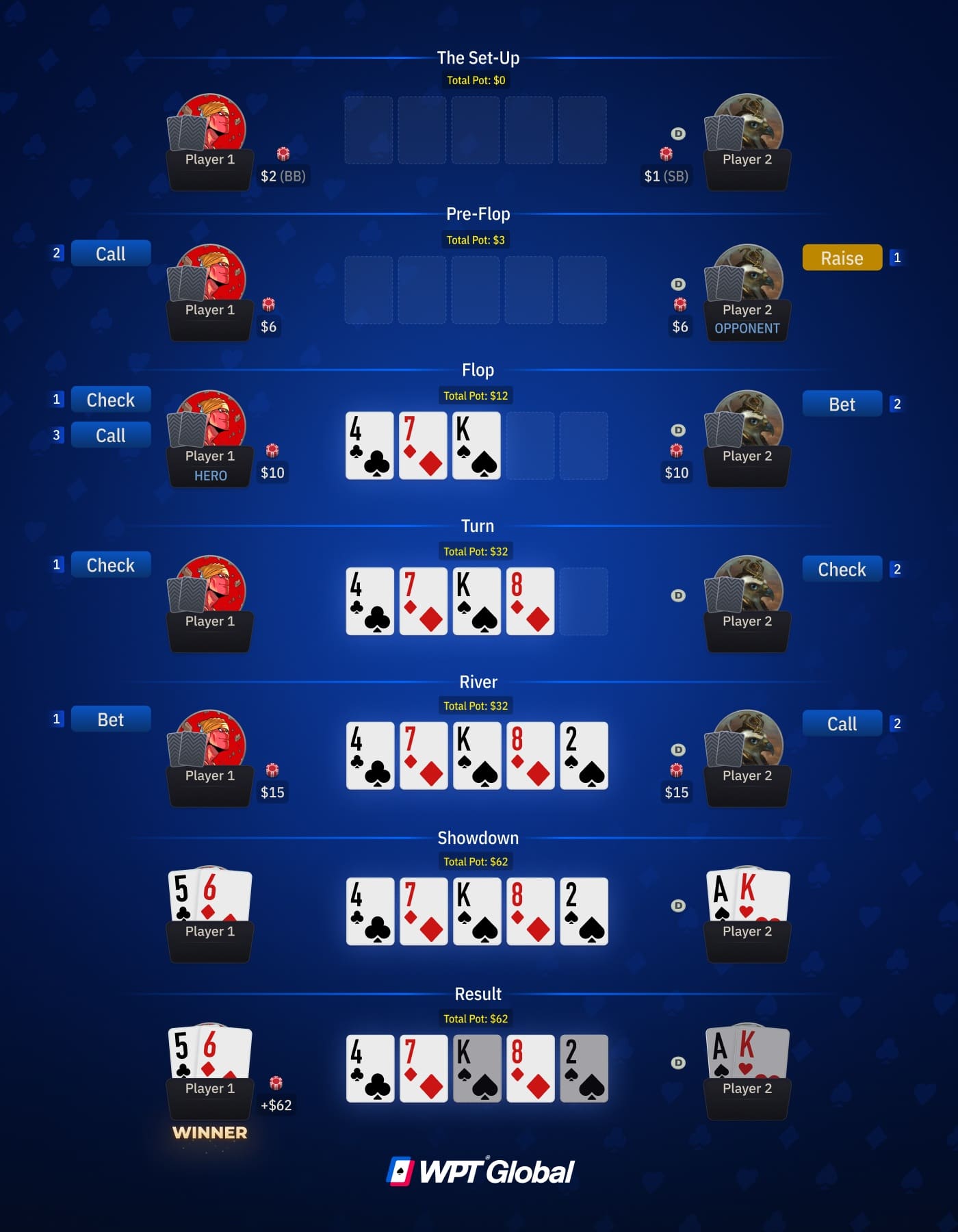
Here's how a round of heads-up poker plays out using the basic rules we've just outlined:
The Set-Up
Poker Variant = Texas Hold'em
Stakes = $1/$2
Player 1 posts the $2 big blind
Player 2 posts the $1 small blind
Each player receives two hole cards
Pre-Flop Betting Round: $3 in the pot
Player 2 is on the button and acts first by raising to $6
Player 1 calls from the big blind
Flop Betting Round: $12 in the pot
Community cards = 4♣ 7♦ K♠
Player 1 acts first and checks
Player 2 bets $10
Player 1 calls $10
Turn Betting Round: $32 in the pot
Community cards = 4♣ 7♦ K♠ 8♦
Player 1 checks
Player 2 checks
River Betting Round: $32 in the pot
Community cards = 4♣ 7♦ K♠ 8♦ 2♠
Player 1 bets $15
Player 2 calls $15
Showdown: $62 in the pot
Player 1 shows 5c 6d for a straight 4♣ 5♣ 6♦ 7♦ 8♦
Player 2 shows As Kh for a pair of kings K♥ K♠ A♠ 8♦ 7♦
Result:
Player 1 wins $62 with a straight
This hand example shows how positional advantage and disguised draws with consistent aggression can win big pots in heads-up poker.
That's how the action goes in heads-up poker games. As you can see, you're always in the blinds and, therefore, always having to make a decision whether to call, bet, raise, or fold.
Heads-Up Poker Strategy
But, playing heads-up poker requires more than an understanding of the rules. In fact, to be successful, you need to progress beyond the basics.
What do we mean by the basics? If you read any of our poker strategy articles, you'll see that we typically advocate a tight-aggressive strategy whereby you raise with a strong hand and fold weak hands before the flop.
That strategy will only get you so far in a heads-up match. Unless the deck slaps you in the face with a run of amazing cards, the blinds will eat away at your stack if you play too tight.
Here's how to avoid this mistake and play heads-up poker like a pro:
Starting Hand Selection in Heads-Up Poker
The best heads-up poker players avoid blinding out by doing two things:
They widen their opening range, which means they call and raise with more starting hands.
They adjust their range in line with the game's dynamics.
You can only adjust your opening range if you have a standard selection of starting hands. Although every situation is different, a basic opening (aka raising) range from the button depends on your bet size.
In most cases, we recommend opening for 2.5x or 3x the big blind if you're a newbie. This puts more pressure on an opponent, which increases your chances of winning before the flop. As you get more experienced, you might want to experiment with raising 2x.
The recommended opening ranges based on your raise size are:
2x raise from the button = 90% of all possible starting hands
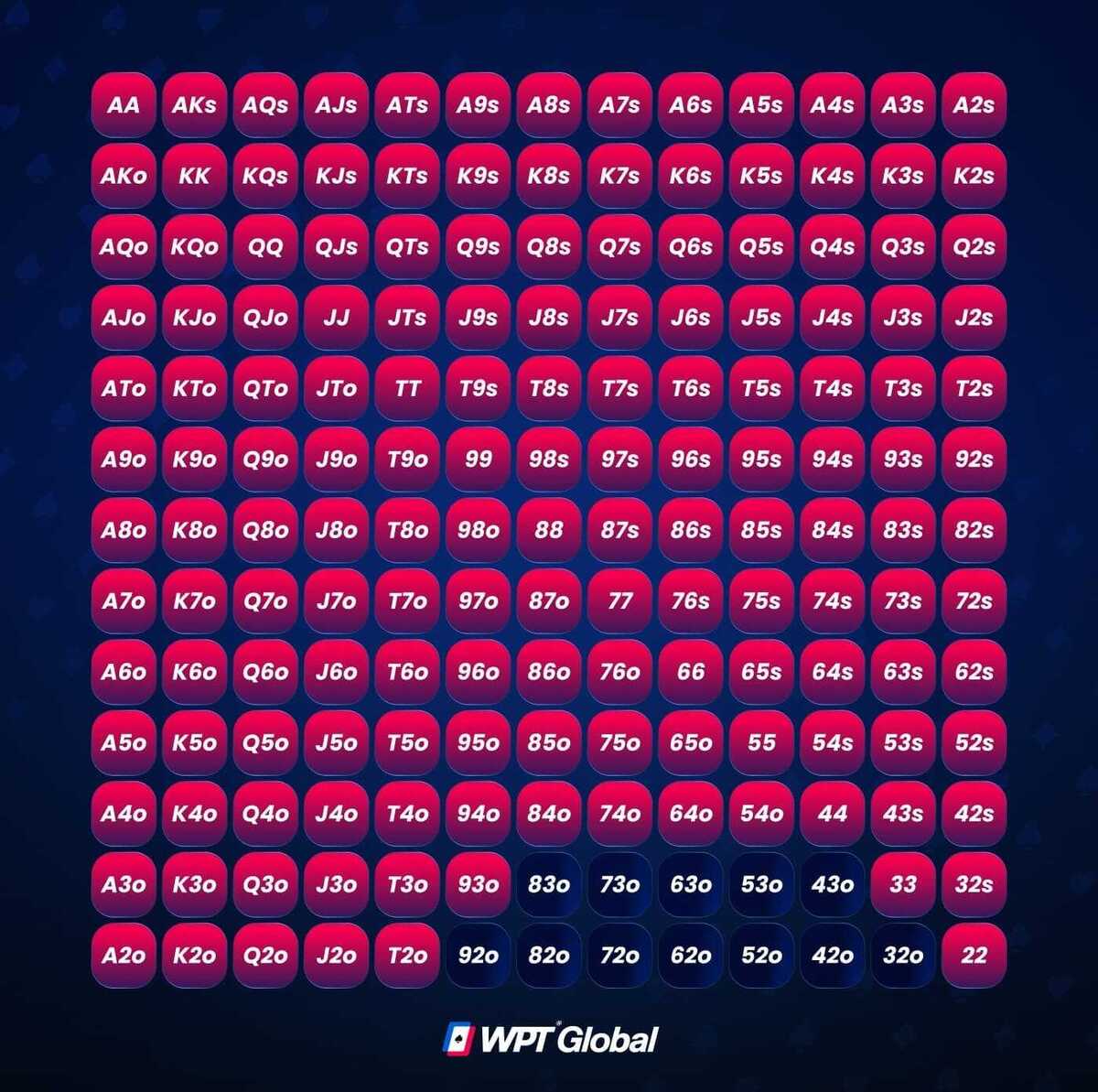
2.5x raise from the button = 80% to 90% of all possible starting hands
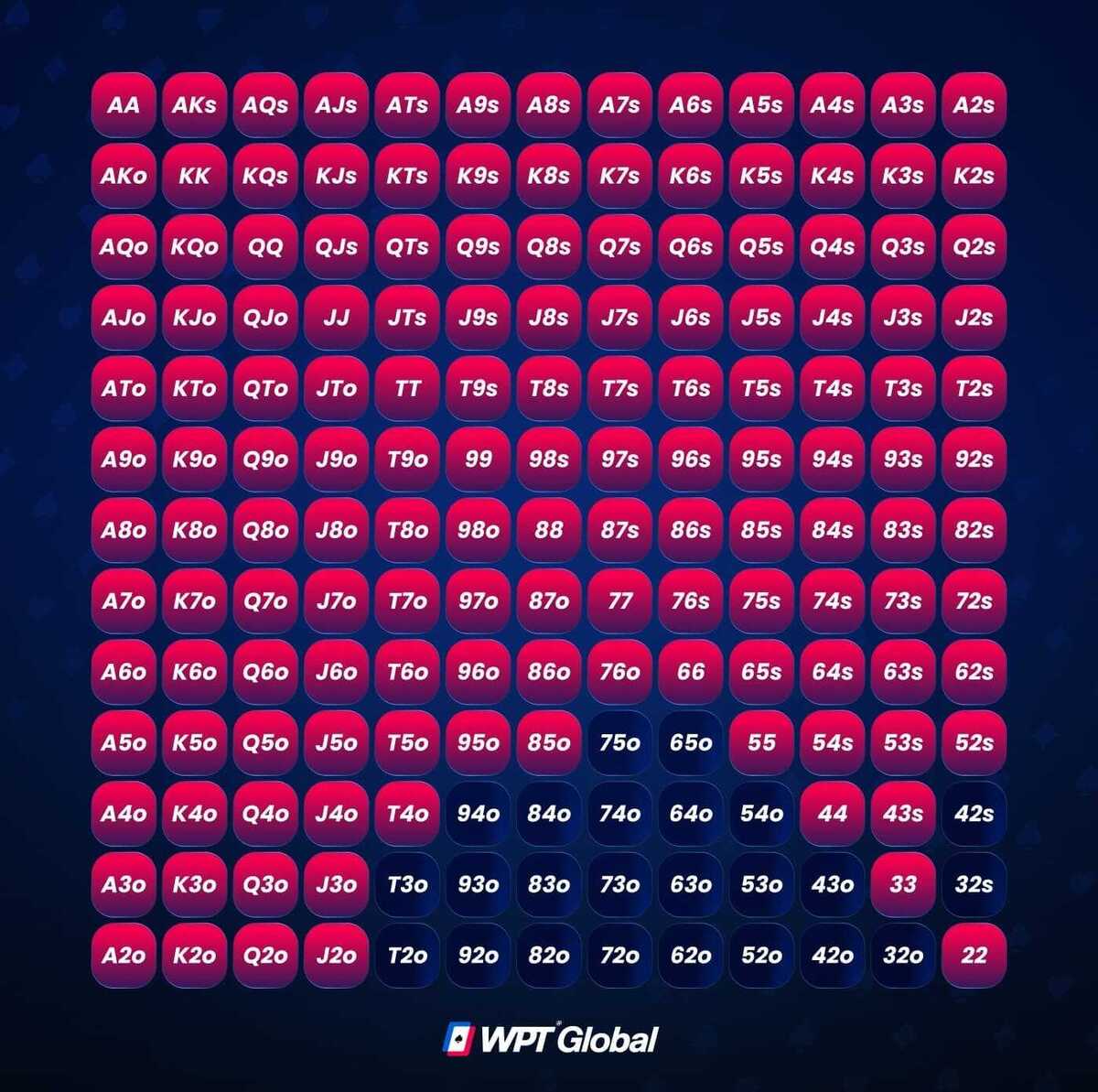
3x raise from the button = 70% to 80% of all possible starting hands
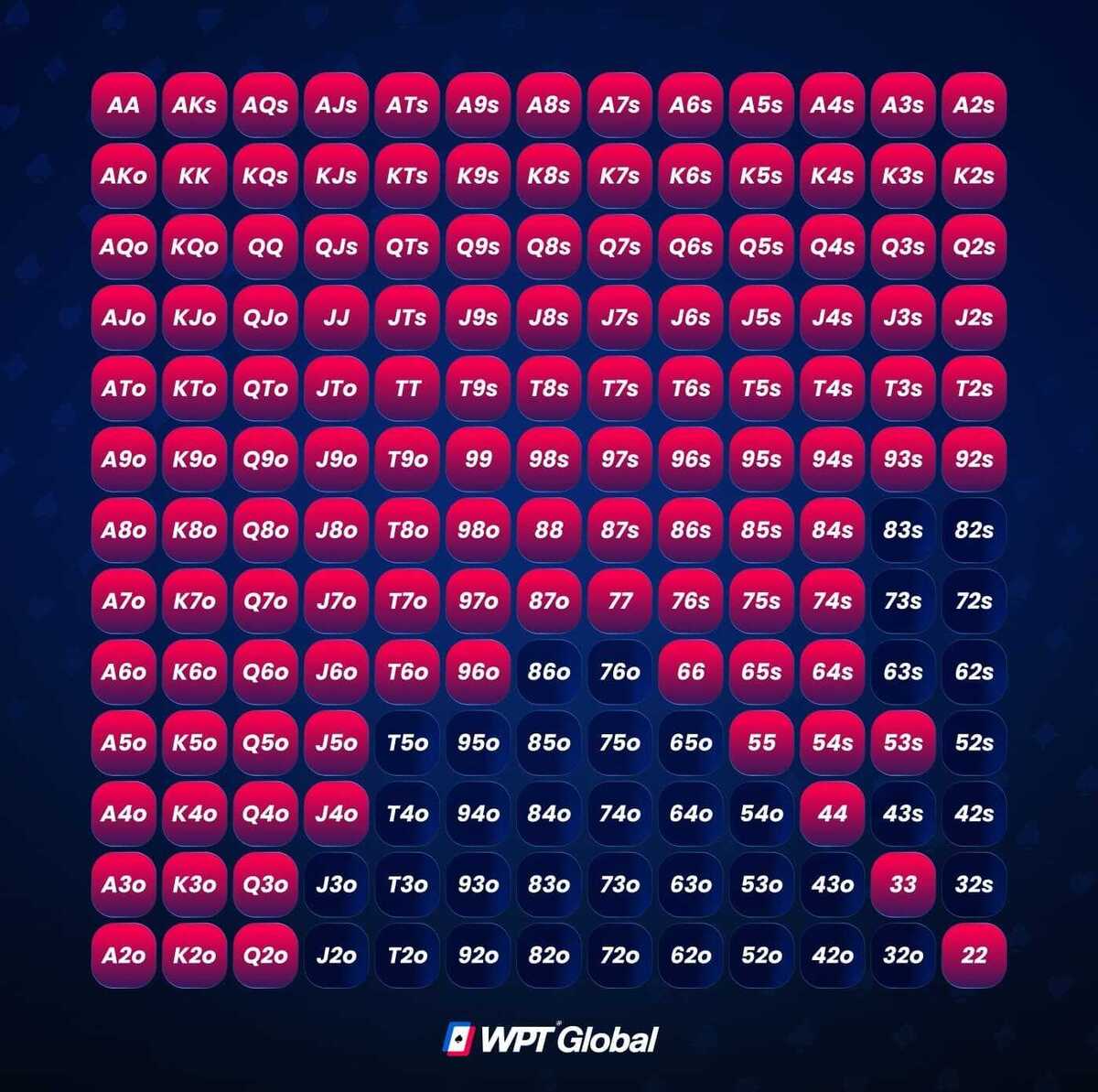
You can use a free range calculator, such as Poker Hand Range, to play around with the percentages and see which hands it includes/excludes.
Once you've got your starting range, you need to adjust it as the match develops. You might want to reduce the size of your raise because the opponent is being aggressive. You might want to remove some weaker hands from your range because you've got a short stack.
Any change in the game's dynamic can affect your range. Skilled heads-up poker players know when to adjust. They also know how to switch things up before their opponent and, therefore, dictate the pace of play.
Button Strategy in Heads-Up Play
The button is always the strongest position in poker. This applies to heads-up poker as much as six-max and full-ring games. That's why the majority of your moves should be done from the button.
You should never say never when it comes to poker strategy, but it's almost always true that raising is better than limping from the button. You only have one player's hand to think about, and they're out of position.
These are the perfect conditions for raising. The thing you need to consider before you raise is your opponent's 3-betting frequency. If they 3-bet a lot, you might consider limping with some of the weaker hands you'd fold to a raise. Against aggressive opponents, you can even induce light 3-bets by raising weaker hands and then punish them with re-raises or post-flop traps using position.
We say "some" because you don't want to limp all of your weak hands and raise the strong ones. That makes you easier to read. So, if you aren't prepared to play 3-bet pots, mix in some limps with a few of your weak hands. You can also 4-bet with a wider range, so you don't get overwhelmed.
Post-Flop Strategy in Heads-Up Poker
The reality is that most hands go to the flop in heads-up poker. Therefore, you have to be comfortable playing raised pots. The secret to success in raised pots is finding the right balance between attack and defence.
There's more money in the middle when you're playing raised pots. Therefore, you don't want to overcommit with mediocre hands. Similarly, you don't want to play draws too passively when the stack-to-pot ratio is low.
To sum up, you should think like this:
If you've got a weak or a medium-strength hand that you're not willing to commit your stack with, use checks and calls to control the size of the pot.
If you've got a strong draw or a made hand, bet and raise as much as possible. Suited connectors and overcards with backdoor draws along with combo draws are perfect hands to semi-bluff post-flop, especially in position. The pot odds will be attractive because there was a pre-flop raise. That makes your opponent more likely to call.
Reading Opponents and Exploiting Mistakes
The final heads-up poker skill to master is reading your opponent. This means noting their tendencies so that you can exploit them later in the match. The main things to look for when it comes to reading poker players are:
Raise vs. Call Frequency
The number of times they raise vs. call. Players who raise more often than the call are classed as aggressive. Players who call (and check) more often are passive. The best way to exploit aggressive players is to trap them. The best way to exploit passive players is to bet and bluff more often.
Timing Tells
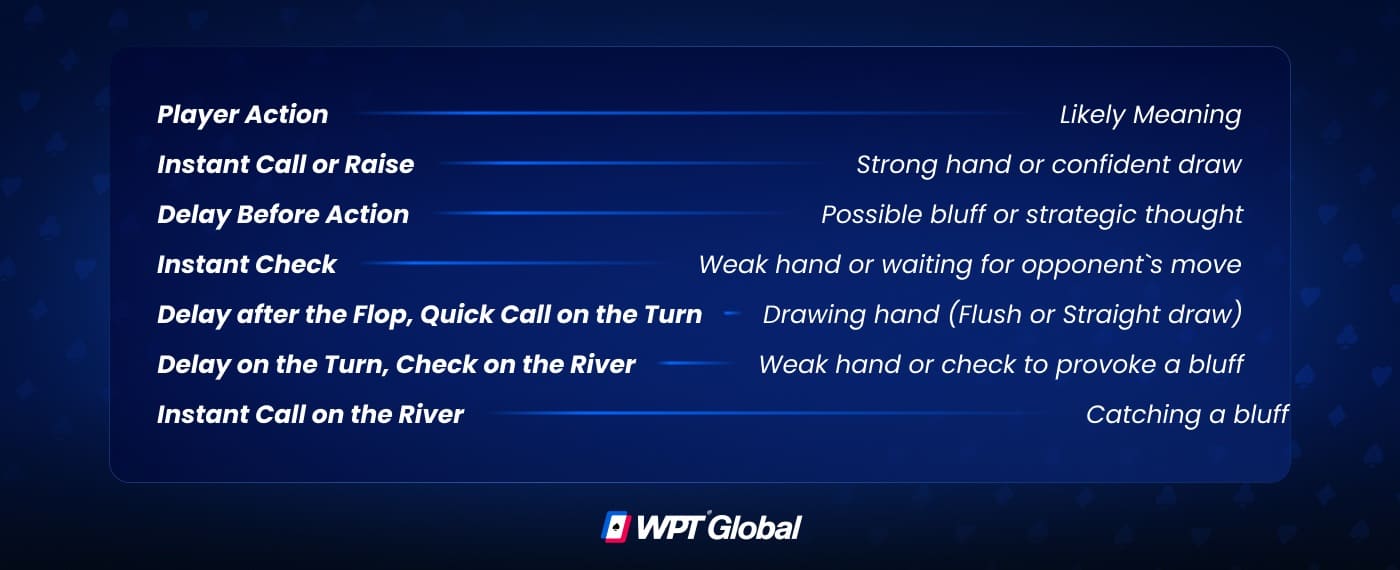
The time it takes for your opponent to act. Timing tells are far from reliable, but it's generally true that players who call or raise quickly usually have a strong hand or strong draw. Pauses after the flop followed by quick turn calls often indicate a player on a draw. Insta-calls on the river can suggest bluff-catchers. Players who take slightly longer to act may be bluffing or deciding whether the pot odds are good enough to call.
Past Hands
The hands someone shows. Take note of every hand someone has at a showdown. This will give you an insight into their betting, calling, and raising range.
Be aware that a formidable opponent will mix up their range. They'll remember the hands they've shown, and use that to their advantage. However, as a general rule, the hands people show give you a good indication of the hands they'll play in the future.
Final Thoughts: Mastering Flow in Heads-Up Poker
Heads-up poker is as much about flow as your hole cards. The fact that you're always in a position to act means you can't wait for premium hands. This forces you into a battle of wits against your opponent.
When you sense they're playing loose, you need to tighten up. When they're playing tight, you need to be aggressive. The player who ebbs and flows the best usually wins a heads-up game.
So, if you take just one thing from this guide, it's that you should focus less on your cards and more on your opponent. Get that right, and you'll be well on your way to heads-up success.

FAQs
What is heads-up poker?

Heads-up poker is a poker format where only two players compete against each other. It’s just a one-on-one variant of the game and can require a more aggressive and adaptive strategy than standard full-ring or six-max poker.
Who acts first in heads-up poker?
Pre-flop, the player in the big blind acts second. Post-flop, the small blind (who also has the dealer button) acts last. So after the flop, the turn, and the river, the player on the button always has position.
Can you bluff more in heads-up poker?
Yes because fewer players see the flop and hand values are generally lower overall. So bluffing plays a bigger role. However, your success can often depend on reading the opponent correctly and choosing good bluffing spots.



Promotions
For Customers
Safety & Security
Stay Connected
Follow us on social media to stay updated with the latest news, updates, and exclusive offers!


Promotions
For Customers
Safety & Security
Stay Connected
Follow us on social media to stay updated with the latest news, updates, and exclusive offers!
 Local Payment Methods
 Cards
Cards Crypto
 E-Wallets
 Apple Pay
 Google Pay
 Instant Bank Payments
*
Some methods may not be available in your region. Please contact support if you experience any issues.
This website is operated by Everstronglink Limited a company incorporated under the laws of Costa Rica having its registered address at Province 01 San Jose, Canton 02 Escazu, San Rafael, On La Ceiba Street, House No. 400, Costa Rica, and is licensed by the Tobique Gaming Commission under License Number 0000005. Kashxa Limited, a Cyprus company with registration number 427606, having its registered office at Strovolou, 12 Aigyptou, Nicosia, 1097, Cyprus, is acting as a payment agent on behalf of the license holder entity Everstronglink Limited.
Gambling can be addictive. Play responsibly. Everstronglink Limited only accepts customers over 18 years of age.
Copyright © 2026 WPT Global. All rights reserved