





 Customer Dispute Resolution Page
 Help Center
 Affiliate Program
In this article
Welcome to WPT Global
Welcome to WPT Global, the online home of the World Poker Tour®. Let us guide you through setting up your account and get you to the tables in no time.Social Media


How To Play
World Leading Tournaments
A huge player pool and everything from freerolls to high rollers – plus regular special events!Ambassadors
Get to know our ambassadors - world-class players from across the globe who embody the spirit of the game. Discover their stories and become part of the community.Your Hub for News
Explore stories, tips, and updates from the world of poker and casino. Learn from pros, discover new trends, and stay in the loop with everything happening at WPTGlobal.What are you looking for?
Close



Mastering the Poker Face: How to Stay Unreadable and Read Tells Like a Pro
Share



You might have heard the term poker face from the TV show featuring Natasha Lyonne as Charlie Cale, but does it actually mean anything at the poker table? It does. In fact, if you can learn to spot a lie like Charlie Cale, you’ll become a much stronger poker player by picking up important tells.
Once you know what a poker face is, the skill is learning how to decipher the information you’ve gleaned. In this guide, we’ll show you how to do that and much more. So, if you’re ready, here’s how to read physical tells and develop a strong poker face.
What Does ‘Poker Face’ Mean?
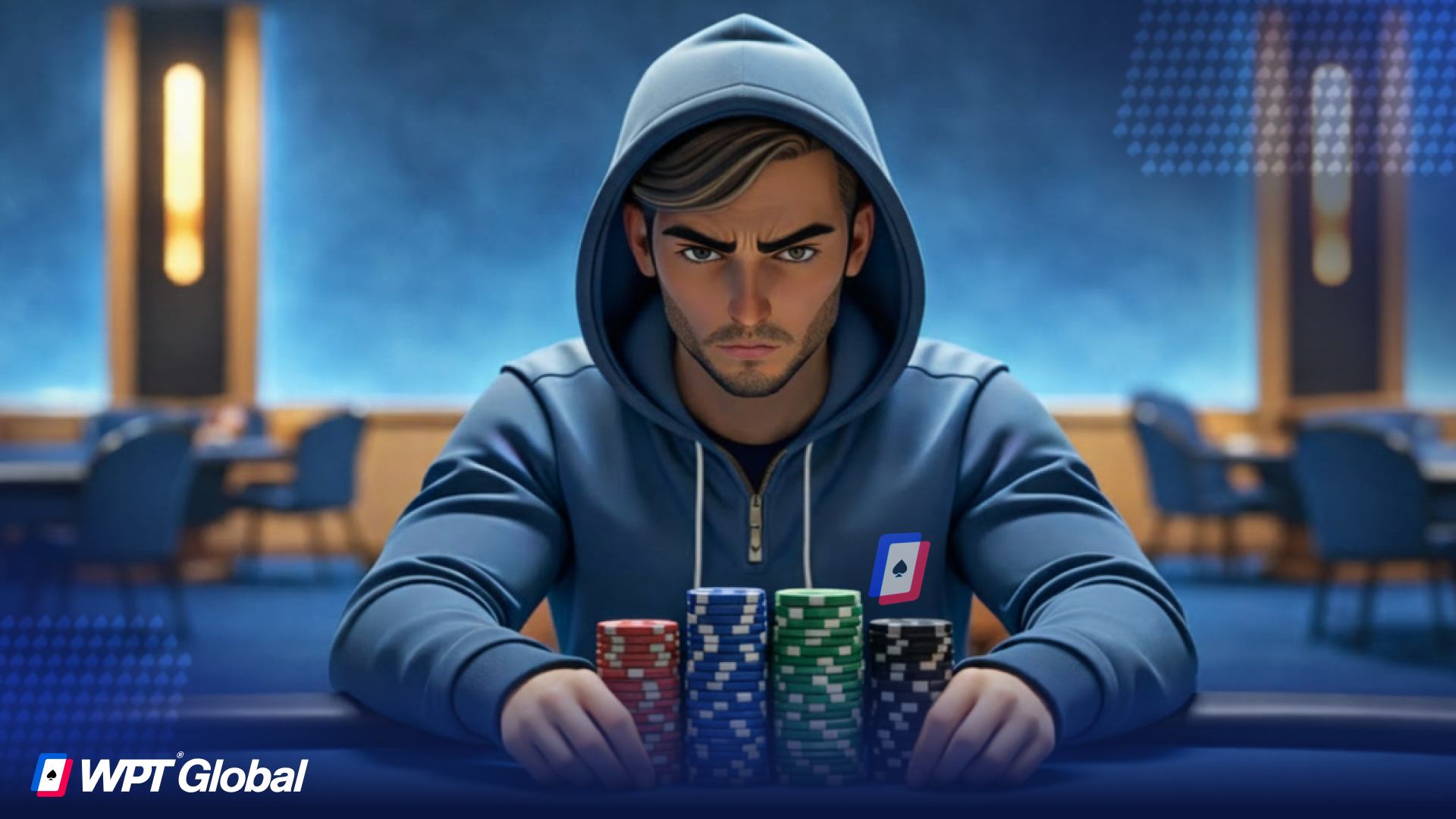
At its simplest, having a poker face means that you’re physically unreadable to other players at the table. In most cases, people use the term 'stoic' to describe someone with a poker face. By that, we mean you’re expressionless, even in the face of extreme emotions.
You don't want to look anxious when you're running a huge bluff for your entire stack, so you try to remain expressionless. That’s the definition of a poker face, but why do you need one? So your opponent doesn’t know you’re scared, excited, or whatever other emotional state you might be in and give away what move you're going to make next.
Why a Poker Face Matters in Live Games
A strong poker face helps you hide emotion while you study others for information. Beginners often assume that every tell means weakness, but in reality, physical movement or hesitation can also signal excitement. The key is combining physical, betting, and timing tells rather than relying on one alone. Understanding this balance makes you a much stronger live poker player.
Common Physical Tells
When you’re sitting at a live poker table, body language and facial cues can speak louder than words. Here are some of the most common physical tells, and what they might mean when you’re sizing up your opponent’s poker face:
Physical Tell | What it Could Mean |
|---|---|
Staring directly at you or the pot | The player is trying to intimidate you, or they’re scared and trying not to give away a tell. |
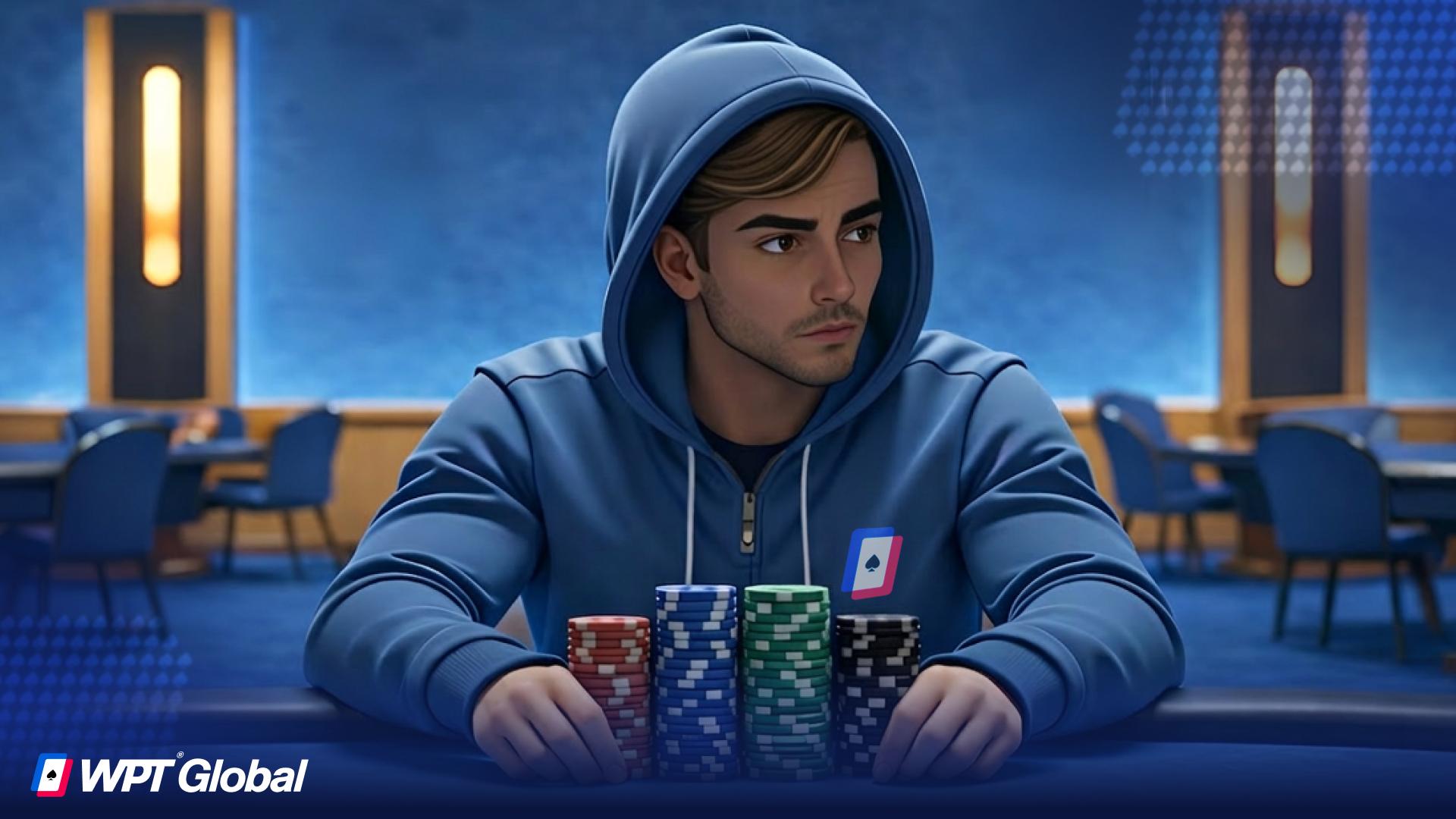
Not looking at you/staring into the distance | The player might be scared to give away some information, or they’re trying to look disinterested because they’ve got a strong hand. |
Trying not to smile | The player might be happy because they’ve got a good hand. |
Trying to look positive | The player is nervous, but they’re trying to hide it. |
Touching their face/fiddling with something (e.g., chips) | The player might be experiencing an adrenaline rush, which is causing them to move around a lot. |
There aren’t any definitive answers to what each tell means. A physical tell is little more than a clue. It indicates that the player is trying to hide something, but it doesn’t necessarily tell you what they’re hiding.
If they’re staring directly at you, does that mean they’re bluffing or enticing you to call? To decide that, take into account everything else that happened up until that point, as well as the things players do to develop their own poker face.
How to Develop a Strong Poker Face
Just as you can see other players, other players can see you. That’s why you need to develop a strong poker face.
Here are five tips for developing the perfect poker face and, in turn, reducing the number of physical tells you give away:
Look in the Mirror: Get to know your own facial expressions. Running through different scenarios in your head allows you to see and feel how your face moves, which makes it easier to control expressions.
Record Yourself: Use your phone to record yourself playing poker online. Try to forget the camera is rolling, but remember that you’re aiming to remain as stoic as possible. Watch the video back while reviewing your hand history to see if you can spot when you were strong vs. weak.
Be Robotic: The best way to reduce the risk of giving off tells is to do the same movements every time. For example, you could always use your right hand to count chips and take 10 seconds to act, regardless of whether you’re going to call, bet, raise, or fold.
Stay Calm: Focus on your breathing throughout the hand. Adrenaline will cause your heart rate to spike in high-pressure situations, but you can still control your breathing. Take deep, even breaths.
Forget the Outcome: Try not to think about the outcome of the hand. Instead, think about your betting patterns, what your opponent might have, and how likely your move is to succeed. When you think about the money you might win/lose, it increases your emotions, which can cause your poker face to crack.
Practice these things, and you’ll have a better chance of being unreadable when you play live poker games. Then, when you get really confident at maintaining a poker face and reading tells, you can think about reverse tells.
Using Reverse Tells to Confuse Opponents
Once you’ve mastered being unreadable, you can then take it one step further by using reverse tells. For example, since players often look away when they’re bluffing, deliberately doing so when you’re strong can make your opponent misread you. Skilled players use this to manipulate observant opponents and turn their own body language into a weapon.
Final Thoughts on Mastering the Poker Face
The art of maintaining a stoic poker face is a fundamental skill that all live players need to master. You need to master this skill for two reasons:
You need to remain indifferent so opponents can’t spot your strengths and weaknesses.
You need to spot physical tells so you can detect when opponents are weak and strong.
When you can manage your own poker face while spotting physical tells in others, you’ll become a much tougher player to beat in Texas Hold’em and other variants.
FAQs
Why is it called a poker face?

It’s called a poker face because that’s where players most often give off physical tells. For example, a common physical tell that people give off is refusing to look at their opponent because they’re nervous.
Is it good to have a poker face?
Yes, if you can remain stoic and expressionless, you’re harder to read. When you’re harder to read, it’s tough for opponents to know when you’ve got a strong or weak hand.
What does a poker face look like?
A good poker face is an expressionless one. The goal when you’re trying to maintain a good poker face is not to give away any information. The best way to do this is by not moving a muscle.

Promotions
For Customers
Safety & Security
Stay Connected
Follow us on social media to stay updated with the latest news, updates, and exclusive offers!


Promotions
For Customers
Safety & Security
Stay Connected
Follow us on social media to stay updated with the latest news, updates, and exclusive offers!
 Local Payment Methods
 Cards
Cards Crypto
 E-Wallets
 Apple Pay
 Google Pay
 Instant Bank Payments
*
Some methods may not be available in your region. Please contact support if you experience any issues.
This website is operated by Everstronglink Limited a company incorporated under the laws of Costa Rica having its registered address at Province 01 San Jose, Canton 02 Escazu, San Rafael, On La Ceiba Street, House No. 400, Costa Rica, and is licensed by the Tobique Gaming Commission under License Number 0000005. Kashxa Limited, a Cyprus company with registration number 427606, having its registered office at Strovolou, 12 Aigyptou, Nicosia, 1097, Cyprus, is acting as a payment agent on behalf of the license holder entity Everstronglink Limited.
Gambling can be addictive. Play responsibly. Everstronglink Limited only accepts customers over 18 years of age.
Copyright © 2026 WPT Global. All rights reserved