










 Customer Dispute Resolution Page
 Help Center
 Affiliate Program


Quick Guide: Learn How to Play Blackjack in a Few Seconds
- Place your bet – Put your chips on the table to start the round.
- Get two cards – You and the dealer each receive two cards.
- Decide your move – Hit (take a card), Stand (keep your hand), Double Down, or Split (if you have a pair).
- Dealer plays – The dealer reveals their hand and draws according to fixed rules.
- Win or lose – The closest to 21 without going over wins. If you go over 21, you bust.
What is Blackjack?
Blackjack is a fast-paced card game where players aim to beat the dealer by getting a hand total as close to 21 without going over.
Did you know? The “blackjack” name came from a classic bonus in US casinos where bonus payouts were awarded to those who win with a jack of spades or clubs, with an ace of spades.
The roots of blackjack can be traced back to the 1600s in France, with a card game called “Vingt-et-Un” also known as 21 in English. It eventually made its way across the Atlantic and became the skilful, fast-paced casino table game we know and love today.
The Objective of Blackjack

Your mission, should you choose to accept it, is to beat the dealer’s hand – without going over 21. That’s all there is to it.
You need to build a hand worth exactly 21. So long as your hand is greater than the dealer’s but below 22, it’s a winner. Go over 21 and it’s game over.
Basic Blackjack Rules
Card Values
Here’s what you need to know to get started:
- All number cards from 2-10 are worth their face value
- All face cards (Jack, Queen, and King) are worth 10
- All aces can either be worth 1 or 11 – whichever value improves your hand best
- Blackjack = an ace and either a 10 or a face card
Example Hand:
You’re dealt: Ace of Spades and 9 of Hearts. Total: 20 (Ace counts as 11 here)
The dealer shows: 7 of Diamonds
You stand, hoping the dealer busts or lands lower.
Dealer draws: 7 of Diamonds → then draws 6 of Clubs → total is 13 → draws again and gets 9 of Spades
Dealer total = 22. Dealer busts.
You win.
Game Flow & Playout
- Place your initial bet to begin the round.
- You’re dealt two cards face up on the table.
- The dealer is also dealt two cards:
- One face up (known as the upcard)
- One face down - You now decide how to play your hand:
- Hit to take another card
- Stand to keep your current hand and wait for the dealer to reveal their face-down card.
The 6 Main Moves in Blackjack
1. Hit
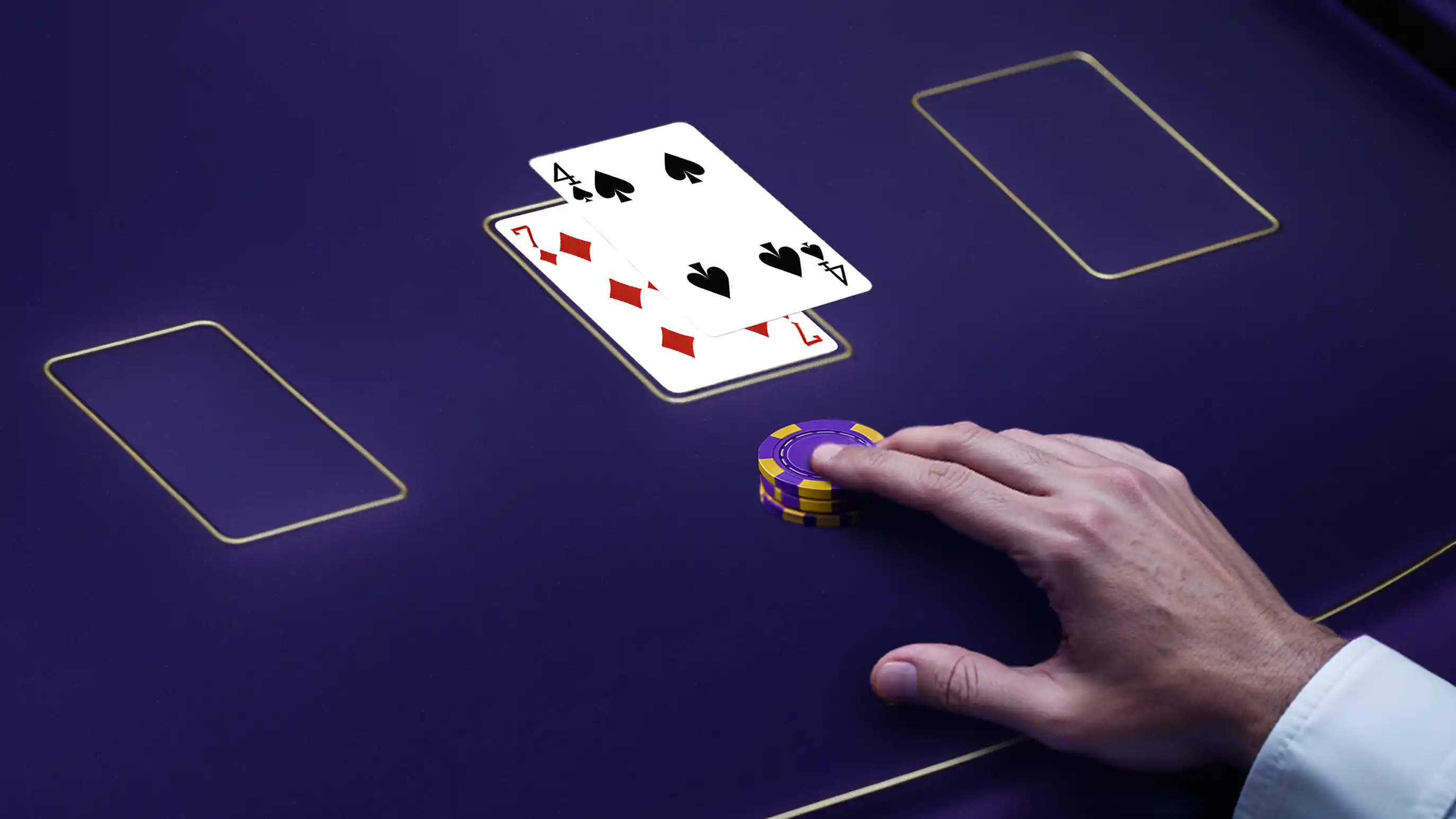
Ask the dealer for another card (after your first two cards). This is useful when your starting hand is weak e.g. 8 or 9.
2. Stand
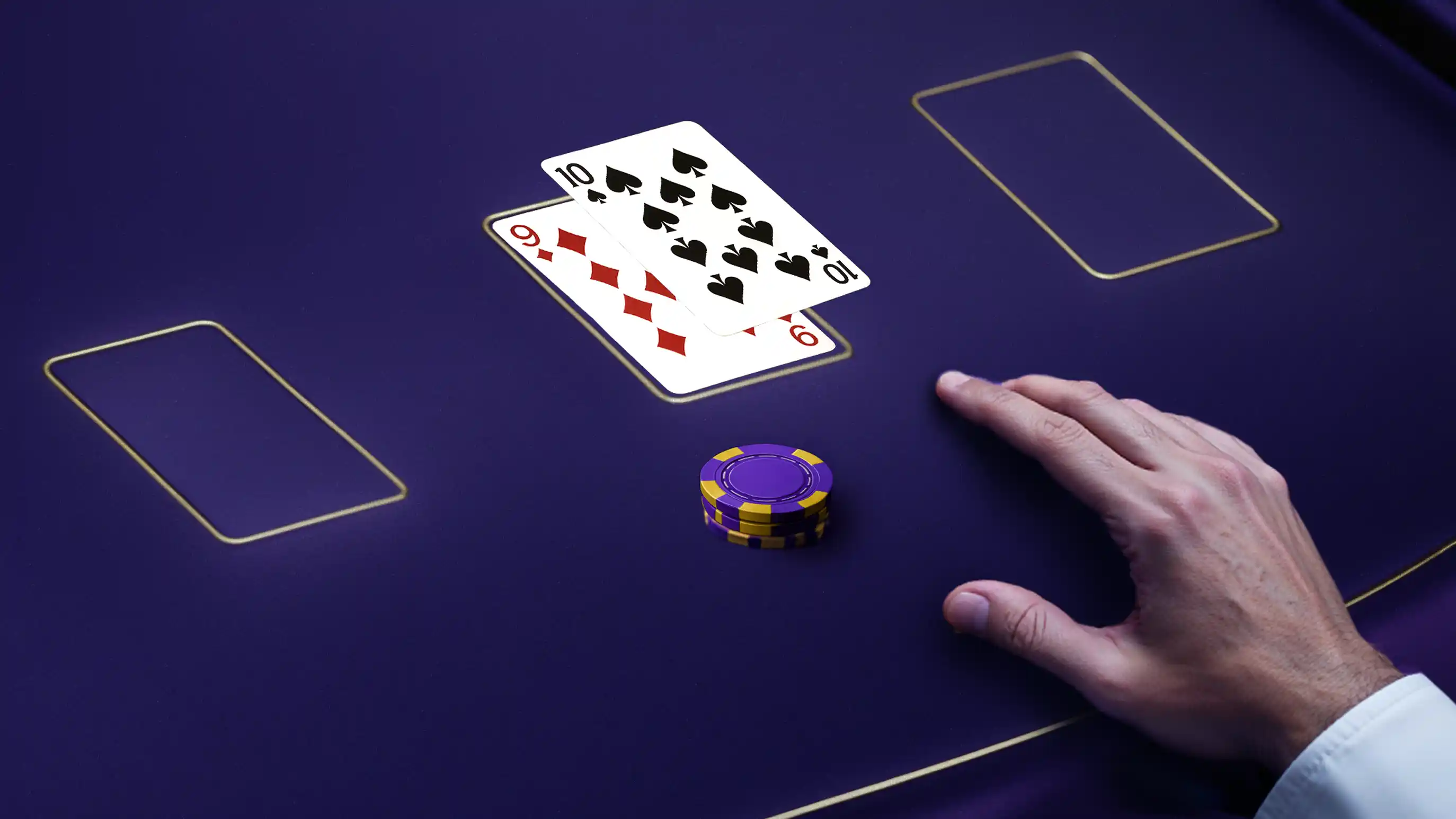
Stick with your existing hand. This is useful if your starting hand is already worth 17-20.
3. Split
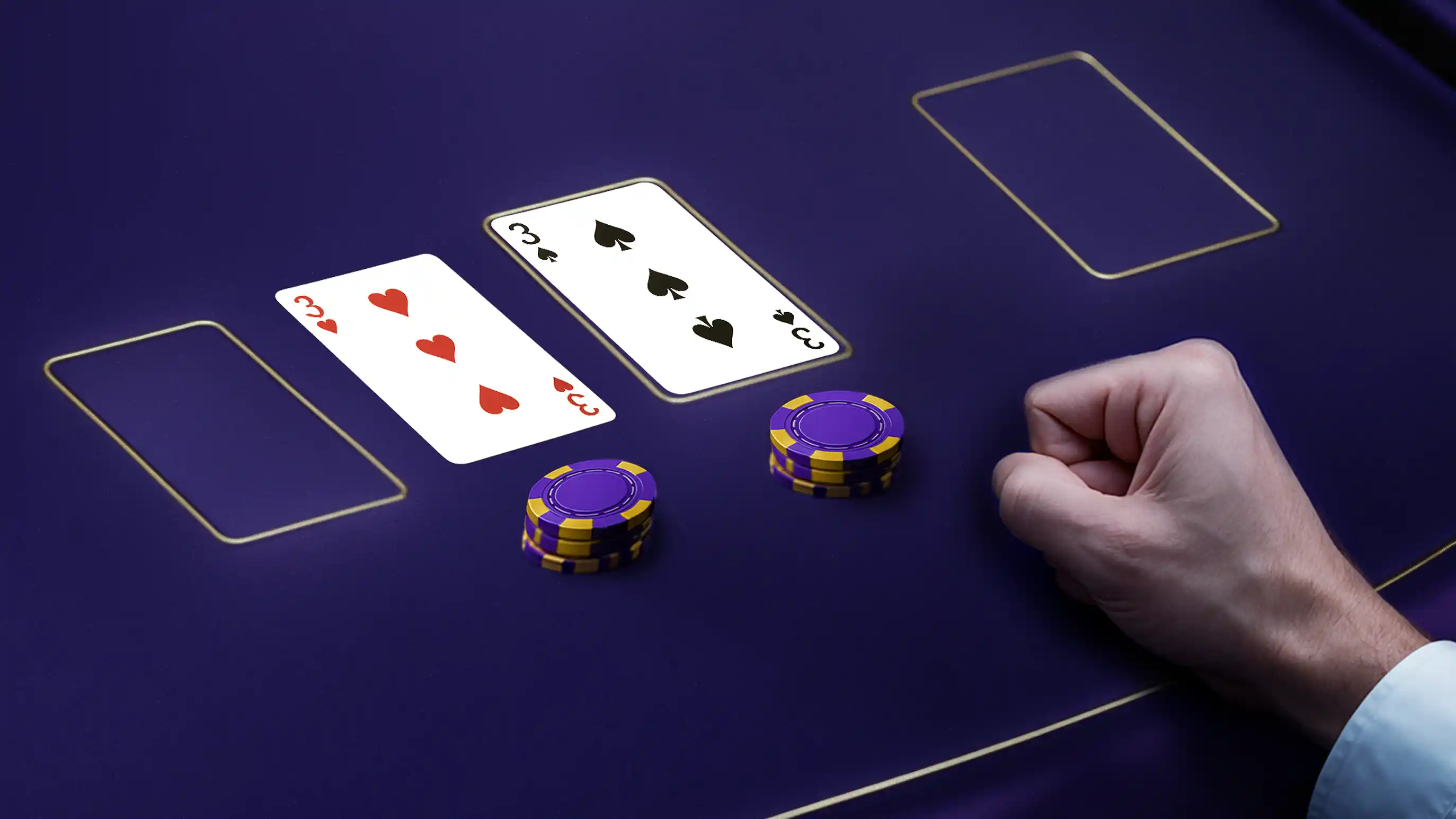
If you’re dealt two of the same cards, double your bet size to split them into two separate hands. This is a smart play when you split the right values.
4. Double Down
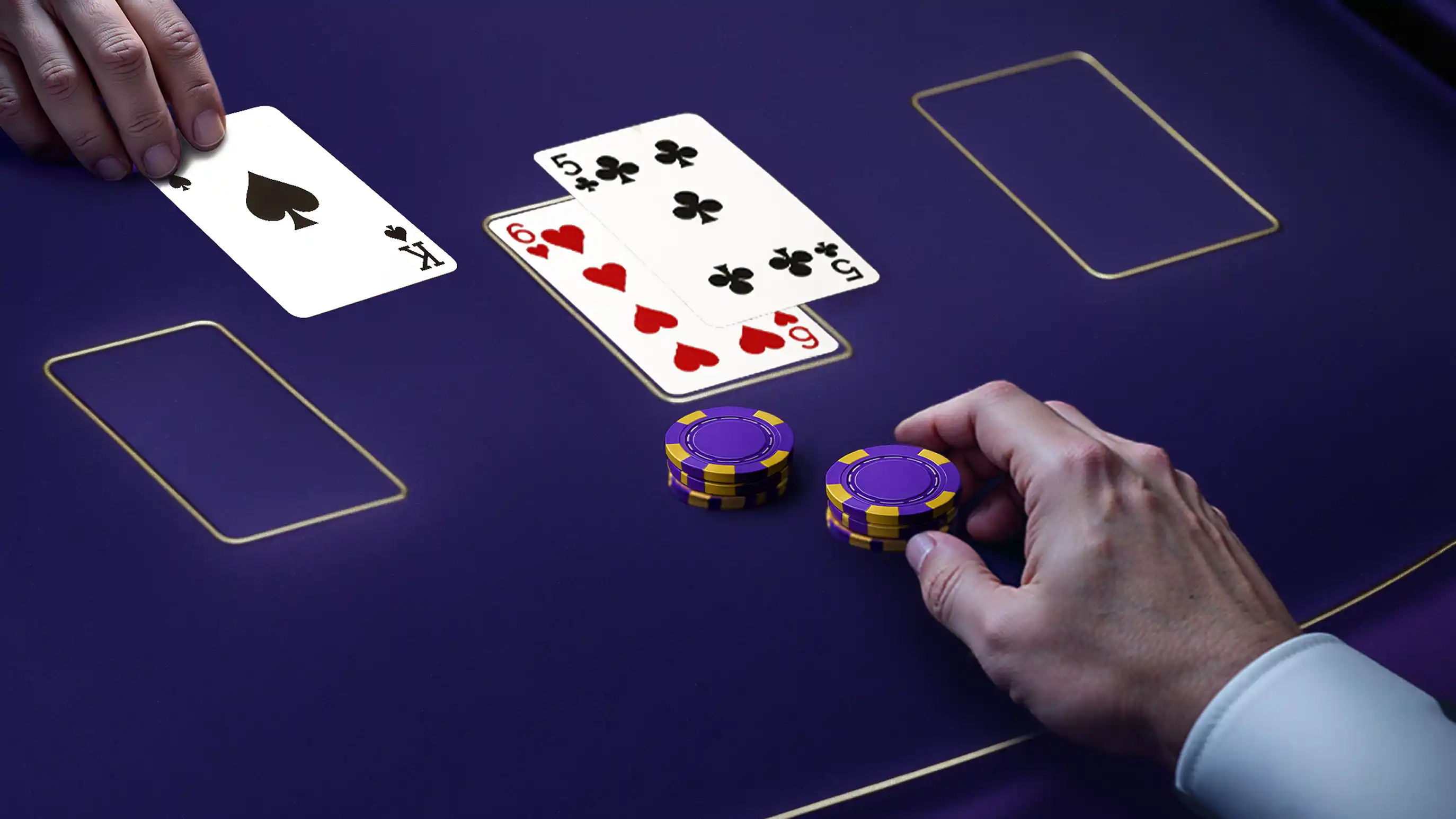
Double the size of your initial bet to receive one additional card only.
5. Insurance
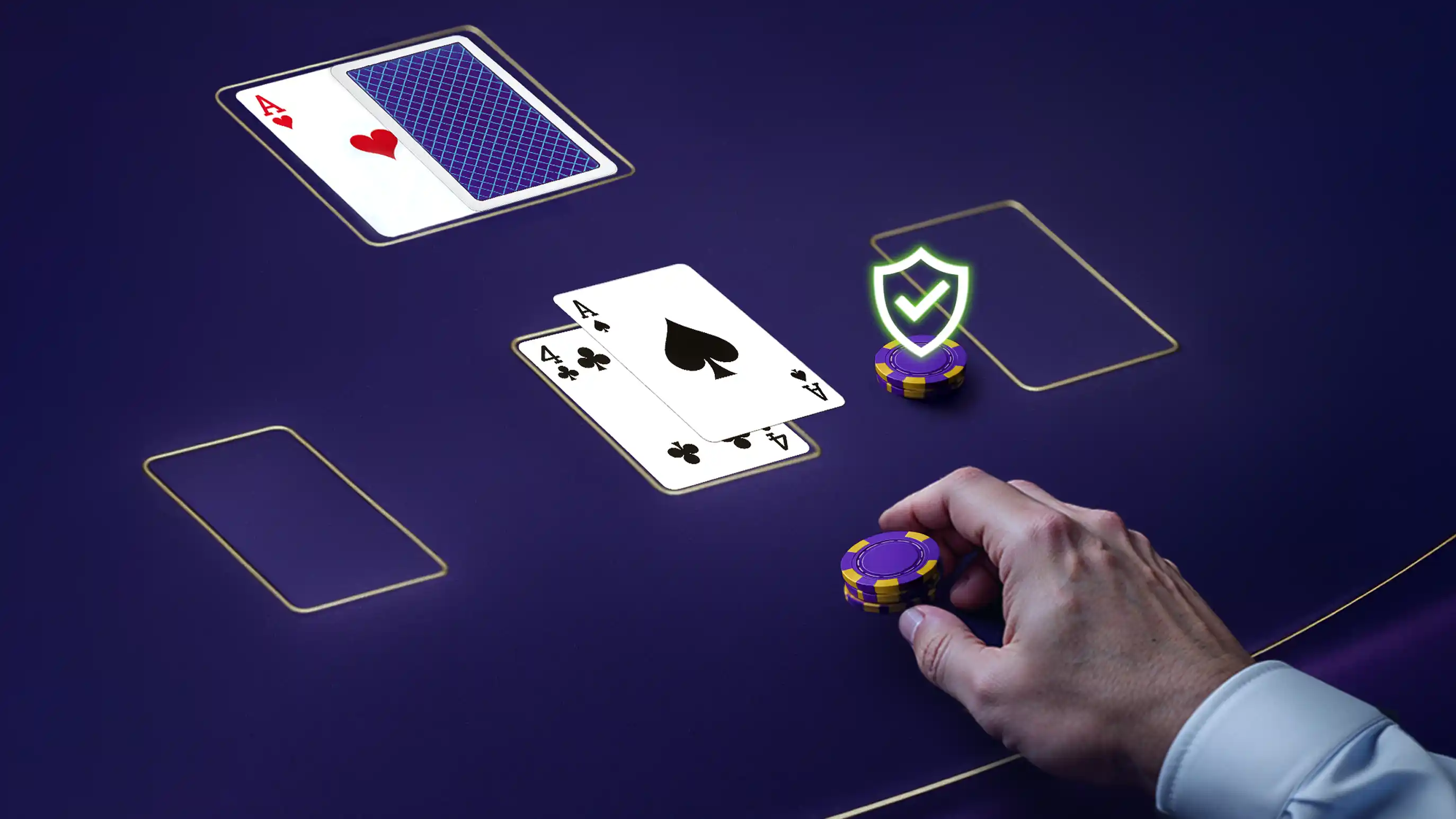
This is a side bet which pays 2:1 if the dealer has blackjack. It’s only offered if the dealer’s upcard is an ace.
6. Surrender
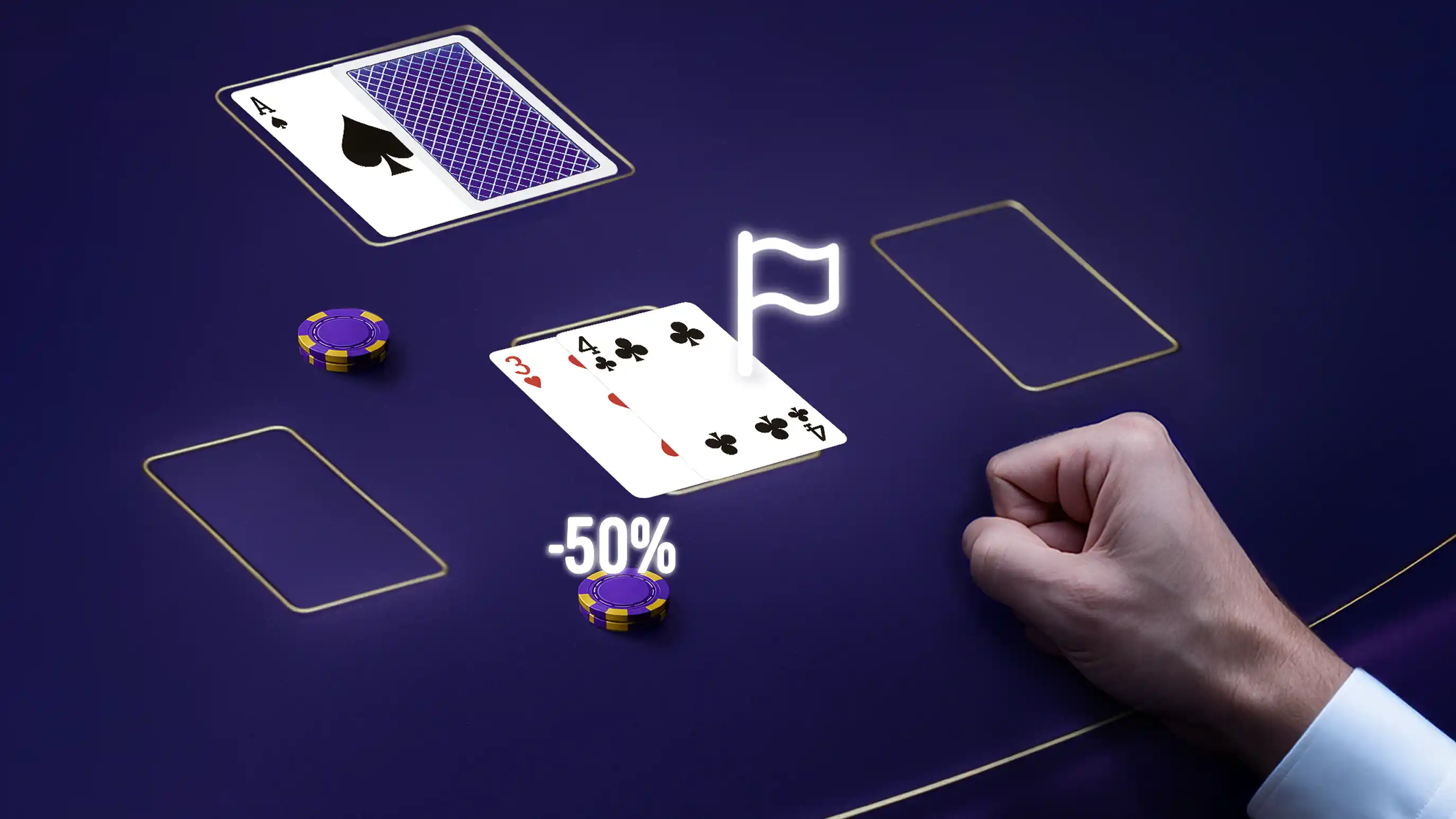
If it’s highly unlikely that your hand wins after your first two cards, you can sometimes surrender your hand and receive half of your stake back.
How the Dealer Plays Their Own Hand
Unlike you, the dealer has set guidelines as to how they must play their hand.
They must carry on hitting when their hand is worth 16 or lower. They must stand when their hand is worth 17 or better.
Blackjack Tips on Table Etiquette
If you’re wondering how to play blackjack online or in person, there’s etiquette in both formats of the game:
In-Person
- Don’t touch your cards when dealt face up
- Make sure your betting chips are highly visible
- Use hand signals to denote hit/stand decisions – it’s useful for the casino’s CCTV cameras
Online/Live Dealer
- When you’re playing live casino dealer blackjack, don’t take too long with your decision-making. Be respectful to your fellow players and don’t disrupt the flow of the game.
Introduction to Basic Blackjack Strategy
Now, let’s get down to the fun stuff.
This is one of the few casino games where clever strategy can impact your wins and losses.
There is something known as basic blackjack strategy. It’s based on making the most mathematically optimal moves based on your hand and the dealer’s upcard.
You’ll be able to find basic blackjack strategy charts and cards online. Using them to inform your decision-making isn’t a no-no at the tables either!
Put simply, basic strategy helps to slash blackjack’s house edge to a mere 0.5%.
That’s a big deal. Especially when the house edge of slots and some other table games can be anything from 3% to 6%-7%!
Should You Count Cards?
There’s also the option to learn how to “count” cards at the blackjack table. By monitoring the number of low and high-value cards that come out of the dealer’s deck, you can determine whether the chances of landing a blackjack or a high-value winning hand are better or worse each round.
It’s not an illegal technique, but if you’re caught doing it, many brick-and-mortar casinos may ask you to stop playing.
Stick to basic strategy first. Master that, then maybe look into the Hi-Lo system if you're feeling confident.
Responsible Gaming Tips
To make sure every blackjack session you play is fun and entertaining, here are our recommendations for responsible gaming.
- Only bet what you can afford to lose. Set a budget before you start. Decide what you’re comfortable losing and stick to it.
- Know your limits. Decide in advance how much you’re comfortable losing.
- Don’t go chasing your losses. Once you’ve hit your loss limit, stop playing. Tomorrow is another day.
- Be consistent with your bet sizes. Don’t increase your stake dramatically after a win.
- Use a simple staking system. Flat betting (wagering the same amount each hand) helps manage your bankroll and avoid emotional decisions.
5 Most Common Beginner Mistakes
Everyone makes missteps when they’re starting out—but in blackjack, some slip-ups are more costly than others. Here are five common beginner mistakes to avoid if you want to play smarter and stretch your bankroll further:
- Hitting on a stiff hand when the dealer shows a weak upcard: If you’re sitting with a hand like 13–16 and the dealer has a 4, 5, or 6 showing, your best move is usually to stand. Why? Because the dealer has a high chance of busting—and you don’t want to go first.
- Standing on hands that need a hit: We see beginners freeze up when they have 12–16. But if the dealer shows a strong card (7–Ace), you need to hit. Playing passively gives the dealer the upper hand.
- Misunderstanding soft hands: Hands with an ace counted as 11 are more flexible, but beginners often treat them like hard hands. For example, always hit on a soft 17 (like Ace–6)—you can’t bust, and you might improve.
- Overusing the double down: Yes, doubling down can increase your winnings—but only in the right spots. Don't double just because you "feel lucky." Use it when the math supports it (e.g. a total of 11 vs. dealer 6).
- Skipping basic strategy entirely: Don't wing it.
The most common mistake? Winging it. Blackjack has a well-established optimal strategy. Use it. Study it. Print it. It’s your edge over the house—and beginners who ignore it are playing blind.
Blackjack Tips Recap
Now that you’re ready to attack the blackjack tables with confidence, here are a few more pointers to help you on your way:
- Always, always split aces and 8s.
- Never split 5s or 10s.
- Avoid the insurance side like the plague
- There’s no such thing as a “hot” or “cold” table – hands are independent events, so the last hand can’t influence what’s coming next.
- Only surrender when your hand is a 16 and the dealer’s upcard is a 9, 10, or Ace – or if your hand is a 15 and the dealer’s upcard is a 10.