










 Customer Dispute Resolution Page
 Help Center
 Affiliate Program




Roulette for Beginners: What You Need to Know
What is Roulette?
Roulette means ‘little wheel’ in French, and it’s been played worldwide for at least 200 years. One of the main reasons for its popularity is its simplicity. It’s easy to learn and start betting.
Roulette's Objective
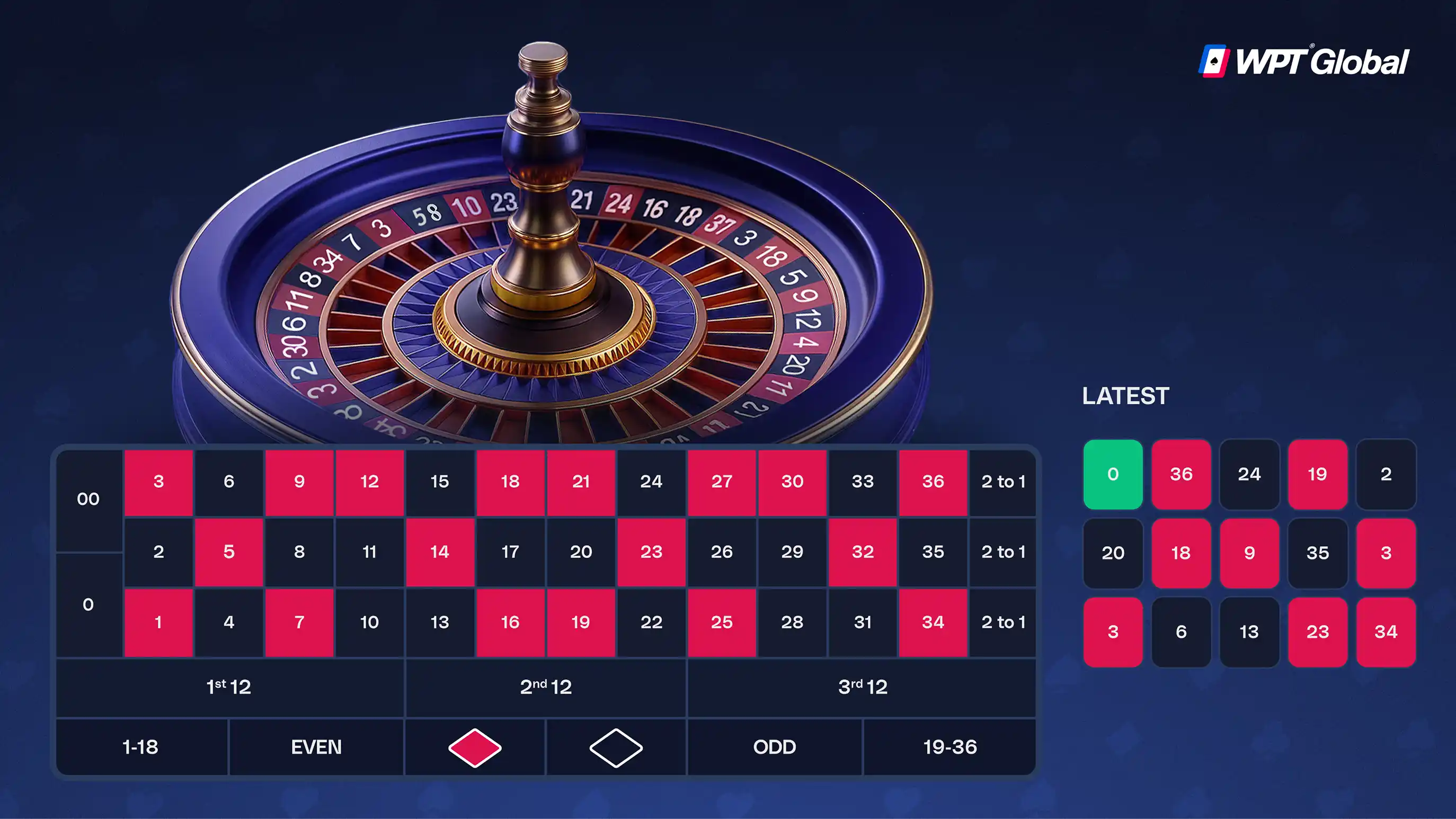
The objective of roulette is to correctly guess the color or the number that the ball will land on.
Roulette's Payouts
The payout size you might receive depends on how precise your choice is. If, for instance, you’ve guessed the ball will land on a single number, you’ll receive higher returns than if you’ve correctly chosen the color of the winning number.
When playing roulette, you can choose from a selection of inside and outside bets:
- Inside bets cover a small range of numbers with larger returns.
- Outside bets cover a bigger range of options with lower returns.
Understanding when to use outside or inside bets is an important part of roulette strategy.
Players can bet on multiple numbers in a game, but roulette is always a game of pure chance. Players don’t have any impact on where the ball lands.
You’ll find the odds for each game in the pay table, and the game version you play will impact the size of any payout.
Step-by-Step: How to Play Roulette
Roulette is one of the easiest games to pick up at the casino. Here’s how it works in just three steps:
1. Place Your Bets
Choose where to drop your chips on the table. Bet on:
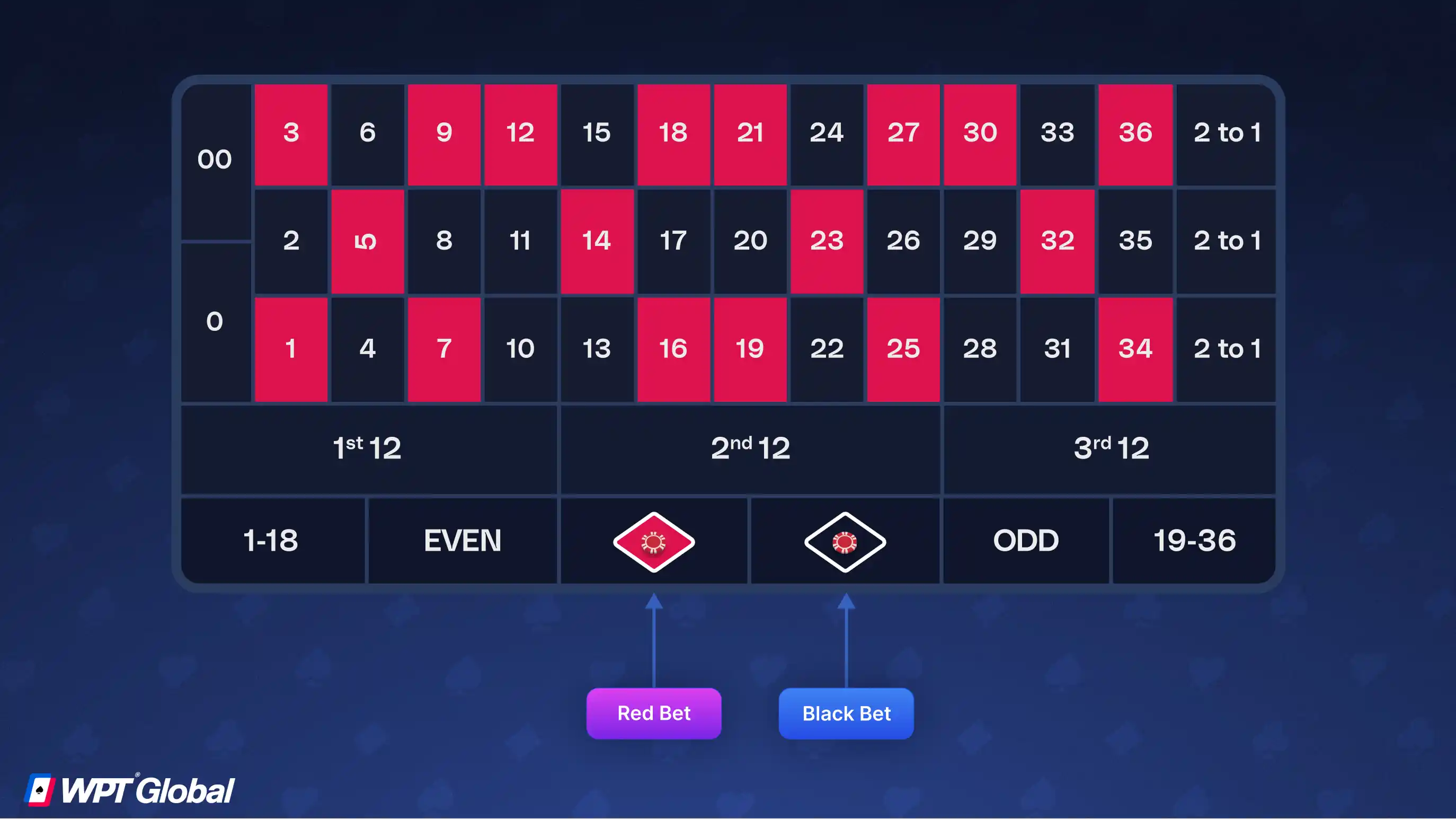
- Red or Black
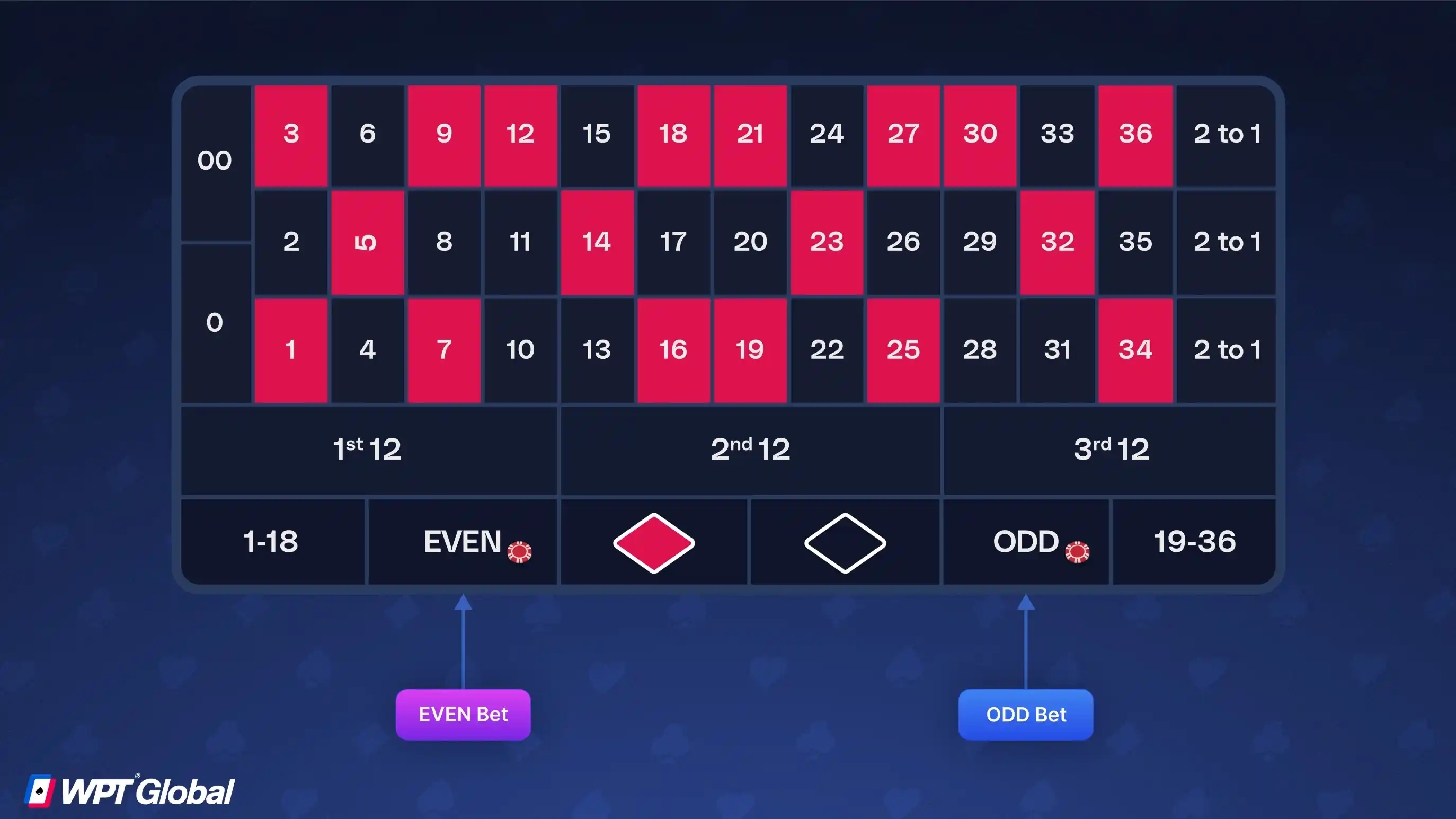
- Odd or Even
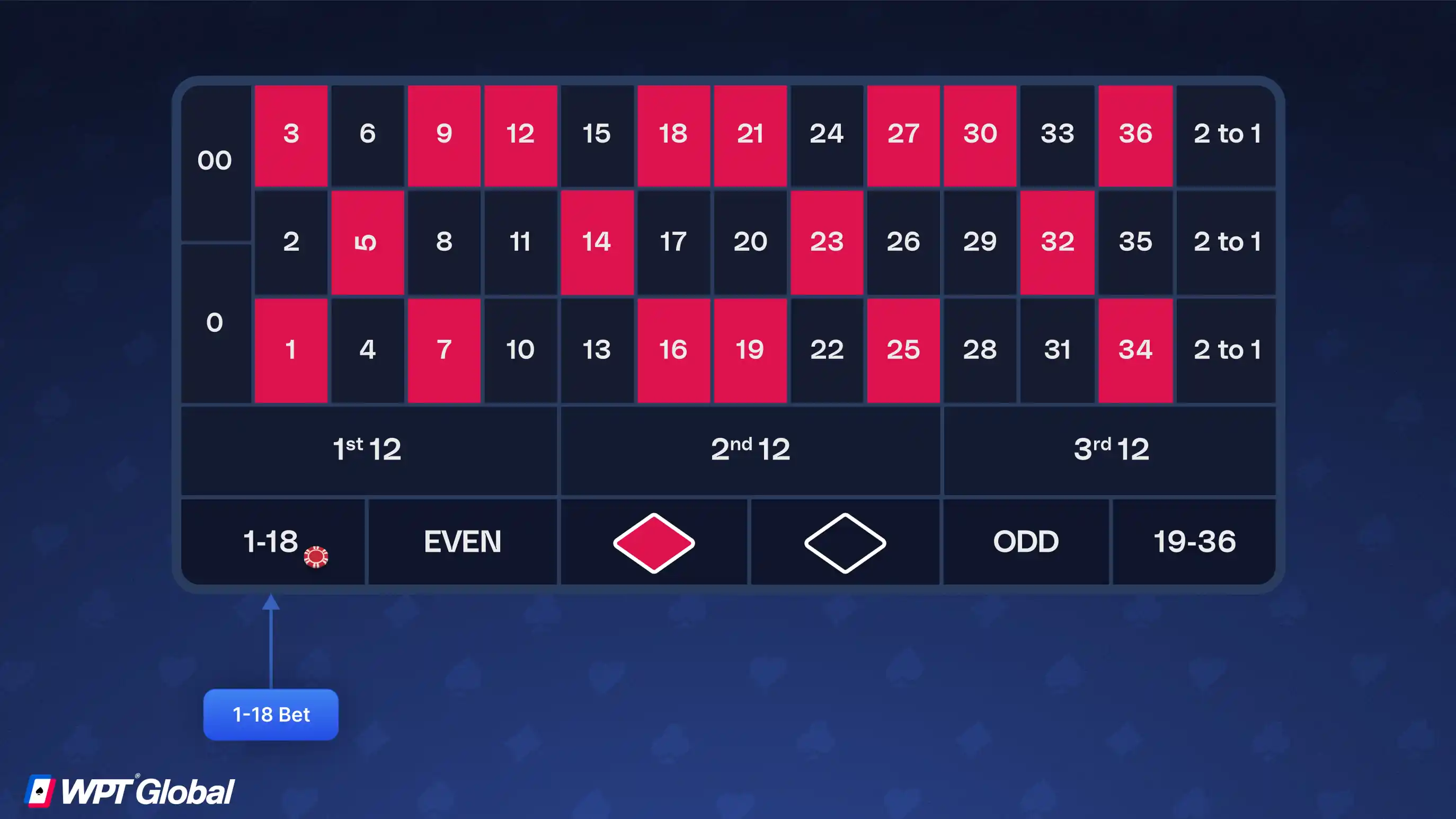
- A Range like 1–18
Feeling lucky? Go all-in on your favorite number. There are dozens of ways to bet—just remember, each one comes with its own risk and reward.
2. Spin the Wheel
Once everyone’s bet is locked in, the dealer (or game software) gives the wheel a spin and sends the ball flying in the opposite direction. When you hear “no more bets,” it’s hands off—just sit back and watch the drama unfold.
3. See Where the Ball Lands
The ball drops into one of the numbered pockets, and bam—that’s your result. The dealer pays out winners, clears the table, and the next round kicks off.
Essential Roulette Terms
Before you begin playing, it’s important to understand the meaning of some common roulette terms you’ll encounter:
House Edge
One term you'll come across when you first start playing roulette is house edge. This is the casino's built-in advantage over the players, which takes the form of zero pockets or double zero pockets. The house edge figure is the percentage of the casino's bets likely to win.
For French roulette, the house edge is 1.35%; for European roulette, the house edge is 2.7%; for American roulette, it's 5.26% and for Mini roulette, it's 7.69%. Roulette tips generally suggest beginners look for wheels with a lower house edge.
Here's the table for ease:
Variant | House Edge | Expected Loss / $100 over 100 spins |
|---|---|---|
French Roulette | 1.35% | $1.35 |
European Roulette | 2.70% | $2.70 |
American Roulette | 5.26% | $5.26 |
Mini Roulette | 7.69% | $7.69 |
Straight-Up Bet
The simplest roulette wager to understand is the straight-up bet. This is placed on a single number on the wheel and offers the highest payout. The downside is that the chances of winning are longer, but this ‘inside bet’ is a popular choice for any player feeling lucky!
Evens Bet
Roulette tips often suggest that beginners and more cautious players begin with an even bet. These bets give you nearly a 50/50 chance of winning, minus the house edge, and can be placed on red or black, odd or even, or low (1-18) or high (19-36) numbers.
Inside Bets
These bets are placed on combinations of numbers or specific numbers on the part of the layout. This might include split bets on two numbers, street bets on three numbers, and corner bets on four numbers. These have a lower chance of winning, but if they come good, they deliver higher payouts for players.
Outside Bets
Outset bets are placed on the outer edges of the roulette table layout and cover broader categories. These typically include red or black, high or low numbers, dozens, odds or evens, and columns. The payouts are smaller but the odds of a win are much higher, which makes them a popular roulette strategy for cautious players looking to build their winnings over time.
Zero Bets
The zero in European roulette and double zero in American roulette are colored green and are not covered by red/black or odd/even bets. When the ball lands at 0 or 00, most bets are lost, apart from those placed directly on the zero.
Roulette Bet Types Overview
Bet Type | What It Means | Odds of Winning (European) | Payout | Best For |
|---|---|---|---|---|
Straight-Up | Bet on a single number (e.g. 17) | 2.7% | 35:1 | Risk-takers, big payouts |
Split | Bet on two adjacent numbers (e.g. 17 & 18) | 5.4% | 17:1 | Moderate risk, good return |
Street | Bet on three numbers in a row (e.g. 1–2–3) | 8.1% | 11:1 | Balanced risk and reward |
Corner | Bet on four numbers in a square (e.g. 1–2–4–5) | 10.8% | 8:1 | More chances, less payout |
Even Money | Bet on red/black, odd/even, or 1–18 / 19–36 | 48.6% | 1:1 | Beginners, steady strategy |
Dozen | Bet on 1–12, 13–24, or 25–36 | 32.4% | 2:1 | Low-risk, better return |
Column | Bet on one of three vertical columns of 12 numbers | 32.4% | 2:1 | Low-risk, better return |
Zero Bet | Bet directly on the green 0 (or 00 in American roulette) | 2.7% / 1.35% (double zero) | 35:1 | Sharp players, niche strategy |
Popular Types of Roulette
While the basics of roulette remain the same, there are some differences in game play depending on the version you’re playing.
The main versions of roulette are:
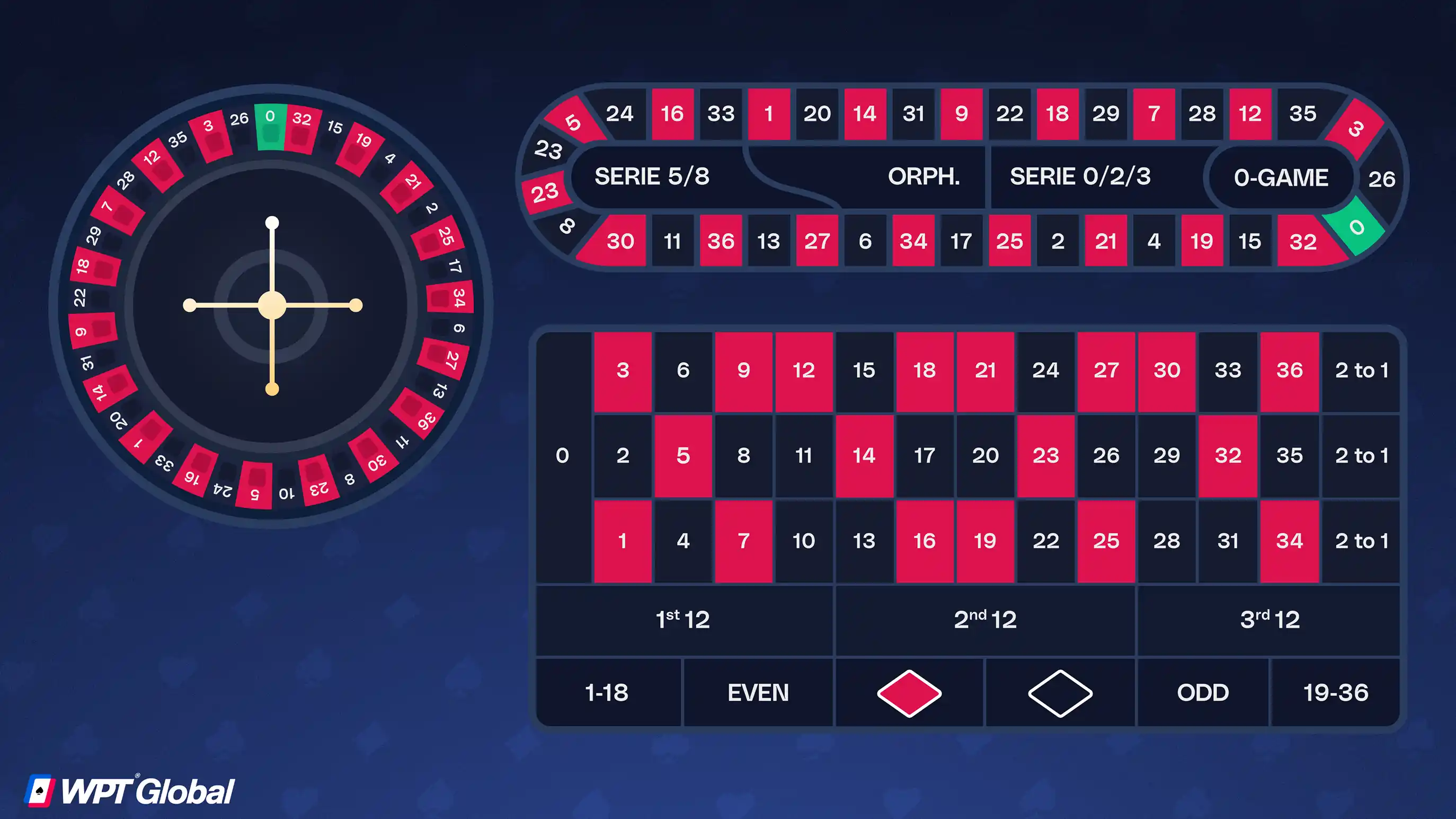
1. European Roulette
The most popular form of roulette worldwide is the European version. Roulette tips often advise beginners to start with European roulette due to its lower house edge. The house wins less often, meaning players have more chance to win at roulette. The wheel has 37 pockets, numbers 1 to 36, and a single green zero.
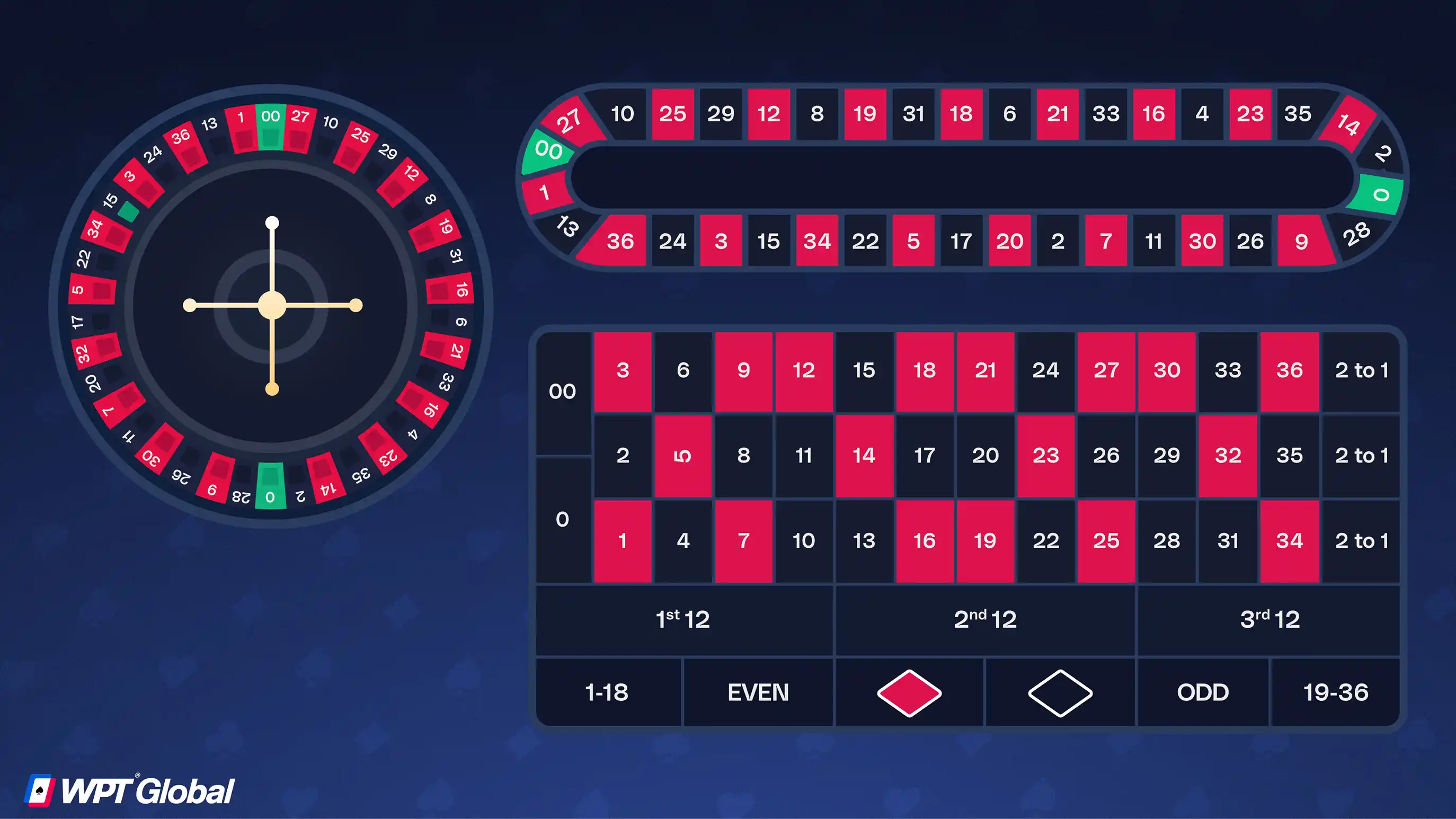
2. American Roulette
Apart from one key difference, American roulette is almost identical to the European version. Where the European game has a single zero, the American wheel has an additional double zero, which increases the number of pockets to 38. This double zero increases the house edge to 5.26%.
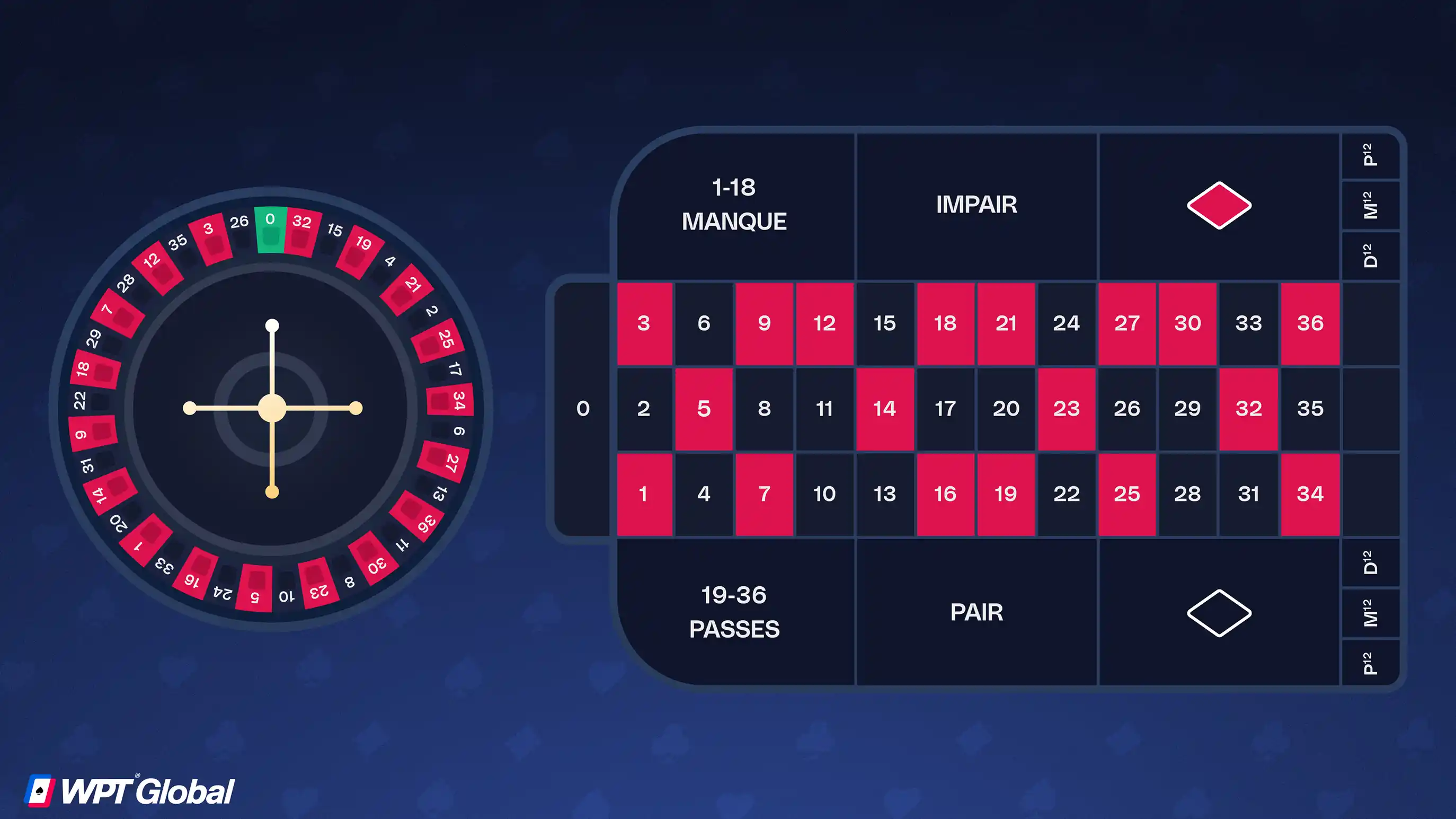
3. French Roulette
The layout of a French roulette wheel is the same as the European version, but there are some variations to the rules that can benefit the player. “La Partage”, sometimes called the sharing rule, says that when the ball lands on zero, players who have placed even-money bets will receive back half of their stake. This means that the house edge is effectively lowered to just 1.35%, giving the players a better chance of winning. French (and sometimes European) roulette will include the ‘En Prison’ rule, where your stake is held over for another spin if the ball lands on zero.
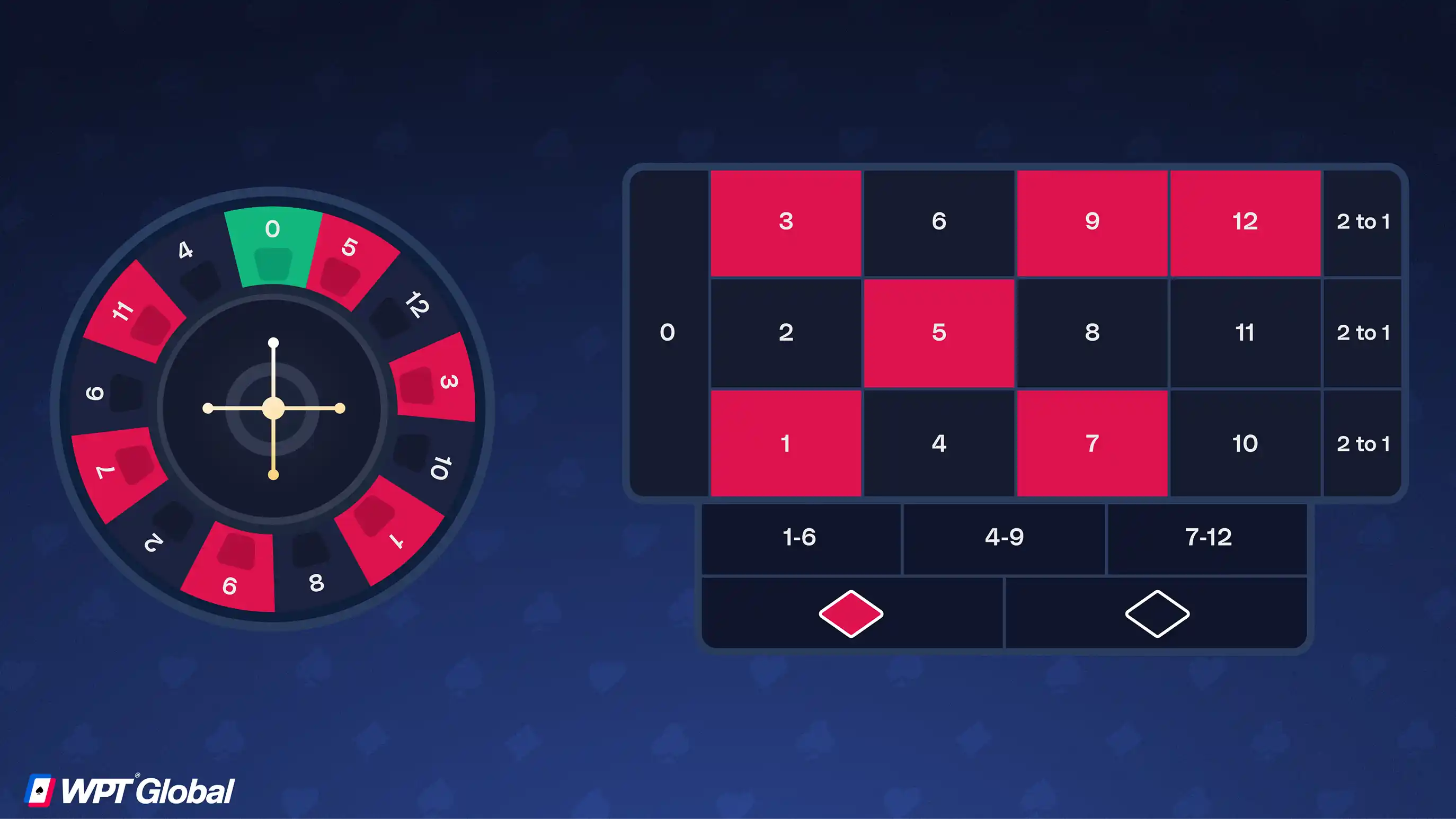
4. Mini Roulette
As the name suggests, mini roulette has a smaller wheel with just 13 pockets. These run from 1 to 12 with a single zero. Because there are few pockets, the house edge increases to 7.69%. Despite the significantly higher house edge, mini roulette is popular with some players due to its speed and simple layout.
5 Roulette Tips & Strategies
Roulette is a game of chance, but there are some roulette strategies that help you enjoy the game for longer, and perhaps slightly improve your odds of winning.
1. Choose Your Table
European or French roulette will have a lower house edge than American or mini roulette, giving players a better chance of winning.
2. Begin with Outside Bets
Betting on red or black, odd or even, or high or low has 50/50 odds minus the house edge. The payouts are smaller, but there’s a much higher chance of winning, so your bankroll will last longer.
3. Set a Budget
Roulette is fast and exciting, and it can be easy to get carried away. That's why deciding your budget before you begin and sticking to it is important. Roulette is all about having fun, not chasing losses.
4. Remember, Roulette is a Game of Chance
Remember that roulette is purely a game of chance. The results are completely random, and it’s impossible to predict how each spin will perform and where the ball will land.
5. Know When to Walk Away
If you’ve won and lost some, and you’re getting to the end of your bankroll, it might be time to walk away. Decide when you’re going to quit and stick to your decision; that way, you can come back and play another day.