













 Customer Dispute Resolution Page
 Help Center
 Affiliate Program







What Is A Sit & Go Tournament?
A Sit-and-Go (SNG) is a poker tournament that starts as soon as a specific number of players join. Unlike scheduled tournaments, there are no fixed start times.
Available in single-table or Multi-Table Tournament (MTT) formats that include hundreds of players, SNGs are the epitome of on-demand poker.
The most appealing thing? New games start all the time. No waiting days for an event. Just pure poker action whenever you're ready.
Are Sit & Go Tournaments Good For Beginners?
Sit and Go's are one of the best ways to learn to play poker. Here's why:
- Accessible stakes: SNGs offer a range of buy-ins, allowing beginners to start with minimal risk. Learn to play and experiment with your strategy—all without jeopardizing your bankroll.
- Simplified strategy: Single-table SNGs provide a streamlined environment for developing your core poker skills. Forget the complexities of MTTs. Concentrate on essential concepts like hand selection, position, and basic betting patterns.
- Bankroll management: Playing SNGs with lower buy-ins is a good way to practice bankroll management.
- Rapid experience: SNGs fill and start quickly. No waiting around involved. As a result, you'll play many more hands in a shorter time, accelerating your experience.
Sit & Go Tournament Variations
SNGs aren't one-size-fits-all. They offer a strategic selection of tournament types, each demanding a distinct approach.
Multi-table Sit-and-Go's scale from 18 to 360 players, providing a test of endurance and broad strategic adaptation. For rapid-fire action with fewer players, single-table formats are ideal.
Here are the core SNG variants you need to know:
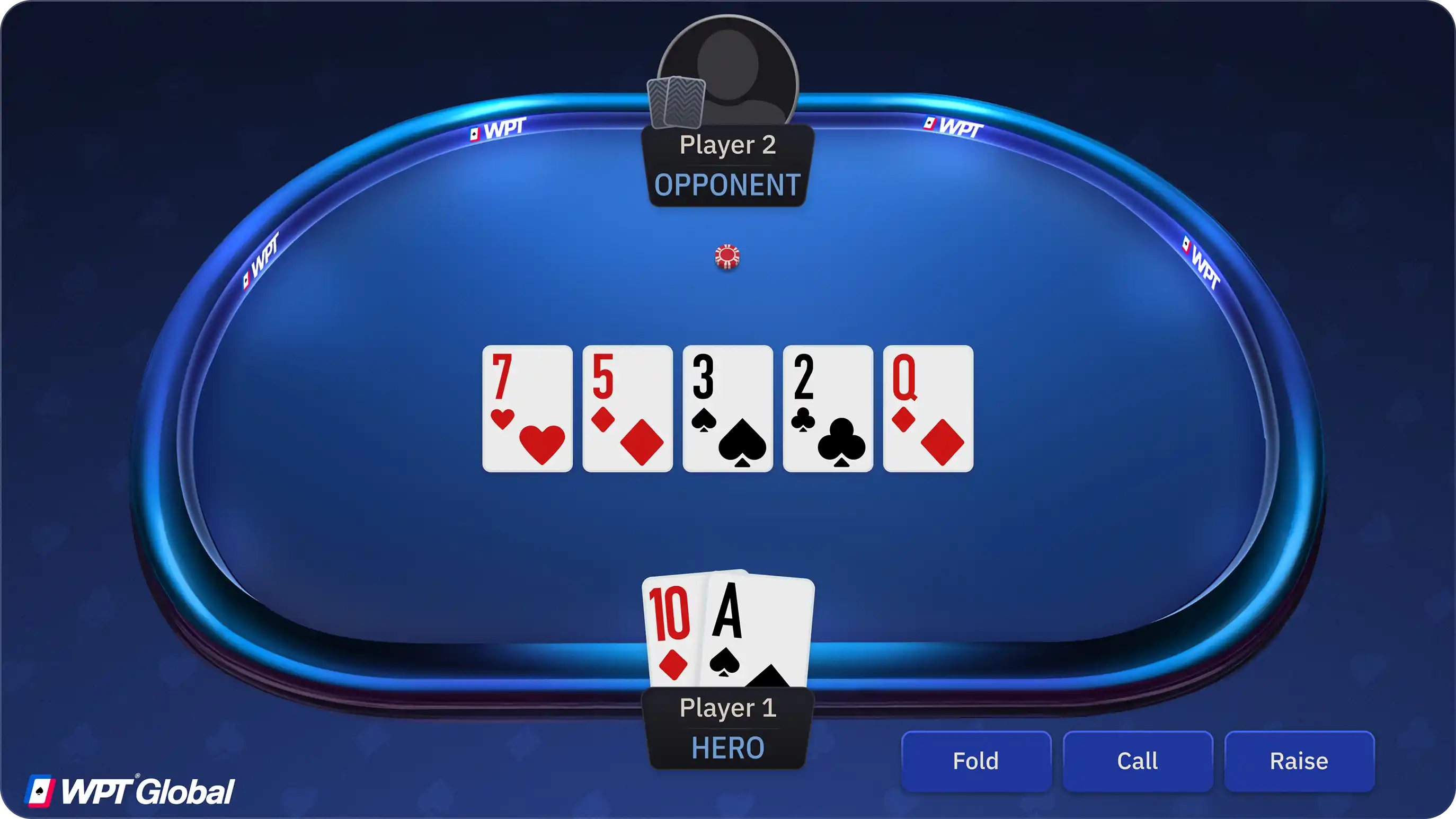
- Heads-Up SNGs: Two players, one winner. This format isolates pure skill.
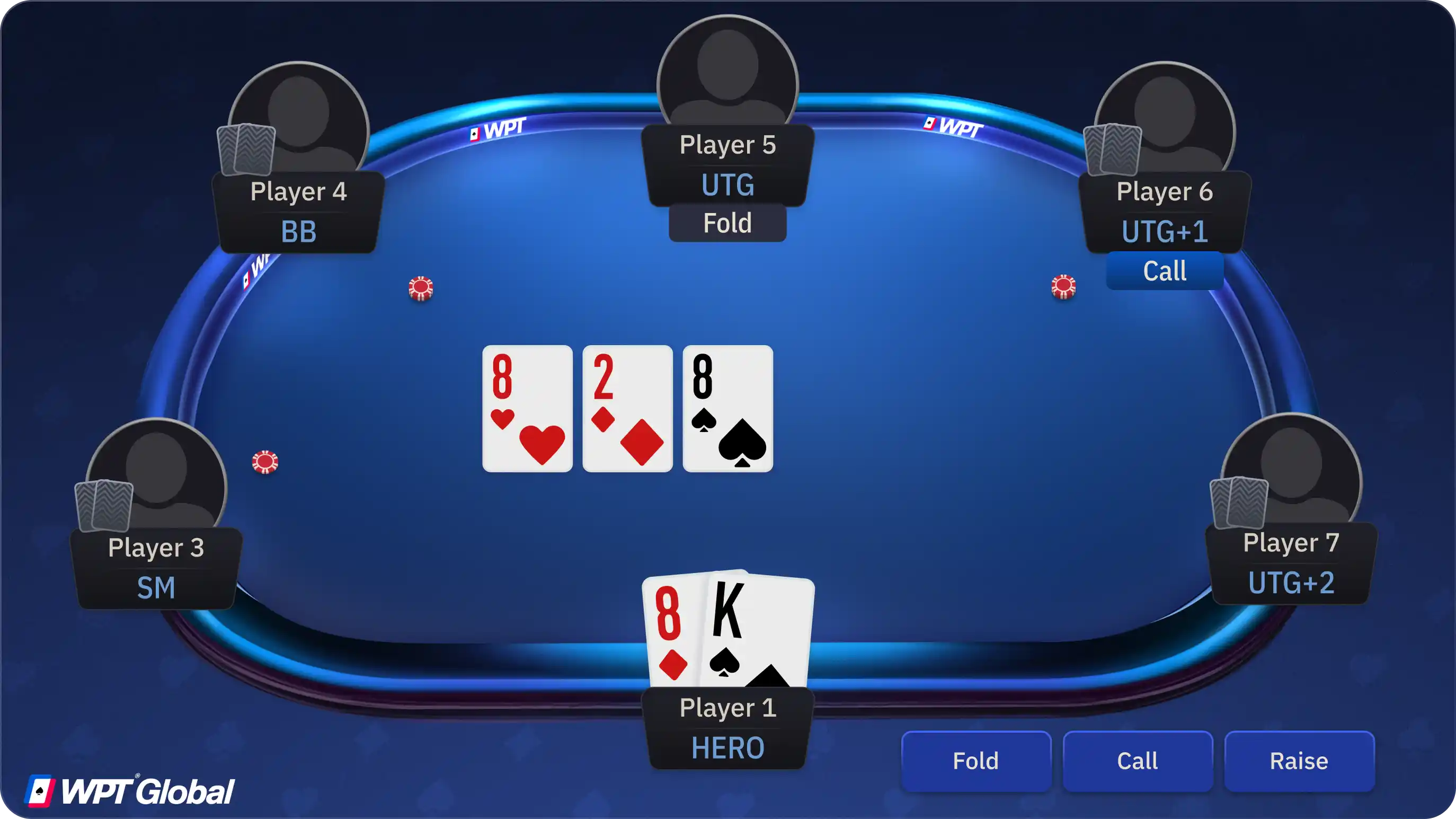
- 6-Max SNGs: Six players, demanding agile strategy and proactive play. Perfect for honing your short-handed game.
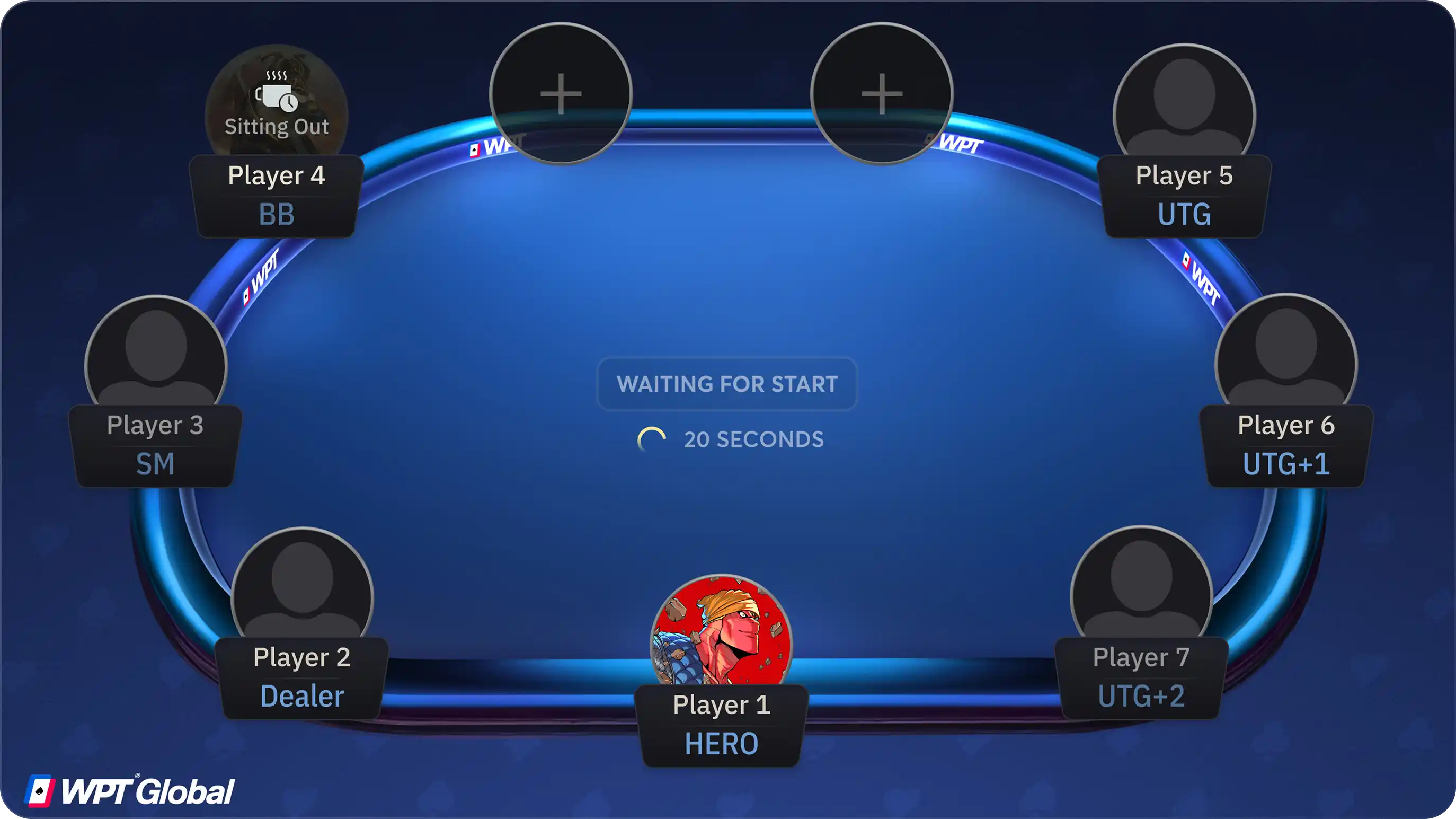
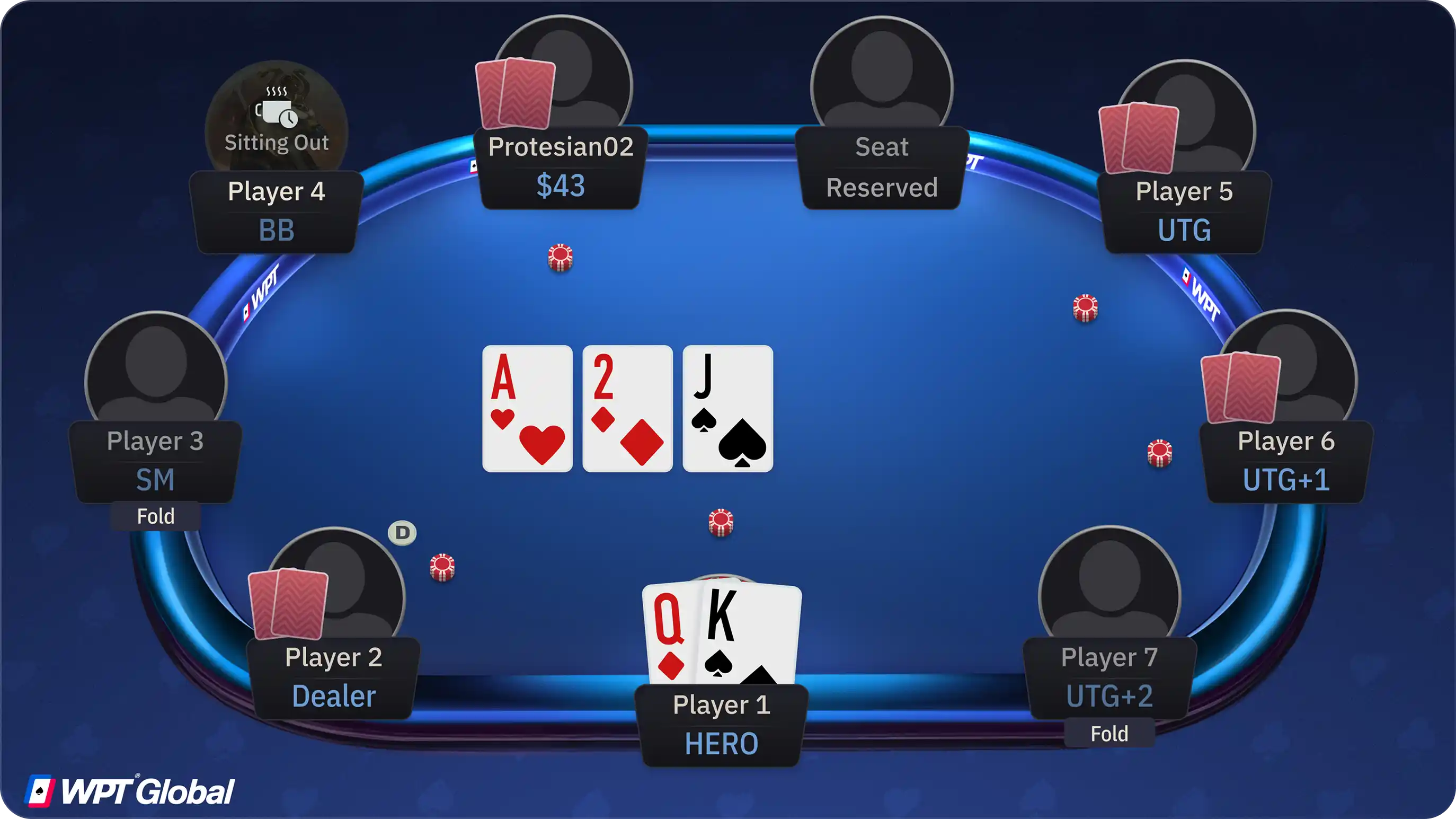
- Full-Ring SNGs: Nine players, a balanced test of poker fundamentals. This is the classic SNG format, offering a solid foundation for your game.
How Do Sit & Go Tournaments Work?
Although Sit & Go variations share core mechanics, their structures differ based on the number of players, blind speed, and payout distribution.
For instance, if there is more than one table, the tournament will follow the MTT format (refer to our comprehensive Multi-Table Tournament guide for details).
While the structure differs between different variations (Heads-Up SNGs, MTT SNGs, etc.), this is how SNGs typically work:
- Buy-ins: All players pay an equal buy-in (entry fee). These buy-ins form the total prize pool and ensure a level playing field.
- Blinds: Blinds (forced bets) increase at predetermined intervals. This drives action and prevents passive play. Turbo and hyper-turbo SNGs feature accelerated blind increases, demanding rapid decision-making.
- Gameplay: Every player begins with the same chip count, emphasizing skill over initial luck. The tournament continues until a single player holds all the chips.
- Payouts: The prize pool is divided between the top-finishing players, depending on the payout structure. For example, the top player could receive 50%, the second-placed player could receive 30%, and the third-placed player could get 20%.
- Duration: SNGs are designed for speed, typically concluding within an hour. This makes them ideal for players seeking quick, decisive poker gameplay. No spending hours playing a single tournament.
What Types Of Poker Are Played In Sit & Go Tournaments?
While Texas Hold'em dominates the SNG landscape, other poker variants are also available:
- Texas Hold'em: Texas Hold'em's simplicity and dynamic gameplay make it the top choice for SNGs. Its popularity ensures a consistent flow of tournaments and players. Plus, it's a go-to choice for those refining their poker strategy.
- Omaha: Omaha, with its four hole cards, introduces increased complexity and action. It's popular among players seeking more frequent and larger pots.
- Short Deck Poker (Six-Plus Hold’em) – Short Deck is a fast-paced variant where all 2s, 3s, 4s, and 5s are removed from the deck, creating bigger hands and more aggressive action.
- HORSE: This mixed-game format tests a player's versatility. It keeps things fresh by rotating Hold'em, Omaha Hi/Lo, Razz, Stud, and Stud Eight-or-Better. This variant is best for experienced players looking to test their poker skills.
- Stud: This is a classic poker variant, occasionally featured in SNGs. The game requires keen observation and memory skills.
Sit & Go Strategy by Stage: How to Play Smart From Start to Finish
Sit & Go tournaments are all about timing. Early on, it’s about survival. As the blinds climb, it’s about momentum. And at the final table—it’s go time.
Here’s how to navigate each stage with smart, winning decisions:
Early Stage
Goal: Stay tight. Let the reckless players knock each other out.
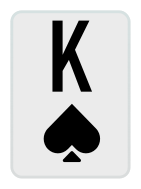
- Before the flop: Play tight and stick to premium hands like,
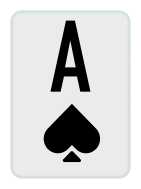
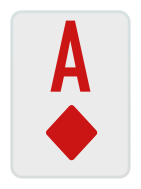 ,
,
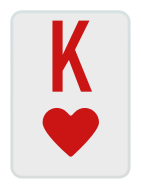 , and
, and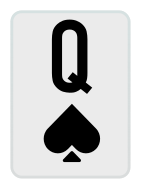
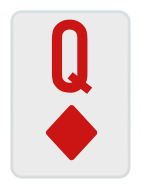 . Don’t get sucked into pots with marginal hands. Fold weak hands from early position—this isn’t the time to gamble.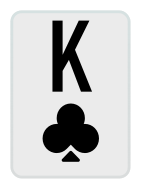
- After the flop: Only continue if you’ve hit something solid like top pair or a strong draw. Avoid chasing speculative draws. Chip conservation is key.
Example:
You’re in middle position with A♣K♠.
- You raise 3x the big blind.
- Two players call.
- Flop comes
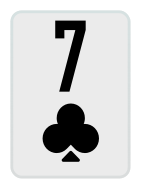
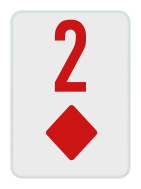
- You’re first to act. You bet half the pot.
- Both opponents fold.
- You win a small but valuable early pot without risking too much.
Mid Stage: Pressure Builds
Goal: Increase your aggression and chip up without risking it all.
- Before the flop: Begin adding hands like,
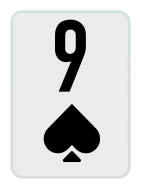
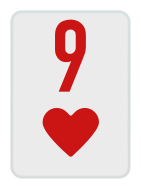 , and
, and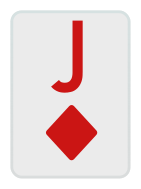 to your raising range—especially in late position. Look for chances to steal blinds and take control.
 - After the flop: Bet strong with top pair or better. Don’t be afraid to shove if your stack is 10 big blinds or less and you’re first to act with a decent hand.
Example:
You’re on the button with 10♣10♦ and 12 big blinds.
- Everyone folds to you.
- You shove all-in.
- Small blind folds.
- Big blind calls with
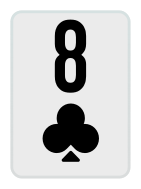
- Board runs out: Q♣6♦2♠3♥J♥.
- Your tens hold. You double up and move into the top half of the field.
Late Stage
Goal: Apply pressure, especially if you're the chip leader. Get aggressive when short-stacked.
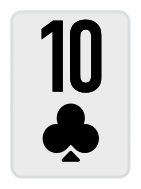
- Before the flop: With fewer players, aggression is key. Jam with any pair, any ace, or strong broadway combos likeor
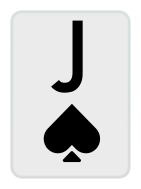 .
.
- After the flop: If you’ve hit anything, bet with confidence. If you’ve missed but your opponent shows weakness, don’t be afraid to make a move.
Example:
You’re heads-up with Q♦J♦ and have a slight chip lead.
- You raise pre-flop and get called.
- Flop comes.
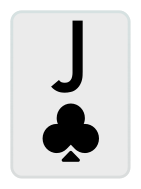
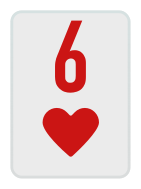
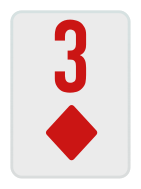
- Your opponent checks.
- You bet 70% of the pot.
- Opponent goes all-in.
- You snap call.
- Opponent shows 8♠6♠.
- Turn and river are safe.
- You win with top pair and take down the tournament.
Why Should You Play Sit & Go Tournaments?
Sit and Go tournaments offer great value for your money.
Here's why you should consider SNGs:
- Time efficiency: SNGs don't last as long as other types of tournaments. So, they're great if you've got limited time and are looking for a tournament that lasts only 1-2 hours.
- Flexibility: Say goodbye to rigid schedules. SNGs launch instantly upon player registration, providing ultimate flexibility. As the name suggests, all you have to do is sit and go.
- Skill development: SNGs are a focused training ground. Adapt to varying stack sizes, refine your opponent reading, and manage escalating blind levels.
- Lower variance: Single-table SNGs minimize the wild swings inherent in larger tournaments. Think more consistent results and a smoother bankroll trajectory.
- Accessibility: You'll come across SNGs with various buy-in levels, and it's pretty easy to find tournaments with low buy-ins. These low-stake options are especially accessible to beginners and those with a limited budget.
Online Vs. Live Sit & Go Tournaments: What's The Difference?
As with other types of tournaments, like Mystery Bounty Tournaments, you can play SNGs live and online. While some elements of SNGs remain the same, there are some differences, too.
- Speed: Online SNGs are usually faster. These tournaments have automated dealing and pot calculations, speeding them up significantly.
- Multi-tabling: When you play online, you can take part in multiple tournaments at the same time. Of course, this isn't possible for live tournaments.
- Reading Opponents: Online, opponent analysis relies heavily on statistical data, betting patterns, and timing tells. Visual cues are absent.
- Convenience: You can access online SNGs from anywhere at almost any time. On the other hand, live SNGS are limited to casino hours and locations.
- Socializing: Live tournaments are a social environment where you can interact with other players in person. Online SNGs are less social but still just as fun and exciting.
Tips For Sit & Go Tournament Success
Want to nail Sit & Go tournaments? Here are some key tips to keep your edge sharp and your chip stack healthy:
1. Avoid Trouble Early On
In the initial stages, prioritize chip preservation. Avoid high-variance plays with marginal hands. Focus on solid hand selection and disciplined folding.
Your goal: Navigate the early blind levels without significant chip losses.
2. Consider Your Position
Position is paramount. Late positions (near the button) provide a significant advantage. In this position, expand your range of playable hands and increase your aggression.
Additionally, use the information gained from earlier players to make informed decisions.
3. Steal Blinds
Stealing blinds is a good way to build up your chip stack without risking a big pot. In late position, identify weak blind defenders (those frequently checking or folding). Don't be afraid to raise with strong hands. This allows you to steal the blinds and gather a healthy amount of chips.
4. Stay Focused
Online SNGs require undivided attention. Avoid distractions like social media and TV. Create a quiet environment where you can fully focus on the tournament until it's over.
Ready to hit the tables and start winning SNGs? Download the WPT Global app now and claim your 100% Cashback Welcome Offer up to $3,000.