












 Customer Dispute Resolution Page
 Help Center
 Affiliate Program








What Is A Multi-Table Tournament?
A Multi-Table Tournament (MTT) is a poker format where players compete across multiple tables, with tables merging as eliminations occur, until one winner remains.
MTTs present a high-stakes, diverse challenge. Expect the potential for massive payouts and the thrill of progressing through a large field of poker players, from developing to advanced playing styles.
Some players adopt a tight approach, carefully selecting hands, while others use an aggressive strategy, especially in the first few levels. The beauty of MTT poker is adjusting your play based on the dynamic nature of the tournament.
Can Beginners Join MTTs?
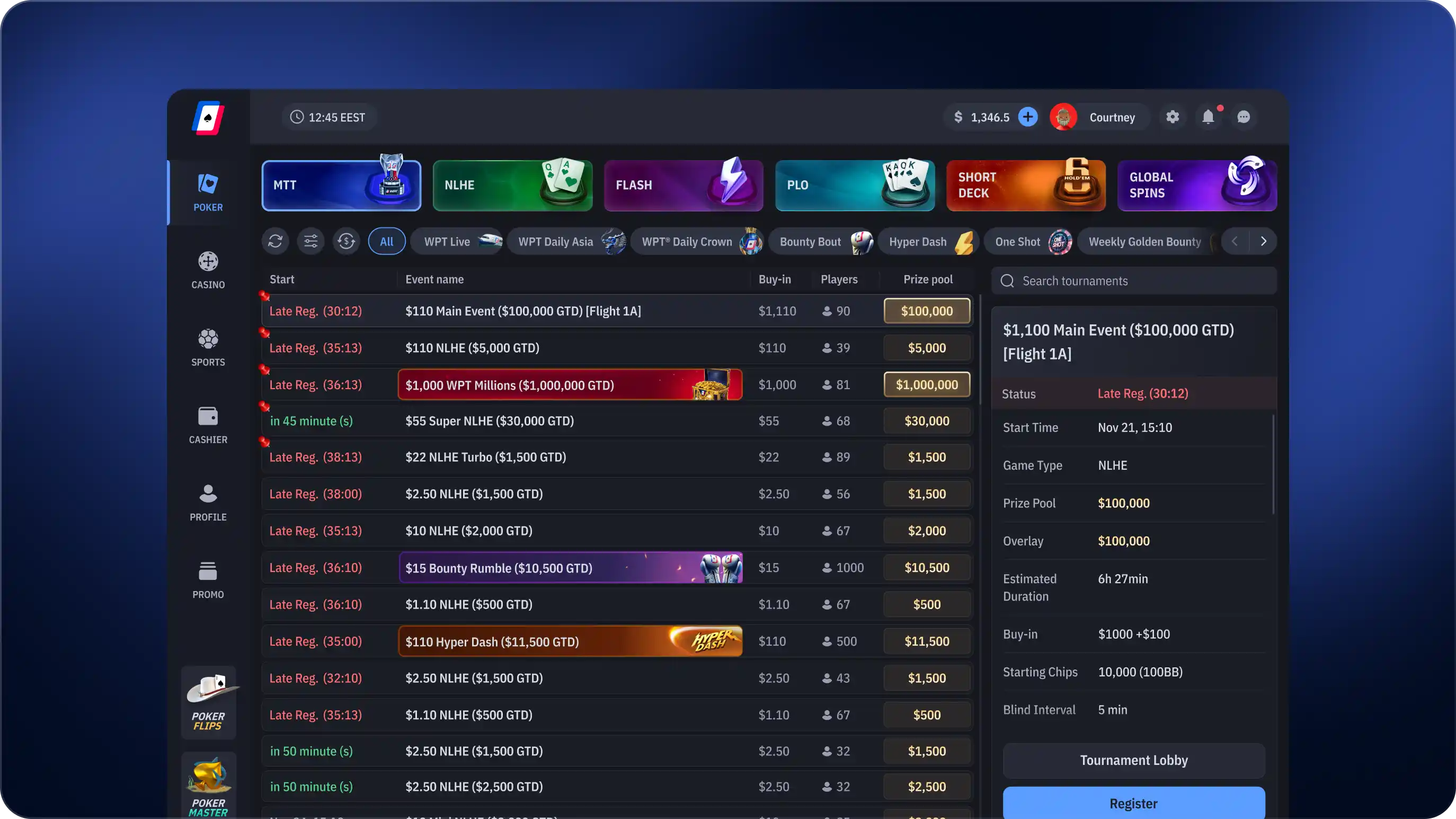
MTTs are popular not only for new poker players but for advanced players too. Online poker tournaments, like those on WPT Global, offer a range of buy-in levels. This includes low-stakes options designed for those still developing their gameplay strategy.
In turn, MTTs allow most players, regardless of stack size or skill level, to participate. Even if you start as a short stack, there’s always an opportunity to make a comeback and win.
How MTTs Work
Before you join an MTT, you need a good understanding of how they work. Once you have this knowledge, focus on battling your way to the final stages.
Buy-Ins
To enter an MTT, you need to pay a fee called a buy-in. All players pay the same amount, and the collected buy-ins form the prize pool (one big pot). So, the more players that enter, the bigger the pot up for grabs.
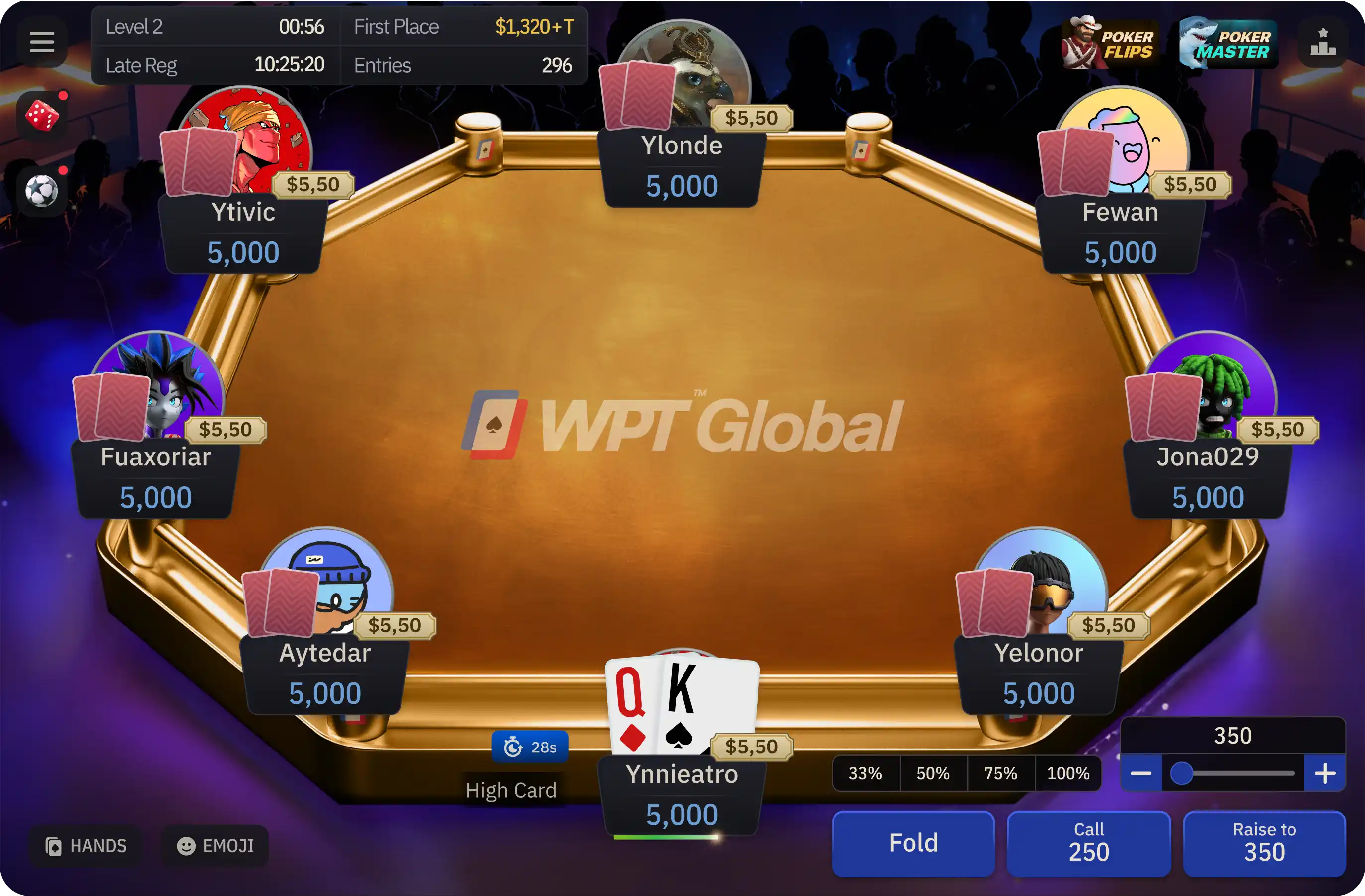
Each player receives an equal starting chip stack. This ensures fairness at the tournament's outset and that everyone has an equal chance to win.
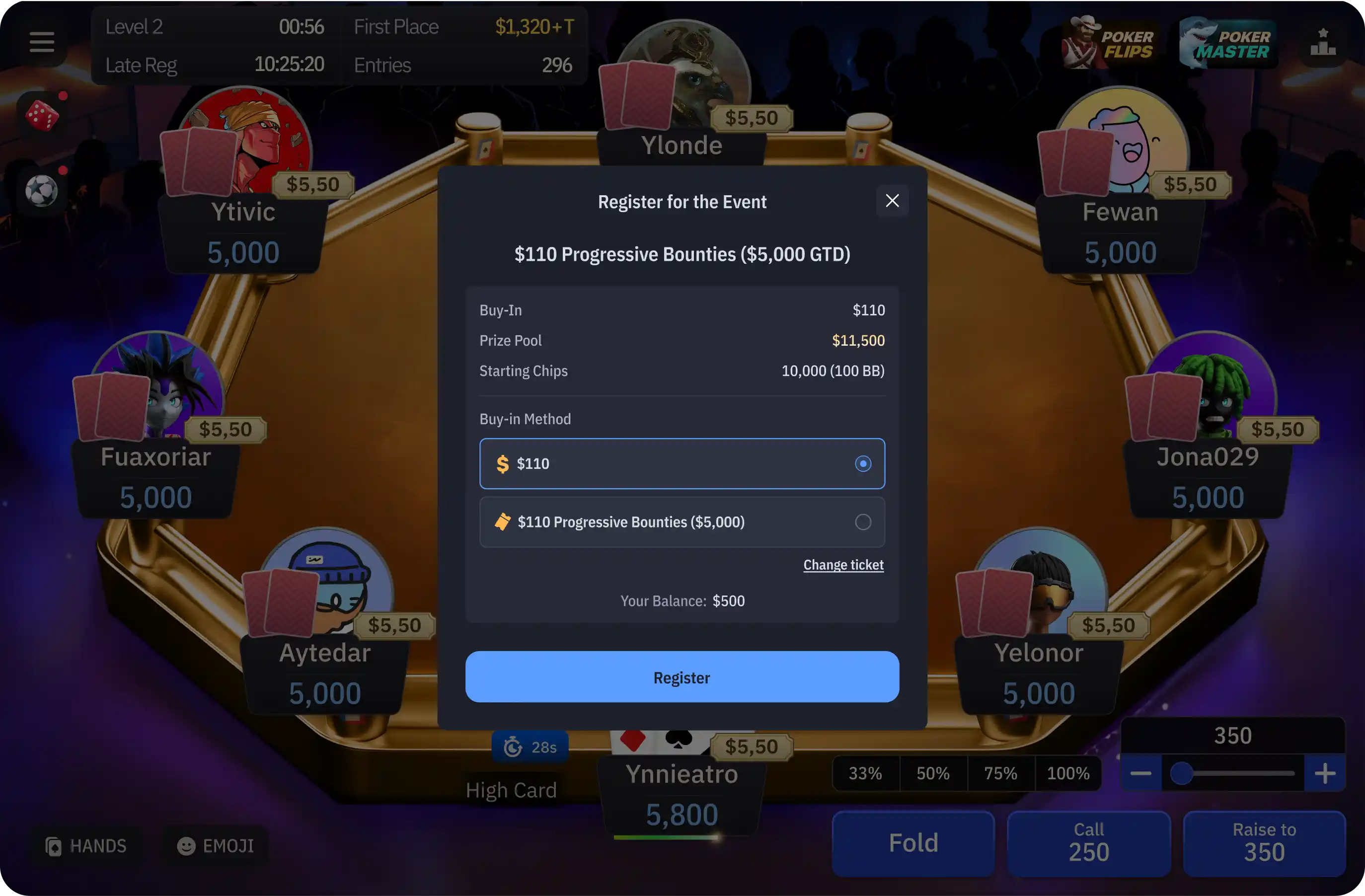
Table Breakdowns & Player Redistribution
At the start of an MTT, you're given a seat at a table. As players lose their chips, they're eliminated from the tournament. This leaves some tables with fewer players than others.
So, to maintain balance and keep things fair, players are moved. Tables with more players go to those with fewer players, known as table consolidation.
This continues until only one final table remains. Players at this table continue playing until there's a winner.
Blinds and Antes
MTTs use escalating blinds to drive action.
At the start of each poker hand, two players post forced bets called blinds. In MTTs, the cost of the blinds increases at set times during the tournament. This is designed to steadily bump up the pot size and accelerate the pace of play.
Later in the tourney, antes are often introduced. Every player contributes to a forced bet before each hand. Expect bigger pots and intensifying competition.
Prize Pool Distribution
One of the best things about MTTs is that you don't usually have to win to take home money. Instead, prize money is distributed among a set percentage of top finishers, rather than just the winner.
For example, let's say 100 players enter an MTT, and the tournament pays out to the top 15% of the field. This means the last 15 players standing will receive a portion of the prize pot.
The higher you finish, the more money you get. MTTs are usually "top-heavy", with the winner taking home a bigger percentage of the pot than anyone else.
MTT Flowchart: How an MTT Progresses
Step 1: Registration & Buy-In → Players enter the tournament.
Step 2: Early Stage → Blinds are low, play is deep-stacked.
Step 3: Mid Stage → Blinds increase, stack sizes vary.
Step 4: Bubble Stage → Players tighten up as the money approaches.
Step 5: Final Table → The last players compete for the biggest payouts.
Types Of Poker Played At MTTs
There are several types of poker commonly played at MTTs. Whatever your preferred game and strength, there's a tournament to suit your skills.
Texas Hold'em
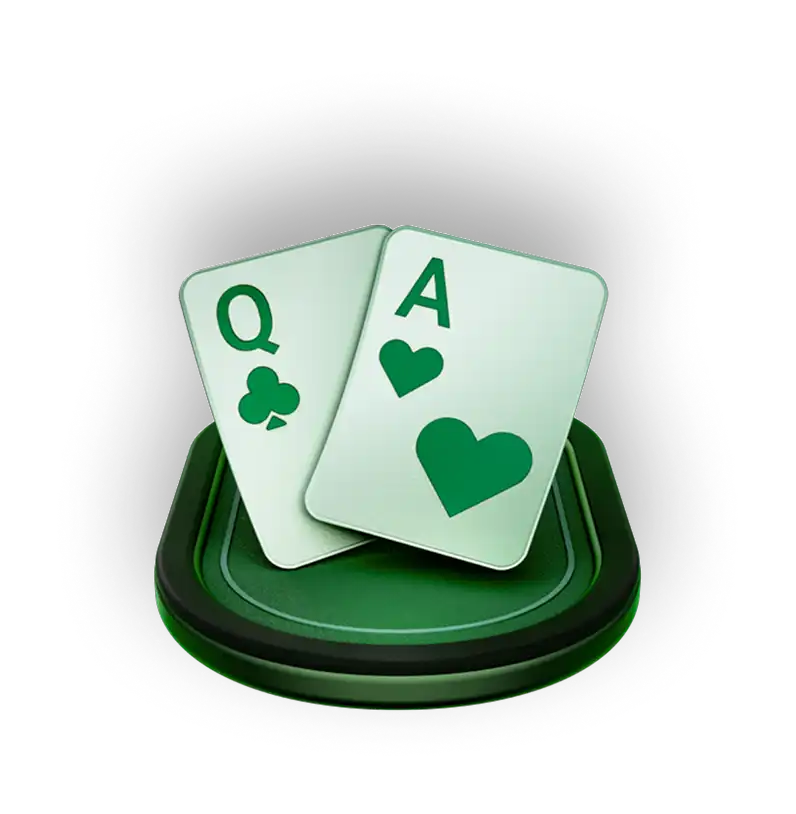
Texas Hold'em is by far the most popular poker variant at MTTs. This stems from its deceptively simple structure: two hole cards, five community cards, and the best five-card hand wins.
Most players are familiar with this format, making it a staple in both online and live poker tournaments.
Omaha
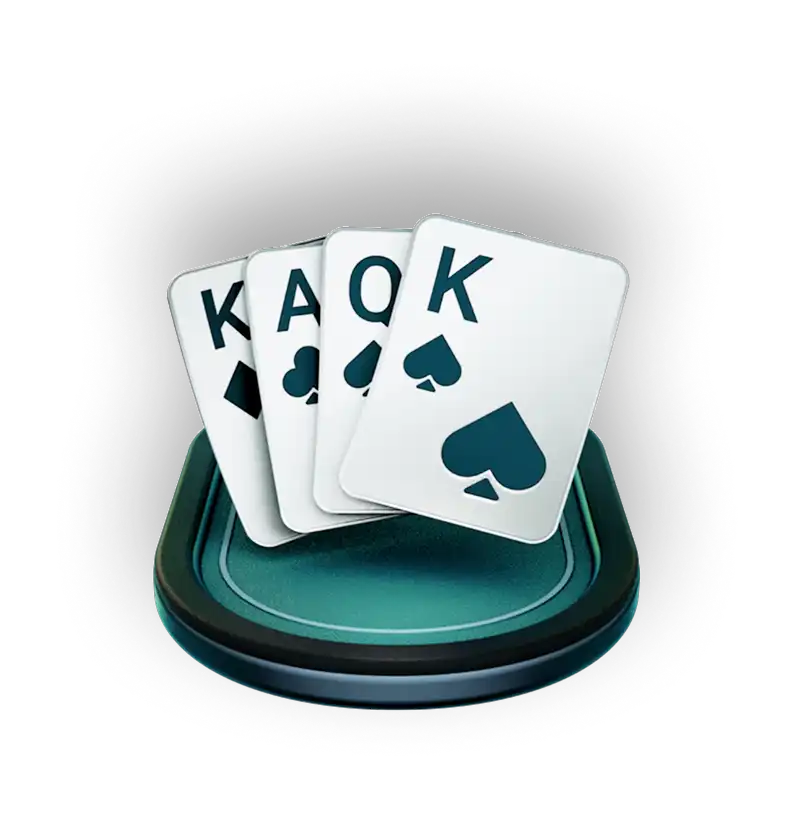
Omaha is a staple in MTT poker, driven by its four-card starting hand format. Think larger pots and more swings compared to Hold'em. This game offers more money in big hands, but also requires a strong understanding of pot odds.

Short Deck
Short Deck isn't as widespread at MTTs as traditional Hold'em or Omaha, but it's certainly gaining popularity. Its defining characteristic—the removal of low-value cards—creates a fast-paced game of action.
Texas Hold'em
Texas Hold'em is by far the most popular poker variant at MTTs. This stems from its deceptively simple structure: two hole cards, five community cards, and the best five-card hand wins.
Most players are familiar with this format, making it a staple in both online and live poker tournaments.
Omaha
Omaha is a staple in MTT poker, driven by its four-card starting hand format. Think larger pots and more swings compared to Hold'em. This game offers more money in big hands, but also requires a strong understanding of pot odds.
Short Deck
Short Deck isn't as widespread at MTTs as traditional Hold'em or Omaha, but it's certainly gaining popularity. Its defining characteristic—the removal of low-value cards—creates a fast-paced game of action.
Many poker players enjoy this format for its unpredictability and the need for aggressive play.
The Different Types of Poker MTTs
MTTs also offer diverse formats. Each has unique strategic implications to suit different bankrolls and playing styles:
- Freezeouts: Freezeouts are straightforward—lose your chips, you're out. No re-entry allowed. This format emphasizes tight, strategic play and risk management.
- Progressive Knockout (PKO): PKOs place a bounty on each player. Eliminating opponents increases your own bounty. But it also makes you a prime target. Aggressive play and bounty accumulation are key.
- Rebuys and Add-Ons: If an MTT allows rebuys, you can buy more chips during a specific part of the tournament. If the tournament has add-ons, you can buy more chips during a designated break period. Use these options wisely to maximize your stack.
- Mystery Bounty: Mystery bounties combine PKO structure with randomly assigned bounties. These are revealed later in the tournament, adding a layer of unpredictability.
- Satellites: Satellites award winners tournament entries, not cash. They provide a cost-effective path to higher-stakes MTTs.
- Guaranteed Prize Pool Tournaments: These MTTs ensure a minimum payout, regardless of player count.
Benefits Of Playing Multi-Table Tournaments
The structure of MTTs makes them both a thrilling and intense experience. Besides the excitement, there are many other reasons to play MTTs, such as:
- Large prize pools: As MTTs are so popular, they usually involve a high number of players. More players = a bigger prize pool.
- Low buy-in to prize ratio: MTTs often feature low buy-ins relative to potential payouts. Compete for substantial prizes with a modest investment.
- Opportunity to improve skills: MTTs expose you to a wide spectrum of skill levels and playing styles. Learn from the best of them and accelerate your strategic adaptability.
MTT Poker Strategy by Stage: How to Play in Early, Mid, and Late Stages
A successful MTT poker player adjusts their strategy as the tournament progresses. Each phase of the tournament requires a different approach.
Early Stage Strategy (Survival & Chip Accumulation)
Main Goal: Play tight and disciplined to preserve your stack while looking for value opportunities.
Key Moves:
- Play tight, focusing on pocket pairs, high suited connectors, and premium hands (AA, KK, QQ, AKs) aggressively to build a strong chip foundation.
- Avoid unnecessary coin flips (risky all-ins) unless you have a clear edge.
- Steal blinds selectively but don’t overextend—early blinds are small.
- Observe opponents—identify loose, tight, and aggressive players.
Example Hand Play:
- You hold:in middle position
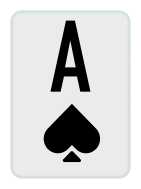
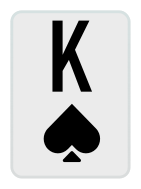
- Blinds: 25/50
- Pre-flop action: UTG raises 3x BB, you re-raise to 9x BB (standard play with a strong hand).
- Flop: K♦ 7♠ 2♥
- Best move: C-bet 50%-70% pot to protect your top pair and charge draws.
Mid Stage Strategy (Stealing & Stack Management)
Main Goal: Chip accumulation becomes crucial as blinds increase.
Key Moves:
- Open your range slightly—steal more blinds and re-raise aggressively in position.
- Pressure small stacks—force folds with well-timed aggression.
- Defend your blinds selectively—avoid letting aggressive players steal from you easily.
- Play positionally aware poker—avoid multi-way pots without strong hands.
Example Hand Play:
- You hold:on the cutoff

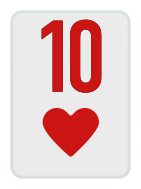
- Blinds: 500/1,000 (100 ante)
- Pre-flop action: All players fold to you. You raise to 2.5x BB to steal the blinds.
- Button folds, SB folds, BB calls.
- Flop: 9♠ Q♣ 3♦ (You have an open-ended straight draw)
- Best move: Continuation bet 40%-50% pot to apply pressure and potentially hit your draw.
Late Stage Strategy (Bubble & Final Table Play)
Main Goal: Maximize money while avoiding unnecessary risks.
Key Moves:
- Tighten up when approaching the money bubble—other players will fold to survive.
- Increase aggression near the final table—many players play tight to avoid elimination.
- Short stacks should push all-in wider—you should be blind stealing to stay alive.
- Big stacks should pressure mid-stacks—force them into tough decisions.
Example Hand Play:
- You hold:on the button
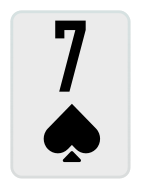
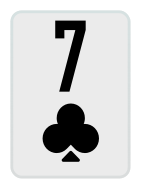
- Blinds: 20,000/40,000 (5,000 ante)
- Stack Sizes: You (800,000), SB (1.2M), BB (350,000)
- Pre-flop action: Everyone folds to you.
- Best move: Open-raise to 2x BB or shove—BB is short-stacked and may fold weaker hands.
What's The Difference Between Online Vs Live Poker MTTs?
While the core MTT format remains consistent, online and live environments present distinct differences.
Online Poker MTTs: Speed and Volume
Online poker tournaments are characterized by rapid gameplay, with more hands in less time. This also allows players to participate in numerous tournaments at the same time. This is known as multi-tabling, which is about maximizing potential profit.
Plus, online tournaments are readily available, with events starting around the clock.
Live Poker MTTs: Physical Tells and Deliberation
Live MTTs are all about a slower, more deliberate pace. While not always as exciting as online poker games, you have more time for strategic decision-making.
Live play also allows for the observation of physical "tells" that could suggest bluffing. This additional information is ideal for assessing hand strength. Experienced players often use slow play techniques to trap aggressive opponents.
Tips For MTT Poker Success
Now you're ready to hit the tables. Follow these expert tips to fight your way through the early stages and take home your share of the prize:
1. Where you sit matters
In poker, sitting late (closer to the dealer button) means you can see what other players do before you make your move. Use this information to make bluffing and betting decisions wisely.
2. Be patient
Early stages demand patience. Avoid unnecessary risks. Play tight and preserve your stack while watching for opponents' weaknesses.
3. Be prepared to adapt
Your strategy must evolve with your stack (number of chips). A large stack allows for aggressive plays. A short stack requires you to play tight, focusing on survival.
If you're ready to put these tips into action, download the WPT Global app and start your game! It's time to test your MTT poker skills and grab yourself a portion of the prize pool.