











 Customer Dispute Resolution Page
 Help Center
 Affiliate Program
Play Anytime, Anywhere
In this article




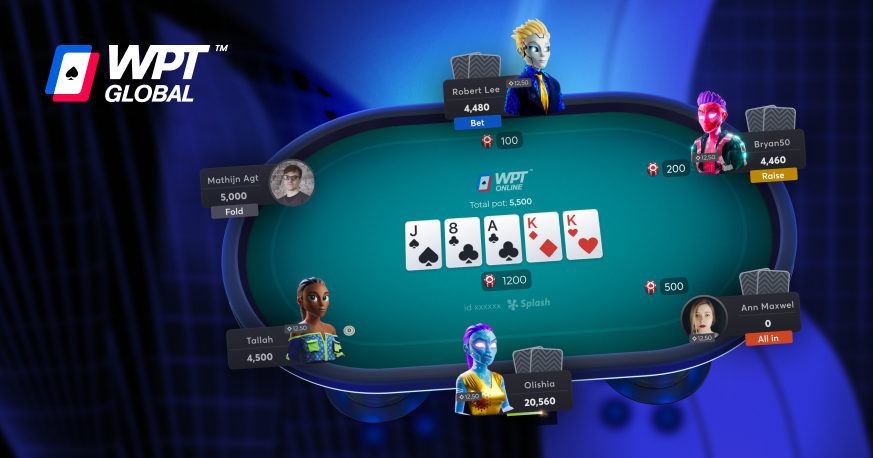





As an online player, you may have had this thought in the past. It may happen somewhere around the second (or third) losing session of the week. Am I running bad, or are the games getting tougher?
It's a real question. And a difficult one, because the honest answer isn't a clean yes or no. It's a paradox, and the 2026 numbers help paint the picture.
More people are playing online poker than ever. The games are also harder to beat. Both things are true at once. To unpack them, one must be careful about which numbers are watertight and which are guesses. So let's do that.
Let's start with the good news. Online poker is not shrinking. It's booming.
In May 2026, a poker site recorded more than 900,000 players online at the same time. It's a concurrency figure no operator had ever approached. What’s more, it was a leap from its own previous record of around 600,000 set the year before. It's a staggering measure of demand. Hundreds of thousands of people, at once, wanting to play.
The broader picture backs it up. Take the traffic reports in 2026. These draw on tracking data from services like SharkScope, and show growth across most of the market. The large majority of measured cash networks are up over a recent 30-day window, with liquidity concentrating on the sites offering the biggest guarantees and the softest pools. Whatever is happening to the games, a lack of players isn't it. The demand side of online poker is as healthy as it has ever been.
Here's the other half. Record traffic doesn't mean easy games. There are several forces that have raised the bar.
The biggest is the democratization of strategy. A decade ago, solver-level understanding of the game was the luxury of a small elite. Now GTO study is cheap, everywhere, and increasingly automated. You can access hand-history reviews, AI-assisted analysis, and near-instant feedback tools. The skill floor has risen. The edges that used to come from simply knowing more than the table are thinner than they were.
Rake compounds it. When the house takes a larger cut, it eats directly into already-slim margins. Many independent observers noted rising rake as a defining feature of the 2026 online market. A thin edge minus a bigger rake is a thinner edge still.
And the soft seats are harder to find as more players study and more regulars cluster around the games with the best structures. So, the recreational players that winners depend on spread thinner. The barrier to making money has changed. It used to be about finding a game, and now it's about having an edge once you sit down.
No account of online poker in 2026 is complete without the security arms race. This is where the data is genuinely hard.
The operators have gone on the offensive against real-time assistance (RTA) and bots. In one 2026 enforcement sweep, one site's Poker Integrity Council permanently banned around 40 accounts linked to real-time assistance (RTA). They confiscated roughly $1.2 million in funds, crediting the money back to affected players within about 48 hours. The detection has grown stronger. Rather than catching a bot mid-hand, sites now compare millions of hands. The analysis flags patterns that no human could sustain over a large enough sample. Every major site now bans RTA and bots outright, with permanent bans and fund seizures being the standard penalty.
It's good news for the game's health. Games are arguably fairer now than during the bot-panic years, and money stolen by cheats can be saved. But it cuts both ways for the difficulty question.
Looking at data from strategy analysts: bots and RTA may have removed the weakest players faster than the strongest. Losing recreational players get ground down and leave; a disciplined cheat can profit for a long time. If that's correct, then cleaning up the games also thinned the recreational pool that winners rely on. It's leaving a tougher field behind.
This is the section many articles skip, and it's the one that matters most. Difficulty is a hard thing to measure directly in poker.
You'll see a specific number cited a lot. The average winning player's return on investment has fallen from around 35% in 2020 to about 20% in 2026, with edges now down to fractions of a big blind. It's a striking figure, and it may be true.
But it should be read for exactly what it is. It's an estimate published by a coaching and training site, with the methodology and sample undisclosed. Sites that sell poker training and rakeback have a commercial interest in the message "the games are hard, so keep studying (with us)." That doesn't make them wrong. But it does mean their win-rate figures are talking points, not industry statistics. No one should repeat "35% down to 20%" as established fact.
So what's the line between what we know and what we're guessing?
Solid: participation is at record highs, traffic is growing across most networks. Rake has risen, and the operators are seizing money from cheats by the seven figures. Inferred: that average win rates have compressed, that fields are uniformly tougher, that edges have shrunk to slivers. The claims are reasonable. They fit the mechanics of solver-era poker, but they're arguments built on incomplete data. A read of 2026 keeps that distinction visible rather than claiming estimates as fact.
None of this adds up to "poker is dead". Record traffic kills that story. But, it's not exactly a gold rush either. What the data supports is more useful: online poker is harder to beat than it used to be, and bigger than it has ever been.
Tellingly, even the most pessimistic voices in the space land on the same phrase: harder than ever, but still beatable. Coaches still publish "how to crush the small stakes" material because studied, disciplined players still win. The edge now has to be earned rather than inherited.
The players who come out ahead in 2026 are the ones doing the unglamorous things well. Choosing their games and stakes carefully. Folding more than feels comfortable. Studying the spots that actually recur, and staying disciplined when the swings get loud.
The barrier moved. It used to sit between you and a seat; now it sits between you and an edge once you're in the seat. The game has got harder, and for the players willing to keep learning, that's not a reason to quit. It's the whole reason there's still money in it.

By most reasonable measures, yes — the skill floor has risen with solver and AI study tools, rake is higher, and recreational players are spread thinner. But it's harder to beat, not shrinking: participation is at record highs.
For studied, disciplined players, edges still exist — even pessimistic sources call 2026 poker "harder than ever but still beatable." It is not, and never was, guaranteed money, and win rates are thinner than in past years. Treat any specific "average ROI" figure with caution; the widely cited ones come from training sites, not audited data.
Bots and RTA are a real threat, but operators are enforcing hard against them — GGPoker's 2026 sweep alone banned around 40 accounts and seized roughly $1.2 million, with refunds to affected players. Detection now relies on large-scale statistical analysis across millions of hands.
Because the two aren't linked. Record traffic reflects demand; difficulty reflects how well the average opponent plays. More players are studying with better tools, so the typical field is stronger even as the crowds grow.


 Local Payment Methods
 Cards
Cards Crypto
 E-Wallets
 Apple Pay
 Google Pay
 Instant Bank Payments
Some methods may not be available in your region. Please contact support if you experience any issues.