















 Customer Dispute Resolution Page
 Help Center
 Affiliate Program
In this article
Welcome to WPT Global
Welcome to WPT Global, the online home of the World Poker Tour®. Let us guide you through setting up your account and get you to the tables in no time.Social Media


How To Play
World Leading Tournaments
A huge player pool and everything from freerolls to high rollers – plus regular special events!Ambassadors
Get to know our ambassadors - world-class players from across the globe who embody the spirit of the game. Discover their stories and become part of the community.Your Hub for News
Explore stories, tips, and updates from the world of poker and casino. Learn from pros, discover new trends, and stay in the loop with everything happening at WPTGlobal.What are you looking for?
Close




Poker Bots vs RTA: What's the Difference?
Share






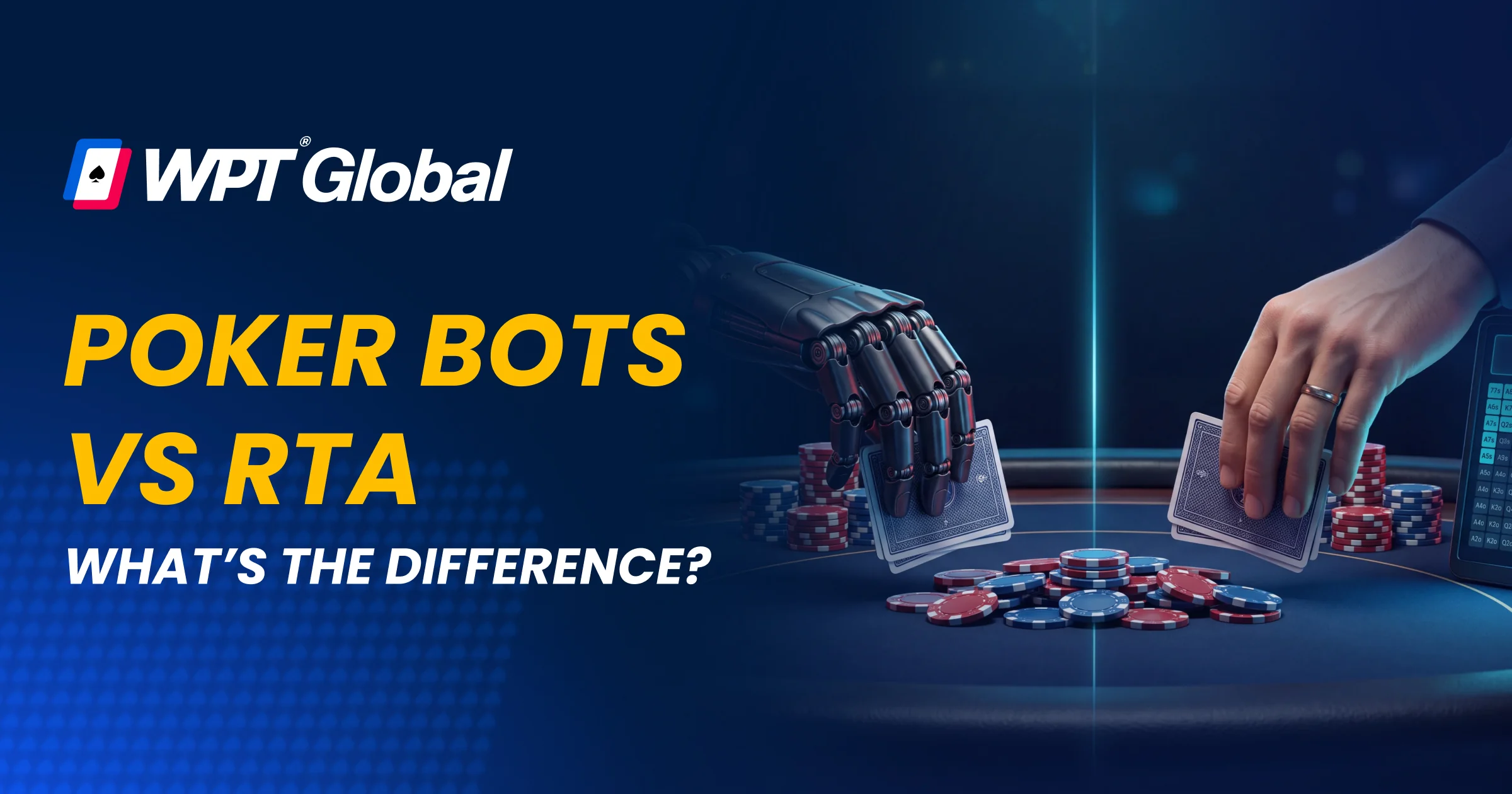
"Bots" and "RTA". These two terms are related, but they aren't identical. The difference comes down to one question: who's actually clicking the buttons?
Here's the clean explanation.
A bot will play poker games for you, and play almost perfectly. It's software that uses solvers to execute every decision on its own, with no human needed. RTA stands for real-time assistance. A human is making the decisions with a "correct" play mid-hand from a solver or tool.
Both are cheating, and most places have banned them. The main separator is whether a person is still in the chair.
What a poker bot actually is
A bot is autonomous software that connects to the poker client and plays itself. It reads the board, decides on an action, and clicks the button. It uses things such as automated charts and preflop solvers to make live decisions.
A bot can do a lot of things we as mere human beings can't. It can play for 24 hours a day, dozens of tables at once, no rest, no misclick, and act with machine-consistent timing.
The technology behind the best of them is the same AI lineage that beat the pros. For example Carnegie Mellon's Libratus in 2017, then Pluribus at six-handed play in 2019. These machines settled the question of whether a machine can out-play humans. However, people are building human mimicking AI. People build bots to behave like a human, varying timing and movements to not look like software.
The AI technology used for poker cheating is the difficult part for operators worldwide.
What RTA is
RTA is different, as it's not automated, it's a tool you use as a player.
It usually goes like this. You sit at the table and play your own hands. However, you have a solver or tool (programs like PioSolver or PokerSnowie) to get the optimal play. You then input it yourself.
In the online sphere, this has been quite a common sight for those wanting to cheat the system. The player provides the hands and the clicks and maintains a human façade. The solver/software provides the answers.
The cheating is happening on a second screen.
Study versus real-time
Solvers are an amazing tool for leveling up as a poker player. If you memorise outputs with intense and committed study, you will improve as a poker player. This is without a doubt.
Standard, legitimate study can be the following. For example, using a solver to review hands after your session. Or running equities away from the table. Plus keeping notes and tracking software, drilling preflop charts.
None of it is illegal. The important moment is when you use it. Take any of those tools and use them to decide on a live hand, and you've crossed into RTA, which is banned. The dividing word is "real-time."
Off the table, for study: fine. During the hand, for a decision: cheating. Keep that line straight, and your software is nothing to worry about.
How sites catch each one
The detection problem varies for the two.
Bots are the easier catch, because they leave recognisable patterns.
Sites use detection software trained to look at behavioural and input signals. Bots typically have:
regular timing.
tell-tale mouse-movement patterns.
lack of errors or fatigue.
sessions that run around the clock.
device or virtual-machine signatures.
Automation leaves a digital fingerprint, and over enough hands it shows. It's easy for a bot detector to find this and flag it for human review. RTA is far harder. Since a human is executing every action, there's no automated input to detect. So sites tend to rely on statistics and scrutiny. The players that receive penalties or bans usually have characteristics in their play.
These can be decisions that track solver output far too closely over millions of hands. Also timing signatures (a long, consistent tank followed by the perfect action). Sites use screen-monitoring that looks for solver software running alongside the client.
Operators now run this analysis through their sites. It's now common to compare millions of hands to find patterns no unaided human could produce. Game integrity teams that combine internal staff with outside experts will then check. It's better than it used to be, but RTA remains genuinely difficult to prove.
The penalties, and the real cases
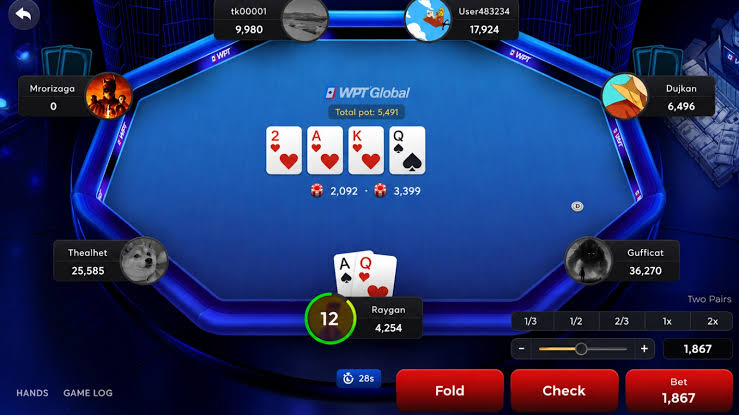
Every major site bans both bots and RTA, and has taken a hard line since around 2020. The standard penalty is a permanent ban plus confiscation of your winnings. The seized funds often go back to the affected players.
There are some big recent cases. In 2020, Fedor Kruse was banned from a poker site for real-time assistance. He was using a second computer loaded with precomputed GTO solutions that he consulted mid-hand. The site confiscated a reported $250,000.
His case is a typical RTA setup. It also shows how hard RTA is to catch, as it reportedly came to light through people who knew him, rather than algorithms.
A 2026 sweep saw a poker sites Integrity Council permanently ban 40 accounts tied to online RTA and seize roughly $1.2 million. Refunds came back to affected players within about 48 hours. This sweep was by statistics. It carried out a large-scale, millions-of-hands comparison that caught the culprits.
Conclusion
Online poker only works if the person playing the virtual felt is a person, playing unaided.
Bots and RTA both break that notion. As such, operators treat them as an existential problem. This is why investment in the detection arms race keeps rising.
WPT® Global, like every major operator, bans both outright and runs its own integrity and detection program. We use a world class system to tackle the tool-versus-cheat issue.
Human-mimicking bots are made to look like people, which makes them harder to catch. The clean "for you versus with you" split still holds as a definition — but the people building the cheats are working hard to make it harder to see.
For the ordinary player, though, it's business as usual. Use solvers to improve as a player and study. Get better between your sessions and leave the RTA off the table. Do this and you'll be on the right side.
FAQs
What's the difference between a poker bot and RTA?

A bot plays on its own, with no human involved. RTA keeps a human playing but feeds them the optimal action from a solver or tool during the hand. Both are banned; the difference is whether a person is still making and executing the plays.
Are poker solvers allowed?
Yes, for study away from the table. Reviewing hands, running equities, and drilling with a solver between sessions is standard and legitimate. Using one to decide a play mid-hand is real-time assistance, which is banned.
Why is RTA harder to catch than a bot?
Because a human executes the actions, so there's no automated input to detect. Sites rely on statistical anomalies over millions of hands, timing patterns, screen monitoring and human review rather than catching software in the act.
What happens if you get caught?
Every major site bans both, with permanent account closure and confiscation of winnings, which are frequently refunded to affected players. Enforcement has been firm since around 2020.
What is "human-mimicking" AI?
Bots built to behave like a person (eg varying timing and movement) so they don't trip the behavioural signals that normally expose automation. They narrow the gap between a bot and a human-played account, which is the current frontier of the problem.
Promotions
Tournaments
For Customers
Safety & Security
Stay Connected
Follow us on social media to stay updated with the latest news, updates, and exclusive offers!



Promotions
Tournaments
For Customers
Safety & Security
Stay Connected
Follow us on social media to stay updated with the latest news, updates, and exclusive offers!
 Local Payment Methods
 Cards
Cards Crypto
 E-Wallets
 Apple Pay
 Google Pay
 Instant Bank Payments
*
Some methods may not be available in your region. Please contact support if you experience any issues.
This website is operated by Everstronglink Limited a company incorporated under the laws of Costa Rica having its registered address at Province 01 San Jose, Canton 02 Escazu, San Rafael, On La Ceiba Street, House No. 400, Costa Rica, and is licensed by the Tobique Gaming Commission under License Number 0000005. Kashxa Limited, a Cyprus company with registration number 427606, having its registered office at Strovolou, 12 Aigyptou, Nicosia, 1097, Cyprus, is acting as a payment agent on behalf of the license holder entity Everstronglink Limited.
Gambling can be addictive. Play responsibly. Everstronglink Limited only accepts customers over 18 years of age.
Copyright © 2026 WPT Global. All rights reserved