








 Customer Dispute Resolution Page
 Help Center
 Affiliate Program
In this article
Welcome to WPT Global
Welcome to WPT Global, the online home of the World Poker Tour®. Let us guide you through setting up your account and get you to the tables in no time.Social Media


How To Play
World Leading Tournaments
A huge player pool and everything from freerolls to high rollers – plus regular special events!Ambassadors
Get to know our ambassadors - world-class players from across the globe who embody the spirit of the game. Discover their stories and become part of the community.Your Hub for News
Explore stories, tips, and updates from the world of poker and casino. Learn from pros, discover new trends, and stay in the loop with everything happening at WPTGlobal.What are you looking for?
Close




Why Do Poker Players Take So Long to Act?

Share






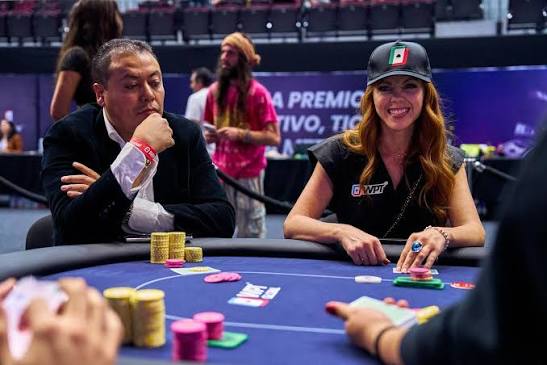
Not all decisions are equal in poker. Some take longer than others. Some may even take what feels like ages. A player stares at the board for two, three, five minutes over a single decision while the whole table waits. Could it be thinking, performing, or stalling (or all three?)
Often it's the first.
Poker is a hard game, the pots are big, and a stack-defining decision deserves real time. But some long tanks are theatre, staged to induce a call or provoke a bluff. Some decisions are pure clock-burning to climb the pay ladder.
Here's why the worst kind is so hard to stop, what all three look like, and how a recent 15-minute tank brought in a shot clock.
When it's real thinking
Most of the time, a long tank is a player working through a difficult decision. Poker can ask a lot of a player in a single moment.
Reading the board, possible combos of opponents, weighing pot odds and implied odds. Often all at once, often with their tournament life or a big chunk of money on the line. A lot of that time goes into replaying the hand street by street, seeing if their opponent's actions add up. Reflecting on the play is a common reason to slow down.
The simple rule is that the size of the decision sets the time it deserves. On a huge river call for stacks, a ten-second snap would be the actual mistake. The bigger the pot, the more the pause makes sense.
When it's an act
Not all the time is thinking. Live poker has always had a performance layer, and using it is common. Granted, as long as you're not holding everyone up for nothing.
The classic move is theatrics.
For example, acting weak when you're strong, sighing over a monster to induce a call, or deliberating to provoke a bluff. Players also vary their timing to throw opponents off rhythm and make them overthink. And some take a consistent, deliberate beat on every decision precisely so opponents can't read them.
If you always act in the same tempo, there's no snap-versus-tank pattern to exploit. (Timing is information, and good players manage what they give away.)
When it's a stall
Then there's another version.
Near a pay jump or the money bubble, a player with chips to protect can stall hoping a short stack busts first. This is so they can ladder up a pay spot with little effort. What makes this almost impossible to police is the incentive. When one player stalls near a pay jump, everyone still in the tournament benefits. They all move up if someone else goes broke first.
So no one at the table wants to call the clock on the staller, because the staller is doing them a favour. It can be difficult to keep the flow of the game moving in such a scenario. It's not cheating, as stalling for a pay jump is a rational, legal play given the incentives.
Structural time limits exist to combat this.
The fix and a case study
The problem got a public airing at a recent championship.
On Day 6, with 72 players left and a jump from $105,000 to $125,000 waiting at 71st place, Loren Klein moved most of his stack in. He then tanked for more than 15 minutes.
It was in the hope another short stack would bust first and bump him up a rung. The rest of the table was in no hurry to stop him, since a stall helped everyone ladder. Floor staff stepped in eventually and Klein busted in 72nd for $105,000. As a result, the long stall didn't even earn the jump.
With stalling spreading across the tables, officials acted. For Day 7 they brought in a 20-second shot clock on every decision, giving each player six "time chips" worth a 30-second extension each. Let the clock hit zero with no chips left and your hand is dead.
The game flowed better and took the pay-jump exploit out of the conversation. However, officials removed the shot clock for the final table. There are those that say poker's biggest decisions deserve unlimited time and a clock pressures players into errors. There are others who are of a different opinion.
For example, take Allen Kessler, the game's most persistent anti-stalling voice. He argues that stalling is an exploit the clock exists to stop, and structural limits are better for all.
Shot clocks and time banks are now standard on the high-roller circuit and increasingly elsewhere. It's worth mentioning the WPT® Action Clock used on its Main Tour. They keep the pace honest, remove the pay-jump stall, and make the game far easier to watch.
Tanking is not slow rolling
Tanking is taking time to think or act during a hand, and within reason it's legitimate. Slow rolling is taking your time to reveal a winning hand at showdown, letting your opponent believe they've won before you table the nuts.
That can be deemed by some as rudeness, and it's frowned upon by many. A long, genuine think is fine. Milking a guaranteed winner to embarrass someone, less so.

FAQ
Why do poker players tank for so long?

Usually because the decision is genuinely hard — reading ranges, counting combinations, weighing odds, and replaying the hand, often for a lot of money. Some tanks are strategic acting to induce a call or bluff, and a few are stalling to climb the pay ladder.
What is stalling for a pay jump?
Burning time near a pay jump or bubble hoping another player busts first, so you ladder up. It's legal but hard to police, because the whole table benefits from one player's stall and nobody wants to call the clock.
What is a shot clock in poker?
A fixed time limit on each decision — at the 2026 WSOP Main Event it was 20 seconds, with six 30-second "time chips" for tougher spots. Run out of time and chips and your hand is dead. It's designed to keep pace and stop stalling.
Is tanking the same as slow rolling?
No. Tanking is taking time to decide during a hand, which is legitimate within reason. Slow rolling is delaying to reveal a winning hand at showdown, which is just bad manners.
Can I ask someone to hurry up?
Yes — any player can "call the clock," asking the floor to put an opponent on a timer. In practice people rarely do it near a pay jump, since everyone benefits from the stall, which is exactly why fixed shot clocks exist.
Promotions
Tournaments
For Customers
Safety & Security
Stay Connected
Follow us on social media to stay updated with the latest news, updates, and exclusive offers!



Promotions
Tournaments
For Customers
Safety & Security
Stay Connected
Follow us on social media to stay updated with the latest news, updates, and exclusive offers!
 Local Payment Methods
 Cards
Cards Crypto
 E-Wallets
 Apple Pay
 Google Pay
 Instant Bank Payments
*
Some methods may not be available in your region. Please contact support if you experience any issues.
This website is operated by Everstronglink Limited a company incorporated under the laws of Costa Rica having its registered address at Province 01 San Jose, Canton 02 Escazu, San Rafael, On La Ceiba Street, House No. 400, Costa Rica, and is licensed by the Tobique Gaming Commission under License Number 0000005. Kashxa Limited, a Cyprus company with registration number 427606, having its registered office at Strovolou, 12 Aigyptou, Nicosia, 1097, Cyprus, is acting as a payment agent on behalf of the license holder entity Everstronglink Limited.
Gambling can be addictive. Play responsibly. Everstronglink Limited only accepts customers over 18 years of age.
Copyright © 2026 WPT Global. All rights reserved