

















 Customer Dispute Resolution Page
 Help Center
 Affiliate Program
In this article
Welcome to WPT Global
Welcome to WPT Global, the online home of the World Poker Tour®. Let us guide you through setting up your account and get you to the tables in no time.Social Media


How To Play
World Leading Tournaments
A huge player pool and everything from freerolls to high rollers – plus regular special events!Ambassadors
Get to know our ambassadors - world-class players from across the globe who embody the spirit of the game. Discover their stories and become part of the community.Your Hub for News
Explore stories, tips, and updates from the world of poker and casino. Learn from pros, discover new trends, and stay in the loop with everything happening at WPTGlobal.What are you looking for?
Close




How WPT® Global Approaches Fair Play

Share




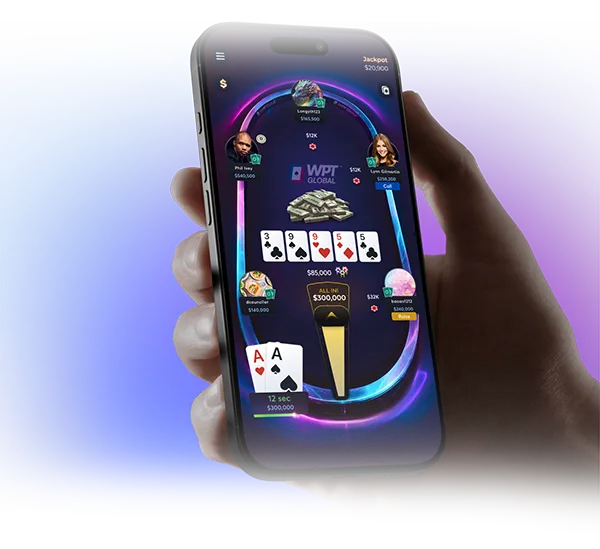

Online poker is a brilliant format. It also works best if you can trust that the player across the table is a real person. One playing without aids, and with a level playing field. That trust is valuable. Therefore, any online poker platform has to answer the question.
How do you protect the game and make it safe?
Here's how we at WPT® Global approach fair play. What detection technology we use and the table rules. The reporting and reward system and enforcement data. The part all operators have to deal with: integrity is an ongoing fight, and innovation is the key.
Why fair play is the whole game
The threats are a consistent thorn in the side of online poker.
Two big things. Bots play hands with no human involved. Real-time assistance (RTA) feeds players solver-perfect answers mid-hand. Collusion has players secretly teaming up. Data-mining tools and heads-up displays (HUDs) let grinders build dossiers on opponents.
It makes it unfair for the average player. The basic promise of fairness is one that makes the game worth playing. A credible fair-play program must target all these.
The technology and the team
At the centre of WPT® Global's approach is an AI detection system called AceGuardian.
AceGuardian has run anti-cheat systems for online poker since 2019. The repertoire scans for bots, collusion, RTA and other prohibited software. A5 Labs, a technology group focused on poker integrity, supplies it.
A5 Labs is a close partner of the WPT® family. It's the same group created the QuintAce coaching tool. It has also built platform technology used elsewhere in the WPT® ecosystem. The anti-cheat tech comes from a team that does dedicated, documented integrity work.
Crucially, AI doesn't act alone. AceGuardian's flags are handled by a team of more than 50 people working solely on game integrity. Machine detection plus human judgment. For avoiding missed cheats and wrongful bans, it's an effective method.
The rules of the table
WPT® Global's table policy is protecting recreational players. It bans HUDs, third-party tracking software, and real-time assistance. A casual player shouldn't have to sit down against opponents with an unfair advantage.
That is, a database of their tendencies or a solver with the optimal play on every street. Taking those tools off the table levels the playing field. We've also promoted recreational-protection measures. This is a cap on how many professional or high-volume players can sit at a single table. A casual player isn't against a full lineup of sharks.
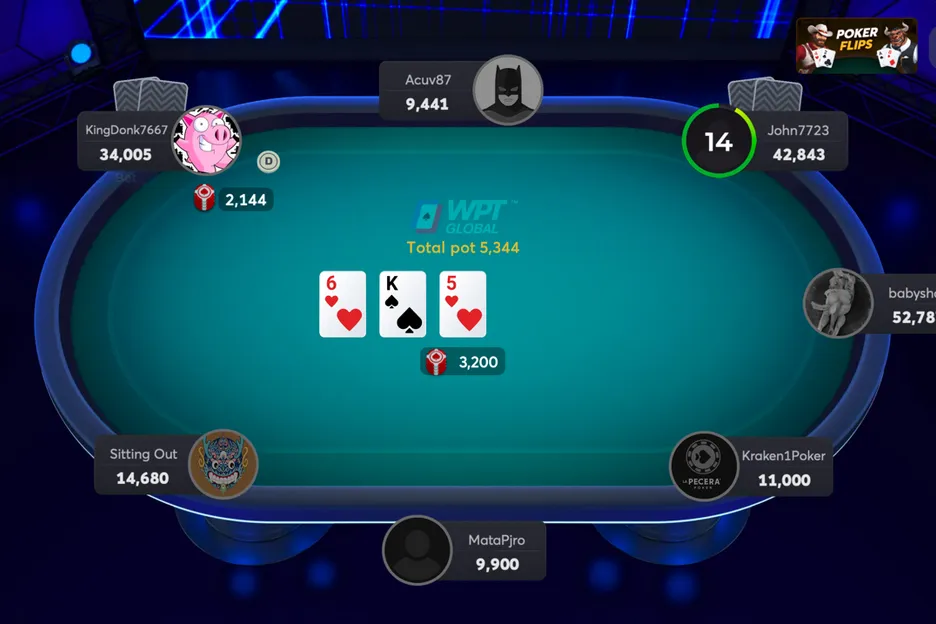
Fair cards: the RNG
Let's talk about the deal itself. The shuffle is by a random number generator certified by Gaming Laboratories International (GLI). It's an industry-standard independent testing lab.
That certification proves the cards fall fairly and unpredictably.
Catching cheats: reports and rewards
Players can report suspected cheating to WPT® Global's security team. The "Rewarding Integrity in Poker" (RIP) program pays players who surface cheaters. WPT® Global has handed out six-figure rewards where a tip led to major enforcement.
It's a paid whistleblower scheme that few other major operators advertise. Reported figures for the top bounty are large, so the incentive for preserving fair play is strong.
Putting it on the record
An important part of integrity is showing transparency, and in 2025 WPT® Global did. It published its first-ever cheating report, a "Recently Banned Accounts" disclosure. Between January and May 2025 we seized $166,885.07. We redistributed all of it to affected players, listing 50 internal user IDs of banned accounts (IDs only, no screen names).
A later update put the cumulative total at $427,481.32 seized and redistributed across January to October 2025.
That put WPT® Global among a short list of operators that publish enforcement data. Returning money to the cheated players, and doing it on the record, is an essential step in fair play.
No system is perfect
No system is perfect.
Detection doesn't catch everything. Our own report says as much. The banned-accounts list is a selection with IDs only and no breakdown of the violations. Transparency as progress, not proof of perfection.
The honest framing is that integrity is an arms race. Solvers, bots and bypass tools keep evolving, and so does the detection chasing them. On the regulatory side, WPT® Global operates under a Curaçao licence (through Seventip N.V.).
We pair AI detection with a sizeable human team. We bar the tools that most hurt recreational players and pay people to report cheats. Also, unlike most of the industry we publishes what we find and return the money.
Play responsibly
Fair play and responsible play are fundamental.
WPT® Global is for players of legal age (18+, or 21+ where required). No detection system changes the basics of looking after yourself. Set limits and treat poker as entertainment. Unless you are a pro, it shouldn't be treated as income, and only play with money you can afford to lose.
If gambling is affecting you or someone you know, support is available.

Is WPT® Global safe and fair?

WPT® Global runs an AI detection system (AceGuardian) backed by a 50-plus-person integrity team, bans HUDs/RTA/third-party tools, uses a GLI-certified RNG, pays players to report cheats, and has published enforcement data returning seized funds to victims.
What is AceGuardian?
An AI anti-cheat system, supplied by the technology group A5 Labs, that WPT® Global says scans for bots, collusion, RTA and prohibited software across its network, with flagged accounts reviewed by a human integrity team.
Does WPT® Global allow HUDs or solvers at the table?
No. It bans heads-up displays, third-party tracking software, and real-time assistance, as part of a recreational-first policy.
Has WPT® Global actually banned cheats?
Yes. It published a banned-accounts report citing $166,885.07 seized and redistributed to affected players from January–May 2025 (a later cumulative figure reached $427,481.32 through October), and it has banned insiders, including a sponsored streamer.
Who regulates WPT® Global?
It operates under a Curaçao licence through Seventip N.V.