






 Customer Dispute Resolution Page
 Help Center
 Affiliate Program
In this article
Welcome to WPT Global
Welcome to WPT Global, the online home of the World Poker Tour®. Let us guide you through setting up your account and get you to the tables in no time.Social Media


How To Play
World Leading Tournaments
A huge player pool and everything from freerolls to high rollers – plus regular special events!Ambassadors
Get to know our ambassadors - world-class players from across the globe who embody the spirit of the game. Discover their stories and become part of the community.Your Hub for News
Explore stories, tips, and updates from the world of poker and casino. Learn from pros, discover new trends, and stay in the loop with everything happening at WPTGlobal.What are you looking for?
Close




How to Practice Poker by Yourself
Share




Key Takeaways
Deal and replay Hold’em hands offline to sharpen hand reading and decision flow.
Use low‑risk online sessions for volume and real decisions.
Review hands with a purpose, so leaks show up fast.
Drill pot odds and equity until it’s automatic.
Study one skill weekly and track progress so practice stays consistent.
If you’re asking how to practice and play poker by yourself, you already know the game, and you’re trying to improve without needing opponents, coaches, or poker buddies watching your every move. In practice, solo work can speed up learning because you can slow down decisions, isolate one skill, and repeat it until your execution feels clean.
This guide shows how to practice Texas Hold’em by yourself at an intermediate level. Offline drills can sharpen your hand reading and odds routines make your math automatic, while online sessions give you real volume. And don’t forget, review systems will reveal how well you really do under pressure. You’ll also learn how to structure practice so it doesn’t turn into mindless grinding, and how to measure improvement so you can tell it’s working.
Practice Poker Alone: Offline Hold’em Hand Drills With a Deck of Cards
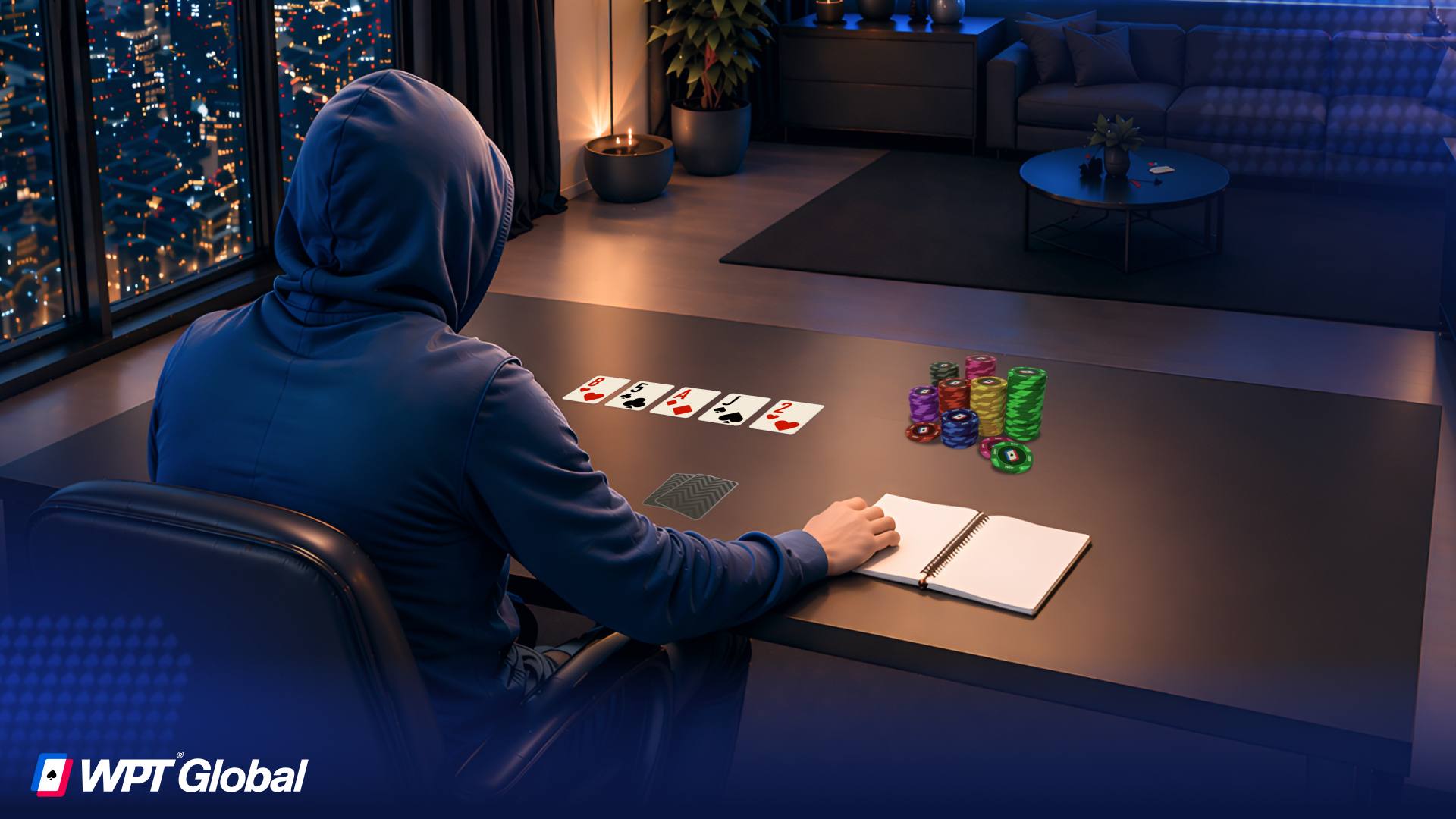
You can practice Texas Hold’em alone by dealing a full hand and walking through the decisions as if two real players were involved. This lets you slow the game down, examine ranges, and practice decision-making without pressure.
Start by grabbing a deck of cards and removing the jokers. Deal two hole cards for Player 1 and two for Player 2.
Sample Texas Hold’em practice hand
Player 1: A♠ Q♠ Player 2: K♦ J♦
Deal the flop:
Board: Q♥ 9♠ 4♦
Now pause and think through the situation. Player 1 has top pair with a strong kicker. Player 2 has two overcards and a possible straight draw if a ten appears.
In a real game, Player 1 might continuation bet the flop for value and protection. Assume Player 1 bets half the pot and Player 2 calls.
Deal the turn:
Board: Q♥ 9♠ 4♦ 10♣
Now the hand becomes more interesting. Player 2 has picked up an open-ended straight draw. Player 1 still has top pair but must consider that many draws are now possible.
Ask yourself what each player’s range looks like at this point. Should Player 1 continue betting for value? Should Player 2 call again with the draw or consider raising?
Deal the river:
Board: Q♥ 9♠ 4♦ 10♣ 2♦
Now evaluate the final result. Player 1 still holds top pair with an ace kicker, while Player 2 has missed the straight draw.
Walk through what the river action should look like. Player 1 might bet for value, expecting calls from weaker queens or missed draws. Player 2 now has to decide whether to fold or attempt a bluff.
Running through hands like this helps train your decision flow. You can repeat the process with different starting hands, board textures, and imagined betting lines. The goal is to practice evaluating ranges and planning your actions street by street.
Practice Poker Solo: Learn to Evaluate the Odds
Evaluating pot odds becomes much easier when you practice it with a specific hand scenario. By dealing a full Hold’em hand and pausing before each decision, you can calculate the math behind the play.
Sample Texas Hold’em odds practice hand
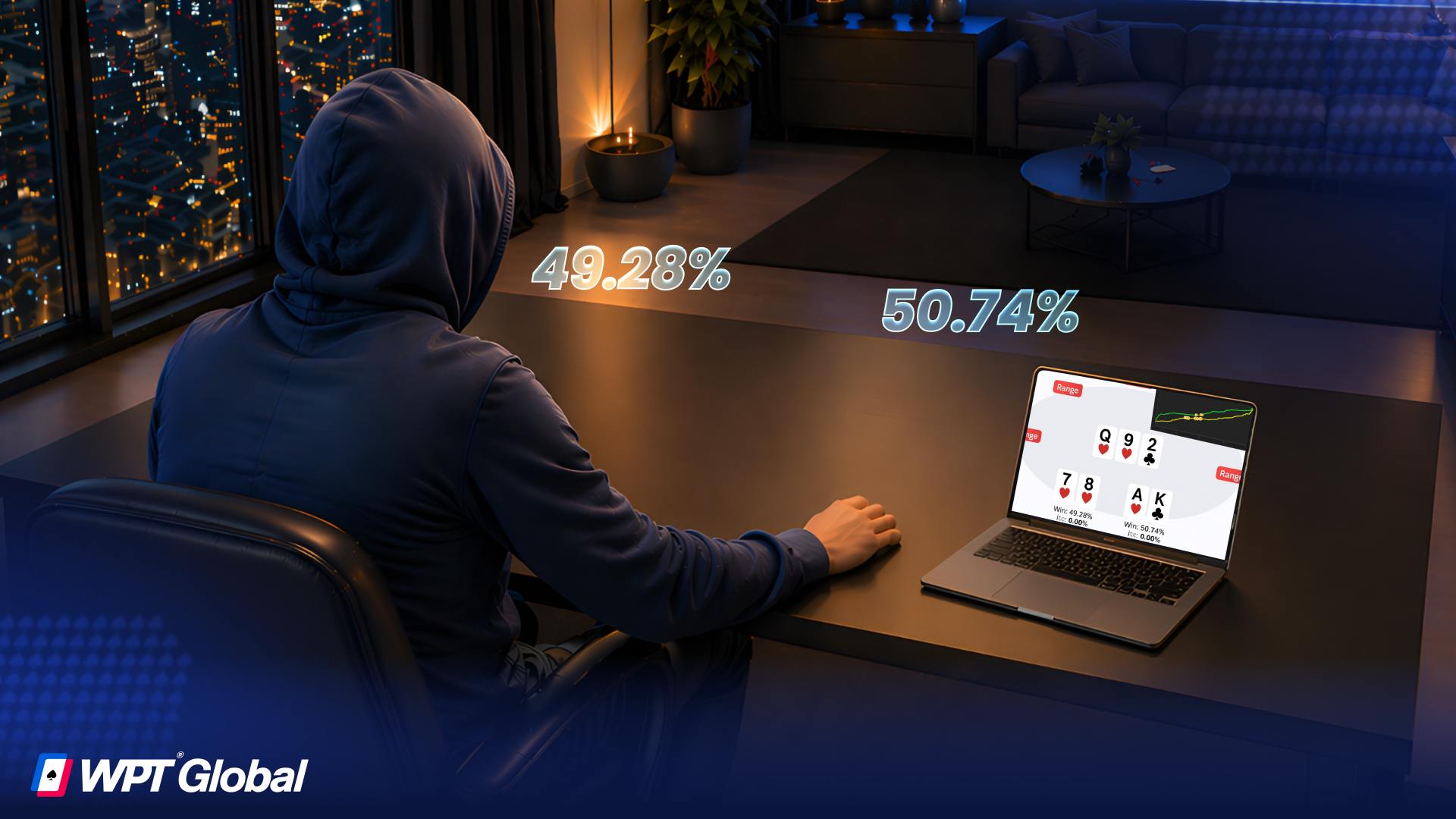
Player 1: A♥ K♣ Player 2: 8♥ 7♥
Deal the flop:
Board: Q♥ 9♥ 2♣
Player 2 now has a flush draw and a straight draw. There are nine hearts remaining in the deck that complete a flush, and six cards (four sixes and four tens, minus overlaps) that could complete a straight.
Assume the pot is $100 and Player 1 bets $50.
Player 2 must call $50 to win a total pot of $150. This means Player 2 needs roughly 33% equity for the call to be profitable.
Now estimate the draw odds. A flush draw on the flop will complete by the river roughly 35% of the time. Because Player 2 also has straight possibilities, the real equity is even higher.
In this case, calling the $50 bet is reasonable because the drawing hand likely has enough equity to justify continuing.
Deal the turn:
Board: Q♥ 9♥ 2♣ 3♦
The draw has not been completed yet. If Player 1 bets again, Player 2 must reconsider the odds. Now there is only one card left to come, which reduces the chance of completing the draw significantly.
This is where pot odds become critical. If the bet size is too large relative to the pot, the call may no longer be mathematically correct.
Deal the river:
Board: Q♥ 9♥ 2♣ 3♦ J♠
The draws have missed. Player 1 wins the hand with ace-high unless Player 2 attempts a bluff.
Working through examples like this helps you understand when a draw has enough equity to continue and when the pot odds no longer justify the call. By repeatedly practicing scenarios with different board textures and bet sizes, you train yourself to recognize profitable decisions faster in real games.
Tips to Practice Poker Online by Yourself
Start with low‑risk volume
If you want practice without stress, freerolls and low‑stakes games give you real decision volume without the emotional pressure of big money. The decisions still train the same skills, especially if you stay focused on one improvement goal per session.
Play fewer tables so you actually learn
Two tables are plenty for serious practice. More tables usually turn into autopilot, and autopilot is the opposite of improvement. If your goal is skill development, you want enough time to think through spots, not just click through them.
Set one skill goal per session
Don’t sit down and “play poker.” Sit down and work on something specific. For example, tighter preflop discipline from early position, better turn barreling selection, defending big blind correctly vs small sizes, or choosing better river bluff candidates. After the session, only review the hands connected to that goal.
Use your database to find leaks fast
Save your hands and review with structure. Pull 1,000 hands and filter by position, stack depth, and spot type. You’ll often spot patterns quickly, like losing too much from the blinds, calling too wide vs 3‑bets, or over‑bluffing bad runouts.
Review hands the same day when possible
Short, consistent review usually beats occasional marathon analysis. Review 10 to 20 hands after a session while the logic is fresh, and your correction loop tightens. That’s where solo practice starts compounding.
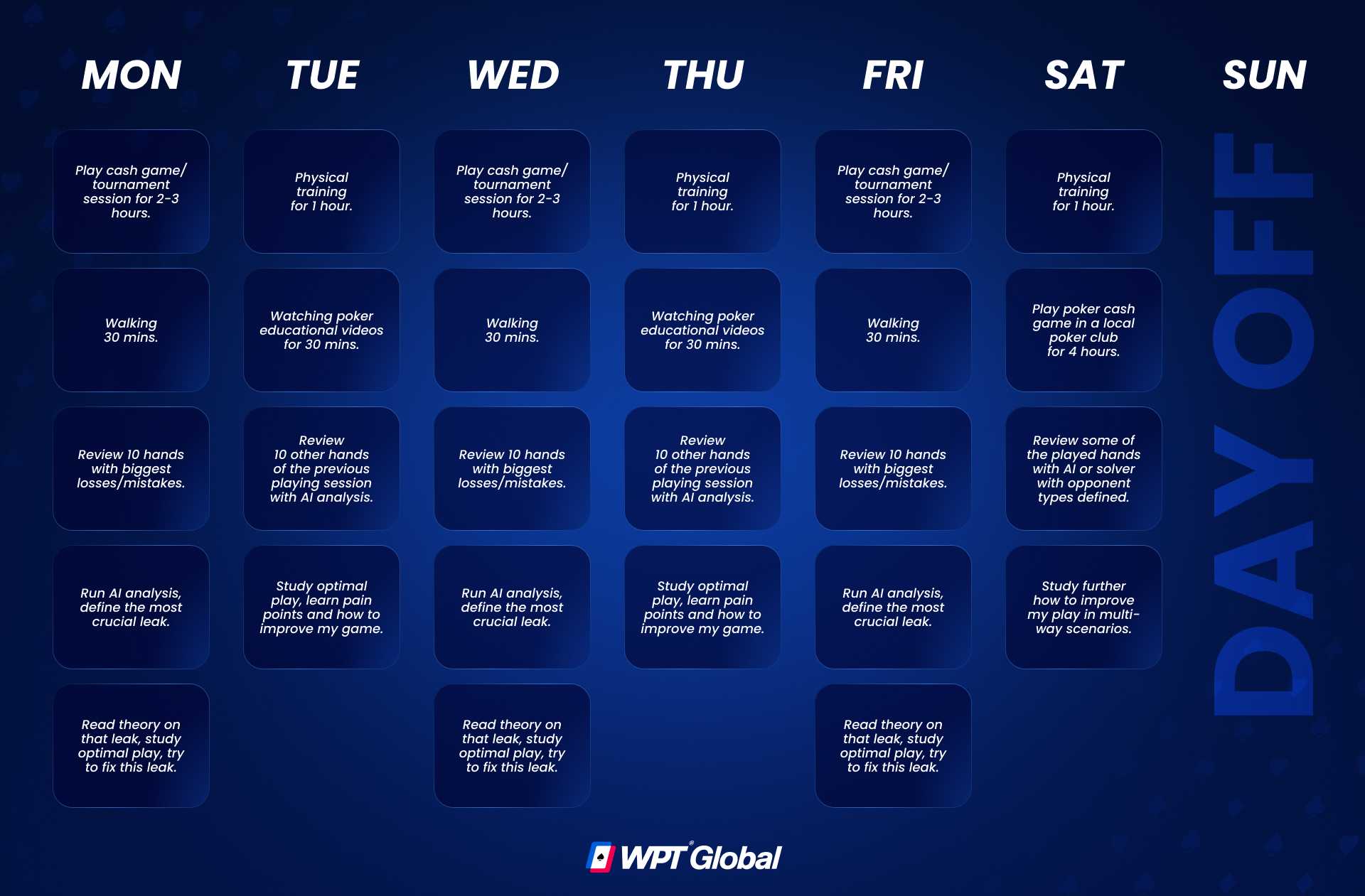
Build Your Solo Study System: One Skill Per Week
The fastest way to improve alone is to stop hopping between random concepts. Pick one skill per week, learn the idea, practice it in real games, and then review only the hands that test that skill.
Choose a weekly theme
Monday to Tuesday, pick one focus. Good options for intermediate Hold’em players include 3‑bet pot strategy, defending vs c‑bets, turn barreling rules, river value sizing, and bluff selection based on blockers.
Play with purpose
Wednesday to Friday, play short sessions focused on that theme. Keep table count low and pay attention to the right spots. Your goal is to notice the situation and make an intentional decision, not to be perfect.
Review and track
On Saturday, review only hands tied to the theme. Ask where you executed well and where you fell back into old habits. Write the pattern in one sentence so you can fix it. Track your progress by logging hours, hands, and one simple metric per skill, like fold‑to‑steal from the big blind or how often your turn bets have a clear reason.
Have Fun While You Practice Poker
Solo practice dies when it becomes dull. The easiest fix is to make practice competitive in a way that improves your decision-making for online poker games.
Challenge yourself against your own metrics. Beat last week’s execution, not someone else’s results. For example, aim to review 15 hands after every session for a full week, or aim to reduce one obvious leak, like calling too wide versus 3‑bets.
You can also practice against fictional opponents. Create a “loose‑caller,” a “tight regular,” and an “aggressive bluffer.” Build their ranges, then test whether your lines actually beat them. This keeps solo work engaging while still training real hand reading.

FAQs
How many hours per week should I practice poker alone?

Aim for 5 to 10 hours per week, but keep it structured. A few short play sessions plus consistent review and one focused study block usually beat long, unfocused grinding.
Is playing with bots as good as playing with real opponents?
Bots can help with repetition and decision flow, but real opponents teach you the mistakes that actually exist in real games. Use bots for drills, but rely on real games and hand review for most improvement.
What’s the best skill to practice first when learning alone?
For intermediate Hold’em players, start with preflop discipline and position‑aware ranges, then move to common postflop spots like c‑bet decisions and turn barreling. Fixing those areas improves everything else faster.
Can I actually improve without a coach or training site?
Yes, if your practice is consistent and your review is honest. The key is isolating one skill, getting reps, and reviewing the hands that test it. Coaching speeds up the process, but discipline is still the engine.
How do I know if my solo practice is actually working?
Track results, but also track execution. Winrate trends matter over time, but the earliest signal is fewer repeated mistakes. Use one or two skill‑specific metrics that match your weekly focus and watch them improve month to month.



Promotions
Tournaments
For Customers
Safety & Security
Stay Connected
Follow us on social media to stay updated with the latest news, updates, and exclusive offers!


Promotions
Tournaments
For Customers
Safety & Security
Stay Connected
Follow us on social media to stay updated with the latest news, updates, and exclusive offers!
 Local Payment Methods
 Cards
 Crypto
 E-Wallets
 Apple Pay
 Google Pay
 Instant Bank Payments
*
Some methods may not be available in your region. Please contact support if you experience any issues.
This website is operated by Everstronglink Limited a company incorporated under the laws of Costa Rica having its registered address at Province 01 San Jose, Canton 02 Escazu, San Rafael, On La Ceiba Street, House No. 400, Costa Rica, and is licensed by the Tobique Gaming Commission under License Number 0000005. Kashxa Limited, a Cyprus company with registration number 427606, having its registered office at Strovolou, 12 Aigyptou, Nicosia, 1097, Cyprus, is acting as a payment agent on behalf of the license holder entity Everstronglink Limited.
Gambling can be addictive. Play responsibly. Everstronglink Limited only accepts customers over 18 years of age.
Copyright © 2026 WPT Global. All rights reserved