





 Customer Dispute Resolution Page
 Help Center
 Affiliate Program
In this article
Welcome to WPT Global
Welcome to WPT Global, the online home of the World Poker Tour®. Let us guide you through setting up your account and get you to the tables in no time.Social Media


How To Play
World Leading Tournaments
A huge player pool and everything from freerolls to high rollers – plus regular special events!Ambassadors
Get to know our ambassadors - world-class players from across the globe who embody the spirit of the game. Discover their stories and become part of the community.Your Hub for News
Explore stories, tips, and updates from the world of poker and casino. Learn from pros, discover new trends, and stay in the loop with everything happening at WPTGlobal.What are you looking for?
Close




Poker Straddle Explained: What is it and How Does it Work?
Share


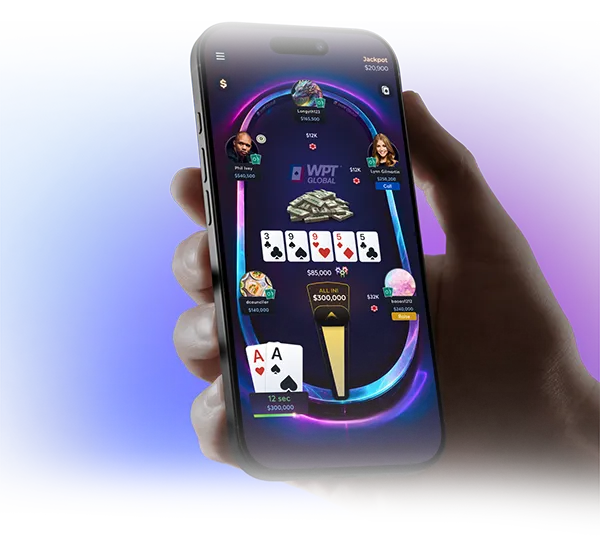

If you've ever watched professional poker players make straddle bets in high-stakes cash games and questioned what these bets are and why people make them, you're about to get some answers.
When you straddle at the right time, you could have the chance to win a juicy pot. However, if you use it at the wrong time or without understanding its risks, straddling can quickly drain your bankroll.
Here's how to straddle in poker, and, importantly, how to do it properly.
What is a Straddle in Poker?
A straddle is an optional bet made by players who want to increase the size of the pot before any cards are dealt.
It's mainly used in live cash games, but some online poker sites have introduced straddle bets as an optional extra in recent years.
Straddles aren't used in poker tournaments because it changes both the pre-flop dynamics and the pot size. Understanding when and why to use a straddle can make the difference between building momentum or burning chips.
How Much Does a Straddle Bet Cost?
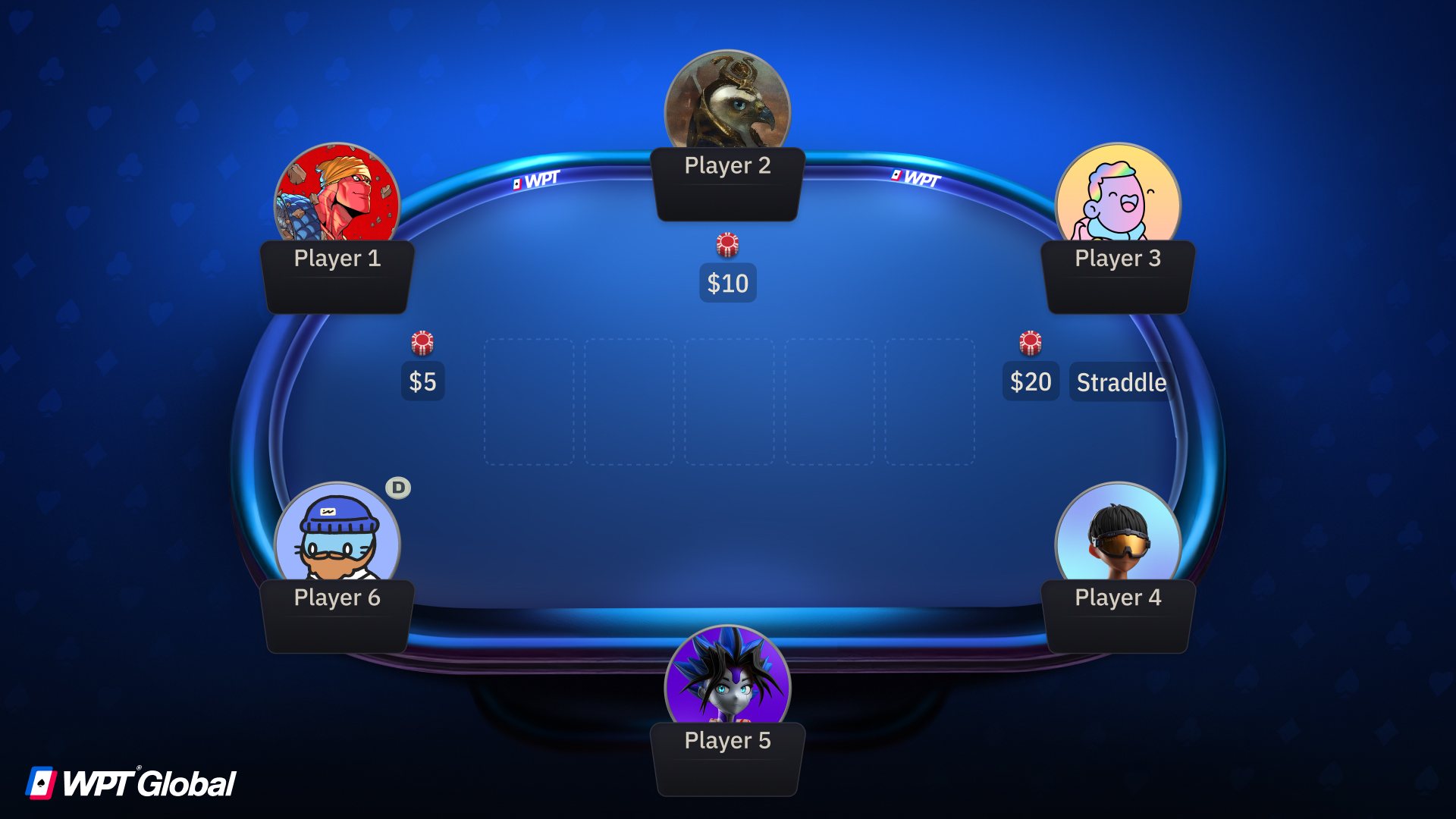
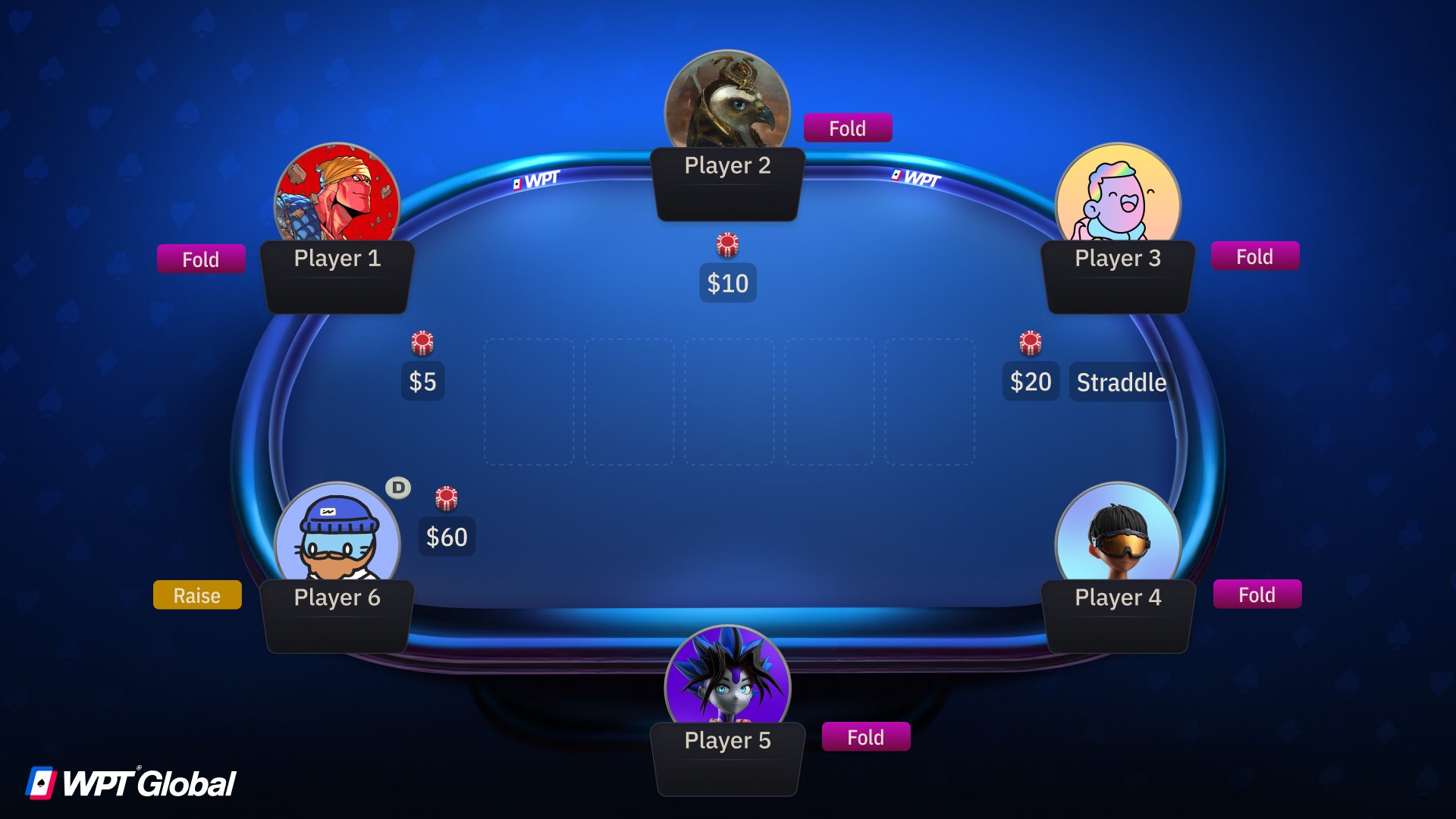
The standard size for a poker straddle is twice the big blind's value. So, if the big blind is $2, a standard-sized straddle would be $4.
Some poker rooms allow players to set their own straddle rules. Therefore, if everyone is in agreement, the cost of a straddle bet could be more than twice the big blind's value.
If a player straddles, their bet becomes the minimum opening bet. Going back to our $1/$2 game, anyone who wants to stay in the hand must put at least $4 into the pot, instead of the usual $2, because a straddle is in play.
The Difference Between the Blinds and Straddle Bets
A straddle bet is a type of blind bet, but it's not the same as the blinds or antes.
You can read our in-depth guide to blinds and antes for more on that topic. However, it's still worth discussing the difference between the blinds and straddle bets.
Certain poker games, such as Texas Hold'em and Pot Limit Omaha, have forced bets known as the small and big blinds. Other poker games, such as Seven Card Stud, have forced bets known as antes.
You can't opt out of these bets when it's your turn - their position moves clockwise around the table along with the button.
Straddle bets on the other hand aren't forced. If a player straddles at the start of a game, the player to their left isn't required to follow suit before the next game.
Placing straddles is usually only done in community card variants, e.g., Texas Hold'em and Omaha.
How Does a Straddle in Poker Affect the Action?
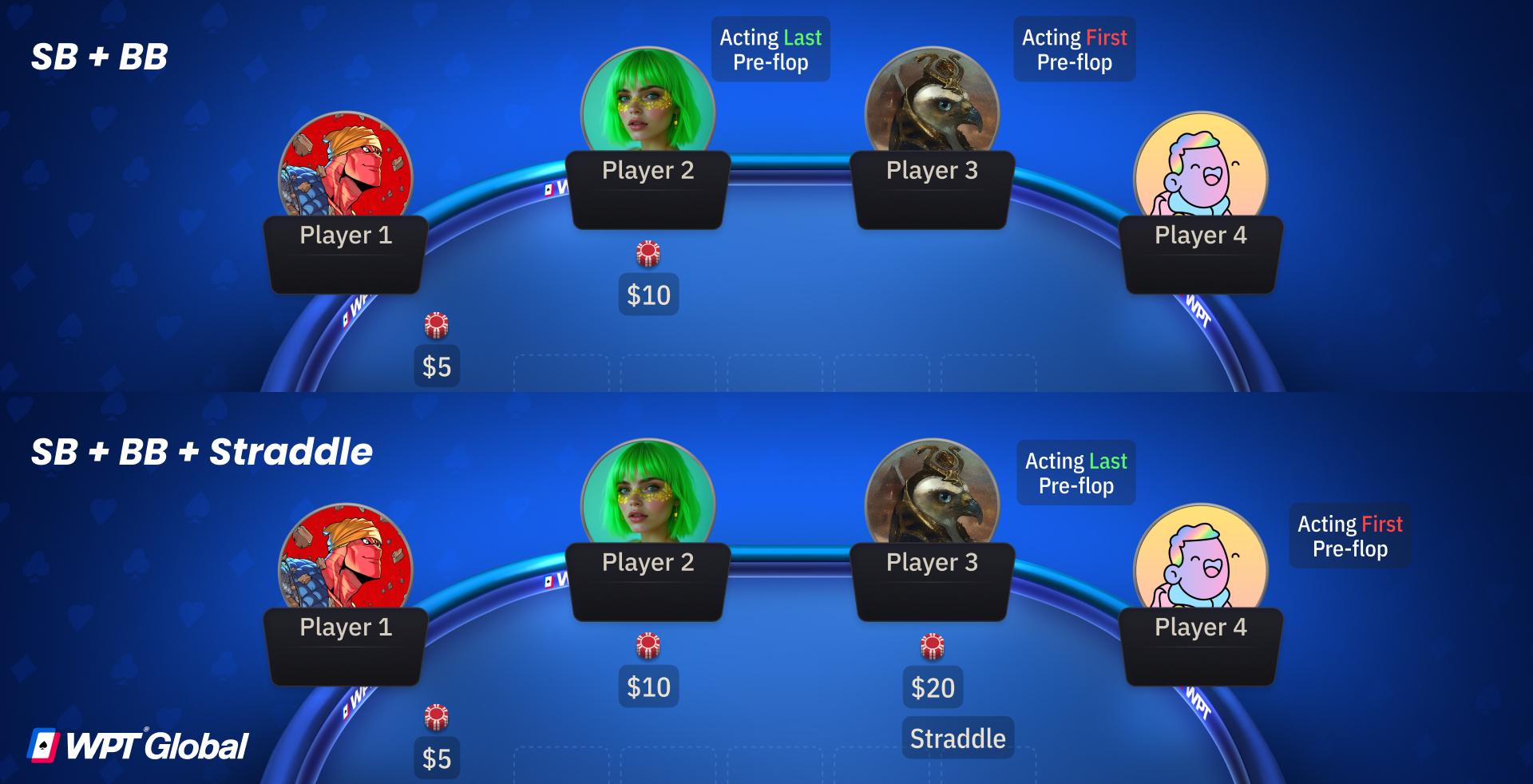
The straddle changes the natural flow of action pre-flop and shifts who acts first in the hand. In online and live poker games with community cards, the player sitting immediately to the left of the big blind is first to act pre-flop.
If that player straddles, they get to act after the big blind. That means the player immediately to the left of the straddle acts first. Because of this, the player who straddles has a positional advantage before the flop because they close the action.
This temporary positional advantage is the main reason skilled players use the move as it lets them act last before the flop, gaining valuable information on opponents.
To summarise, a poker straddle bet isn't enforced under any standard rule set. However, straddles are blind bets. Let's move on to why that's the case.
Types of Straddles
A straddle bet has to be made before any cards are dealt. That's why we refer to it as a blind bet. You're making a bet without knowing what your cards are going to be.
We'll talk about why some players like to do this in the next section. Before that, here are the main types of straddle bets in poker:
Under-the-Gun (UTG) Straddle
The most common position for straddle bets is under-the-gun. That means the player sitting to the immediate left of the big blind places a straddle. In most cash games, no one else can straddle unless the under-the-gun player has.
Double and Triple Straddles
Double and triple poker straddle bets continue what the player under-the-gun started. For example, if a player straddles from under-the-gun and the player to their immediate left follows suit, that's known as a double straddle.
The second straddle must be double the value of the first. If a third player joins in, that's known as a triple straddle, and it must be three times the original straddle. Here's how a triple straddle would play out in a $2/$4 cash game:
Small blind = $2
Big blind = $4
Under-the-gun straddle = $8
Under-the-gun +1 straddle = $16
Under-the-gun +2 straddle = $24
Total pot = $54
Button Straddle
Some live cash games allow players to post straddles on the button. The player immediately to the left of a button straddle (the small blind) acts first in many poker games. However, in some live poker rooms, the under-the-gun player acts first.
If that happens and no one raises, the action skips the button straddle and moves to the blinds. Once the blinds have acted, the action goes to the button. If, however, someone raises, the button acts before the blinds they would under normal conditions.
Mississippi Straddle
Some live cash games allow players to straddle from any position. This is known as a Mississippi straddle.
As with a standard poker straddle, the action starts with the player sitting to the immediate left of the straddler. If the player on the button places a Mississippi straddle, the small blind starts the action.
Advantages of Using a Straddle
Let's go back to our previous point regarding the nature of straddle bets and why some players like them. There are two main reasons for placing straddles in online and live poker cash games:
It increases the size of the pot
It can give you a psychological edge
Increasing the size of the pot can force players to widen their range because there's more money to play for. If you're an aggressive player who likes putting pressure on tight players, straddling is an effective way to do this.
Similarly, placing a straddle bet signals to other players that you're willing to play a wide range, suggesting you're willing to play big pots. This can scare tight players and make them play fewer hands against you.
As with all moves in poker, there are potential downsides to straddling.
Downsides of Straddling
The long-term expected value (EV) of playing a straddle in poker is negative. There are exceptions to this rule, particularly if you're a highly skilled player in weak cash games. But in most cases, it's a negative EV long-term strategy.
That's because you're putting more chips into the pot without knowing what cards you've got. In the majority of situations, you'll have to give up these chips and fold because your hand is weak. Other times, you'll have to play weaker hands because you don't want to give up your straddle bet.
There will be times you straddle and find a strong hand, but this won't happen often enough to cancel out the times you lose chips.
Poker Straddle Strategy
Before we give you our final thoughts on straddling in poker, let's talk strategy. Some of you will want to try it, so here are a few things to keep in mind when you do:
The best times to straddle in poker are when you're in a loose game with deep stacks. Loose games mean players have wider ranges, which means you don't need premium holdings to enter pots. Having deeper stacks allows you to get more value when you enter pots with a wider range and hit a disguised hand.
For example, let's say you pay 2x the big blind to straddle and enter the pot with 3♥ 5♠. The board comes A♠ 2♥ J♣ 7♣ 4♠. You've made a fairly well-disguised straight on board that could easily hit someone else's range. Because the stacks are deeper, you've got a better chance of getting more value from your hand.
The one thing to remember, however, is that smart opponents will know you've got a wider range. If that's the case, you need to adjust accordingly and take different lines to confuse people.
That being said, most novices don't adjust their perception of ranges when people straddle. These are the players you should target.
Should You Straddle in Poker?
It's a bad idea to straddle in live and online poker games if you're a newbie. Learn how to play poker from the ground up. Then, only once you're confident with concepts such as value betting, bluffing, ranges, and expected value, should you consider straddling.
There's no doubt that straddling is fun, but it can also give you a strategic advantage in certain situations. However, it's a risky move that, in most cases, eats into your bottom line.

FAQs
Is straddling good or bad in poker?

A poker straddle bet isn't automatically good or bad because it depends on how well you play the situation. Overall, it tends to be a negative EV play because you're putting more chips into pots without knowing your cards. However, if you're in a particularly weak game, you can improve your EV by making the game bigger and playing aggressively from the straddle.
Is the straddle considered to be a raise?
A straddle is considered a live bet, rather than a raise. It plays a similar role to the big blind in that it becomes the minimum amount required to enter a pot. For example, if the big blind is $6 and a player straddles to $12, the minimum cost to enter a pot is $12 rather than $6.
How much can you straddle in poker?
A standard straddle in poker is 2x the big blind. For example, if the big blind is $5, a straddle bet will be $10. There are situations where it's possible to double straddle, which means a second player pays 2x the straddle's value.

Promotions
Tournaments
For Customers
Safety & Security
Stay Connected
Follow us on social media to stay updated with the latest news, updates, and exclusive offers!


Promotions
Tournaments
For Customers
Safety & Security
Stay Connected
Follow us on social media to stay updated with the latest news, updates, and exclusive offers!
 Local Payment Methods
 Cards
Cards Crypto
 E-Wallets
 Apple Pay
 Google Pay
 Instant Bank Payments
*
Some methods may not be available in your region. Please contact support if you experience any issues.
This website is operated by Everstronglink Limited a company incorporated under the laws of Costa Rica having its registered address at Province 01 San Jose, Canton 02 Escazu, San Rafael, On La Ceiba Street, House No. 400, Costa Rica, and is licensed by the Tobique Gaming Commission under License Number 0000005. Kashxa Limited, a Cyprus company with registration number 427606, having its registered office at Strovolou, 12 Aigyptou, Nicosia, 1097, Cyprus, is acting as a payment agent on behalf of the license holder entity Everstronglink Limited.
Gambling can be addictive. Play responsibly. Everstronglink Limited only accepts customers over 18 years of age.
Copyright © 2026 WPT Global. All rights reserved