













 Customer Dispute Resolution Page
 Help Center
 Affiliate Program


Understanding an “Act” in Poker
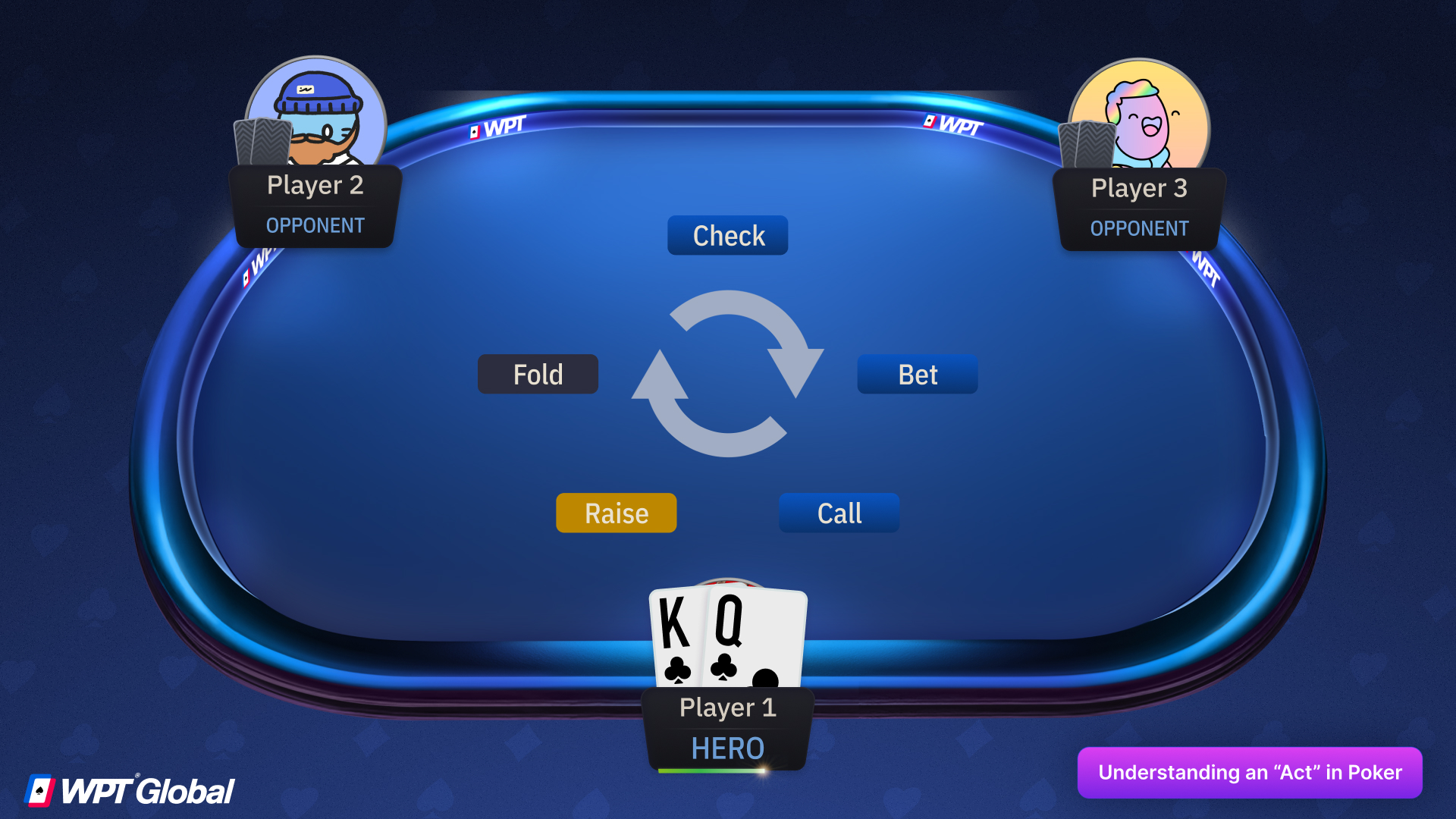
When it’s your turn in the betting round, you are required to act; this means deciding between checking, betting, calling, raising, or folding.
For example:
- If no one has bet, your act might be to check.
- If a player has bet, your act could be to call, raise, or fold.
One key rule is acting out of turn, which happens when a player moves before it’s legally their turn. This can reveal information unintentionally and is penalised in live poker. So, avoid this and always wait for your turn.
Knowing the basic definition is useful, vital even, but to really appreciate the importance of acting, we need to break down each possible act.
Types of Acts in Poker
When it’s your turn to act, you have a limited set of possibilities, and knowing them is the foundation of poker play.
- Check: Passing the action without betting when no one has bet yet.
- Bet: Putting chips into the pot when no one has bet on the current street.
- Call: Matching the amount of another player’s bet to stay in the hand.
- Raise: Increasing the size of a current bet to put pressure on opponents.
- Fold: Surrendering your cards and giving up any chance to win the pot.
These five core acts cover every decision you can legally make at the table.
Understanding them not only builds your basics but also lays the groundwork for advanced concepts such as bluffing, value betting, and positional play.
Example in a Sentence
“He had to act first on the river, so he checked to his opponent.”
A short example like this shows just how naturally the word “act” appears in poker conversations. You will hear this word thousands of times.
Quick Takeaways: What to Remember About “Act” in Poker
- To act means to make a move: check, bet, call, raise, or fold.
- The order of action is dictated by table position.
- Acting out of turn is against the rules and usually penalised.