








 Customer Dispute Resolution Page
 Help Center
 Affiliate Program


Understanding Acting Out of Turn in Poker
In poker, betting order always follows a set rotation, which is usually clockwise around the table. If you check, bet, raise, or fold before the action reaches you, you’ve acted out of turn.
Example:
- Player A is still deciding, but Player B throws chips in for a raise.
- Player B has acted out of turn since Player A had not yet acted.
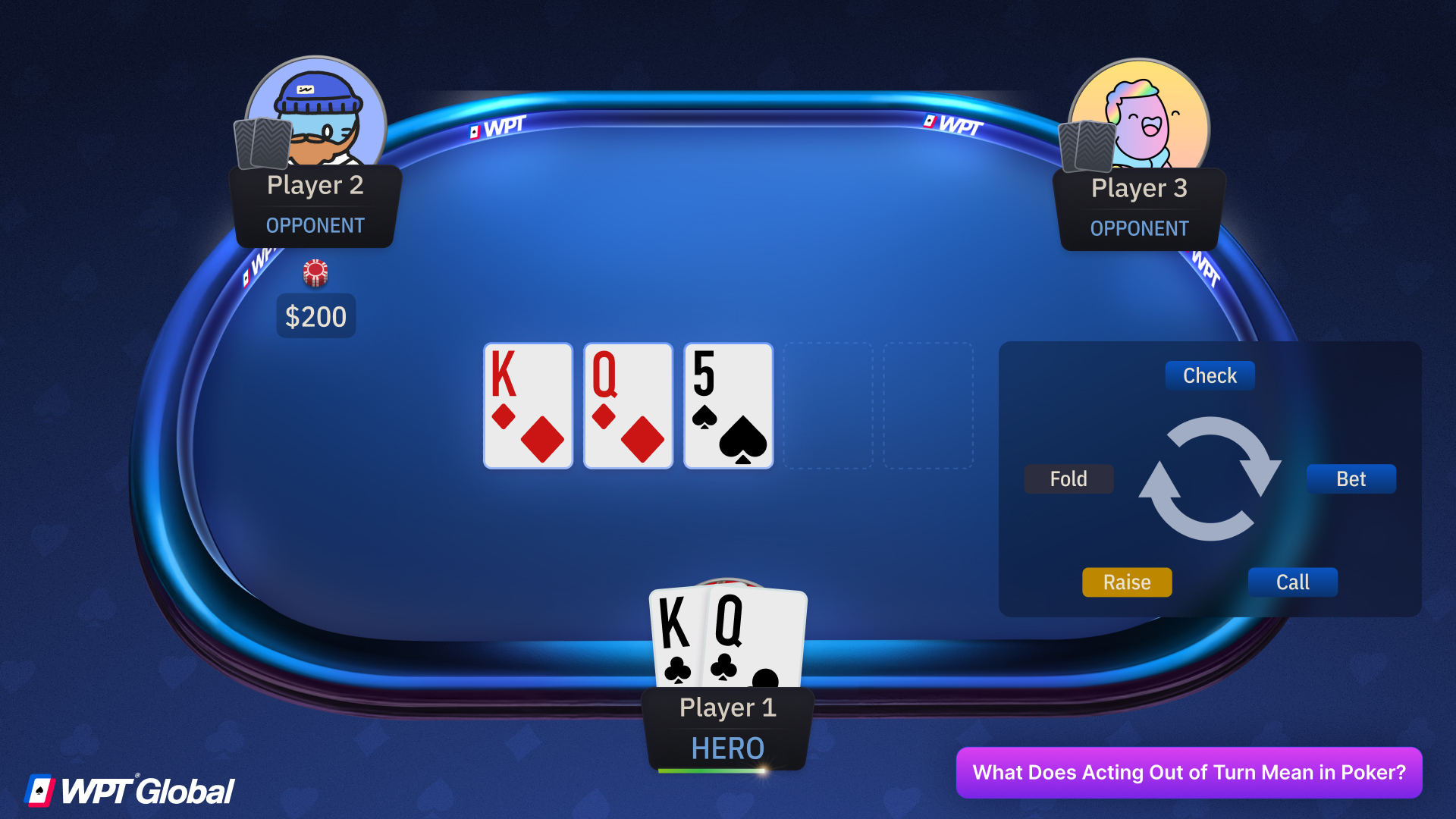
Because it can interfere with other players’ decisions, there are specific rules that determine what happens next.
Acting Out of Turn Rules
Different poker rooms and tournaments apply slightly different rulesets, but below are the most common outcomes when someone acts out of turn:
- Binding Action (in many casinos/tournaments):
If no one else has acted yet, then the out-of-turn move can become binding once the action reaches said player. So, for example, if you bet out of turn, you will be forced to make that bet when it is your turn. An often costly mistake. - Action Retracted (common in casual/home games):
Some games allow a retraction. The premature move is voided, and the player gets their chips/cards back when their turn arrives. Do not repeat this, though, otherwise you may be punished more severely. - Penalties:
Repeated violations may result in warnings, time penalties, or even removal from tournament play.
These rules exist to protect the general fairness of the game, but the real issue is how acting out of turn changes the flow of the hand and how it affects other players.
Why Acting Out of Turn is so Bad in Poker
Acting out of turn isn’t just about the rules; it impacts gameplay, psychology, and is bad etiquette.
- Gives Away Information:
When you act out of turn early, you reveal information that opponents should never have access to. If you fold, for example, before the action reaches you, then players behind instantly know you’re out of the way with nothing, giving them more opportunities to steal any blinds or apply pressure to you. If you raise prematurely, you would then unintentionally advertise strength. This would allow observant opponents to adjust their play by tightening up or even trapping you. Skilled opponents would exploit this leaked information immediately. - Disrupts Strategy:
Poker decisions rely very much on accurate sequencing. When you act too soon, you distort the order of play, and this forces players to react to something they shouldn’t have seen yet. For example, if someone plans to check-raise, but you bet before your turn, you would prevent that move entirely and alter the natural flow of the hand. This unplanned interference can change the size of the pot or eliminate strategic options, and this can create unfair advantages or disadvantages for multiple players. - Table Etiquette:
A large part of the game of poker is rhythm, focus, and mutual respect. Acting out of turn can frustrate opponents and slow down or disrupt the game. In live settings, this is viewed as both disrespectful and unprofessional. Players expect everyone at the table to maintain order and failing to do so can harm your reputation and even encourage your opponents to target you.
Understanding the negative impact it can cause shows why it’s so important to avoid acting out of turn, but examples make it even clearer.
Examples of Acting Out of Turn
Here are common ways it happens at real tables:
- Checking Early:
You tap the table before the action reaches you, this can be out of habit or distraction. This can be considered harmful because players behind you now know your intention is to check, thus removing the uncertainty they rely on to plan their bets or their bluffs. It could also kill opportunities for players who wanted to check-raise. - Folding Ahead of Time:
You toss your cards into the muck before the players ahead have acted. This gives away crucial information and your opponents now know one fewer hand is competing, which could then encourage wider steals or change their betting patterns. It could also disrupt the game flow and force unnecessary pauses as the dealer retrieves cards or clarifies a certain action. - Betting Too Soon:
You push your chips forward before the action reaches you, often because you’re eager with a strong hand or you haven’t been following the action closely. This can reveal card strength unintentionally, allowing your opponents to adjust their approach by folding hands they might otherwise have called with. It can also prevent players ahead of you from completing their decisions, interfering with their strategies, and potentially earning you a penalty.
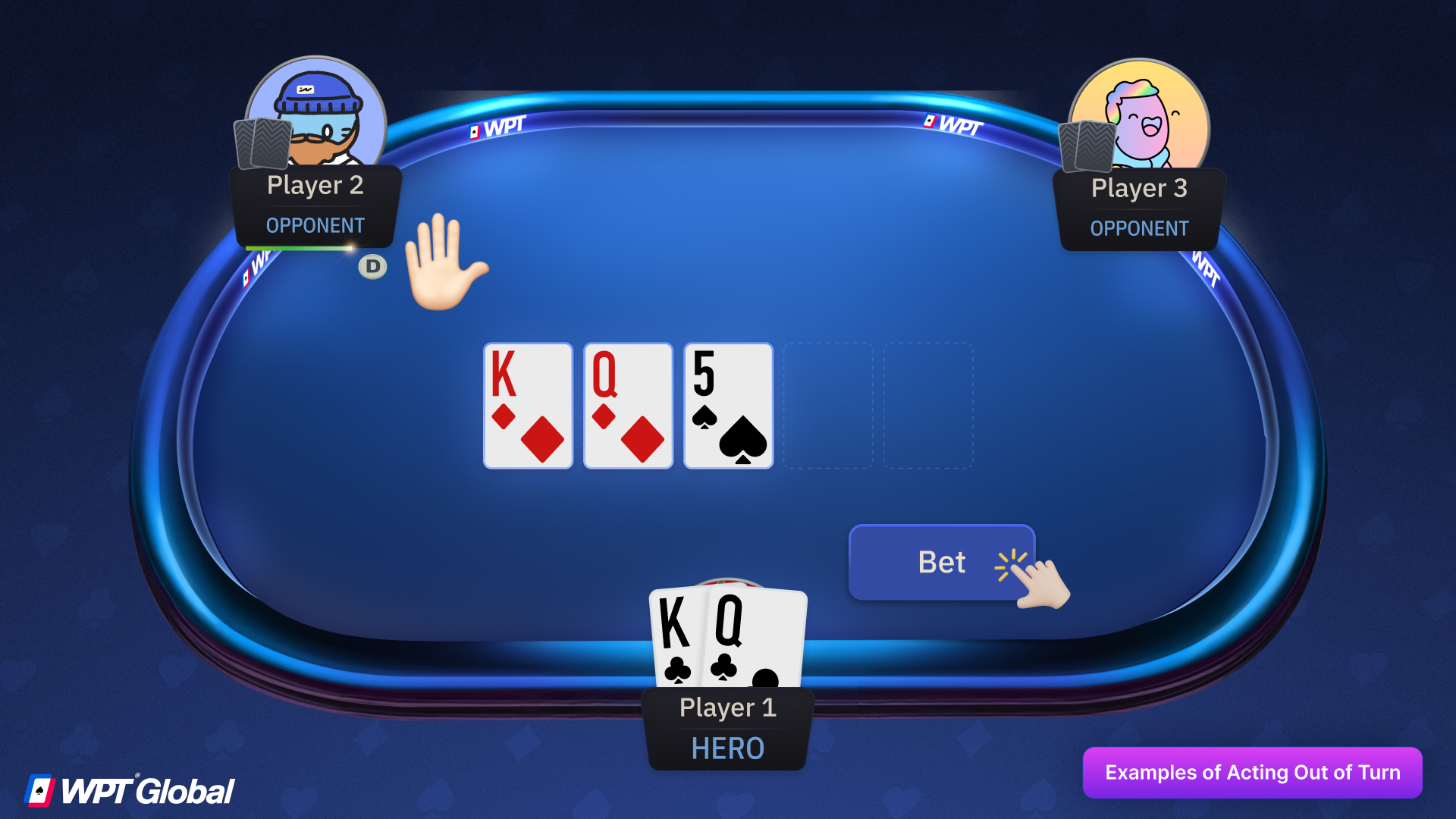
Seeing these examples makes it clear why poker etiquette is so important to adhere to. You can not only anger your opponents, but also put yourself at a huge disadvantage.
How to Avoid Acting Out of Turn
While usually unintentional, acting out of turn has strategic consequences, so take note of these tips below to avoid the situation entirely.
- Stay Focused:
Keep your attention on the betting order at all times because even a momentary lapse can lead you to acting early and therefore giving away information or disrupting someone else’s strategy. Experienced players will constantly track who is left to act so they never reveal their intentions too soon. - Don’t Be Hasty:
When you pick up a strong hand, make sure to resist the urge to move quickly. Acting too fast signals strength and can cause opponents to fold hands that you would have possibly profited from. Waiting for the action to reach you preserves both your deception and full strategic value. - Respect the Dealer:
If you do accidentally act early, acknowledge it immediately and tell the dealer, they will guide the correction. Staying composed always helps the game run smoothly and prevents any misunderstandings that could cost you chips or earn penalties later in the session.