











 Customer Dispute Resolution Page
 Help Center
 Affiliate Program


What Does Advertising Mean in Poker?
At its core, advertising is about sending a deceptive message through your play.
- Sometimes a player can show down a weak hand after making a big call or bet, making others think they play loose.
- Other times, a player will overbet or bluff in a spot where it’s unusual to do so, hoping opponents remember it later.
- The key goal here is to build a false table image that can be exploited in future hands for more gain.
Advertising isn’t just about the single hand in play; it’s about shaping perception for the long game, and then once that image is created, it can directly impact how much value you extract with your stronger hands down the line.
Why Do Players Use Advertising?
Poker is as much about psychology as it is about cards. Advertising serves several strategic purposes for the player:
- Inviting Action: By showing you’ll gamble with weak hands, you encourage opponents to call more often when you later hold strong ones. Increasing your chances of winning big pots.
- Confusing Reads: Opponents can’t easily put you on a range if they think you’re capable of anything. Or they put you on a different range.
- Balancing Image: If you’ve been tight for too long, advertising a wild hand can reset how others perceive you. Therefore, effectively throwing your opponents off your scent.
Ultimately, advertising is about planting seeds in your opponents’ minds to help later when you have premium holdings. This is where opponents can pay you off because they’ve seen you play terribly or loose before.
Example of Advertising in Action
Imagine a cash game:
- You raise pre-flop with.
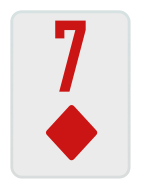
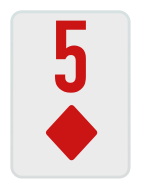
- You fire on the flop and turn with nothing, but still bluff.
- On the river, you show your bluff when called.
Now your opponents think you’re willing to bet with junk hands. So later, when you pick up an A♠ A♥, you might get called easier than usual thanks to your earlier “advertising.”
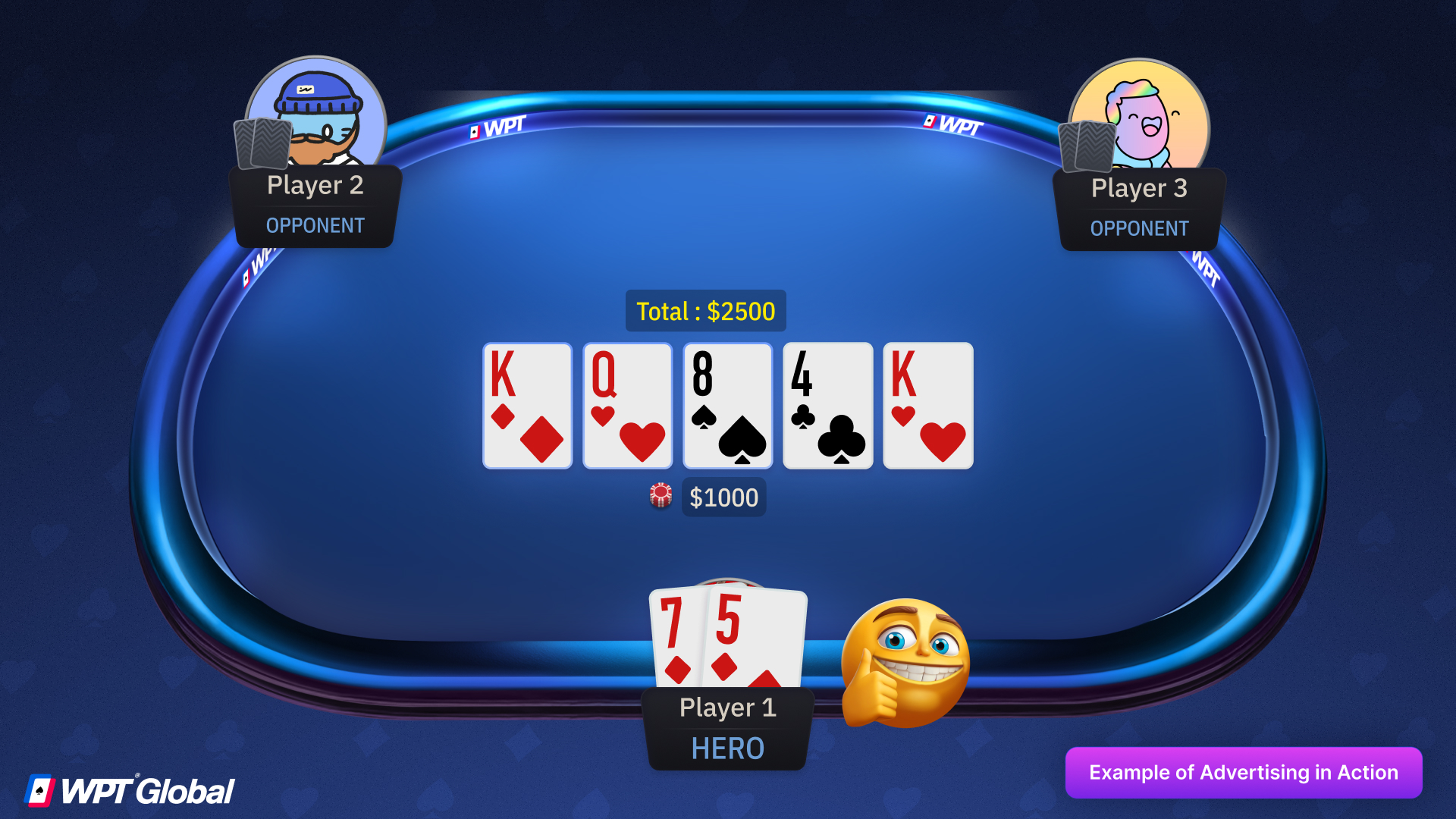
This example shows that advertising is less about the immediate pot and more about the future potential payoff. What is a small chip sacrifice now can translate into a huge win when you finally get a monster hand.
Risks of Advertising in Poker
While it can be very advantageous, advertising isn’t without downsides:
- Costs Chips: Showing down weak hands means you’re often losing the pot to make your point. This inevitably costs chips you aren’t guaranteed to make back later.
- Backfires: Smart opponents may adjust correctly and quickly and exploit your fake image.
- Overuse: If you advertise too often, opponents will just see through you or see you as a bad player, not a deceptive one.
That’s why the best players use advertising sparingly, such as a very carefully timed bluff. A little bit of deception can pay great dividends, but overdoing it will quickly erode your stack and your credibility at the table. So be cautious.