












 Customer Dispute Resolution Page
 Help Center
 Affiliate Program


Understanding Aggression in Poker
Aggression isn’t just about playing fearlessly (or recklessly); it’s about taking control of the action in a purposeful way to the player’s advantage.
- Betting forces opponents into tough spots where they must decide whether to continue by calling or raising. This is vital for aggressive poker.
- Raising seizes the initiative and builds pressure while changing the pot dynamic. This is a key element of aggressive poker.
- Checking and calling surrenders control, leaving your fate in your opponent’s hands. This is not considered aggressive poker.
By choosing aggression, you are attempting to shift the balance of power into your hands. Each bet and raise forces opponents to respond, as opposed to dictating the pace themselves.
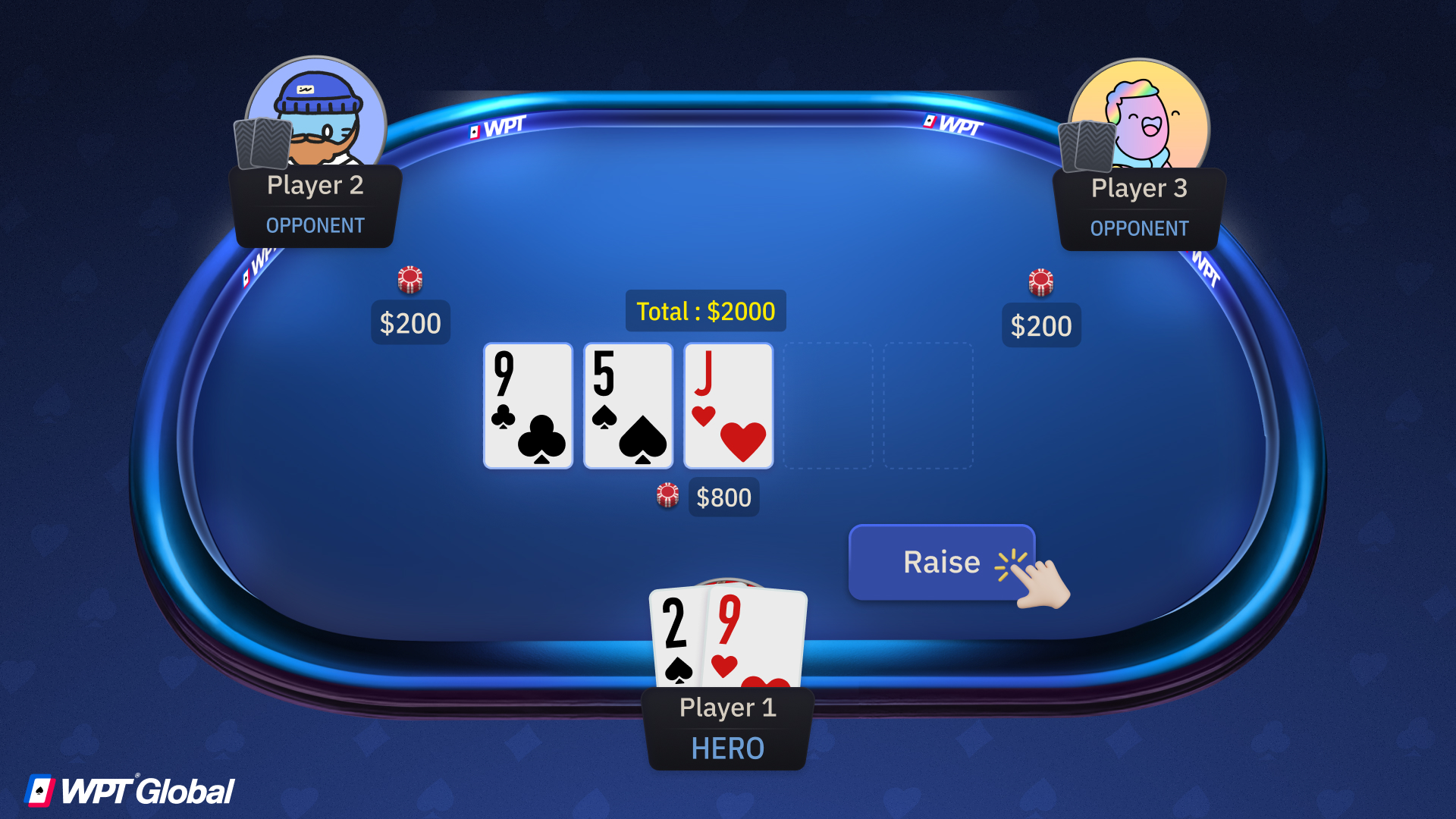
Why Aggression Can Win More Pots
Aggressive players can often put themselves in a position to collect chips in ways that passive players do not. Therefore, they give themselves more opportunities to win pots.
- You can win hands without reaching a showdown by making others fold through fear.
- You can grow larger pots with your strong value hands, which maximizes return.
- You deny opponents the chance to realize their equity when they fold to pressure.
- You build a difficult-to-read table image, which makes it hard for others to know when you’re strong or when you’re bluffing.
Aggression can create advantages on multiple levels, and when used effectively, it can become the engine that drives solid winnings.
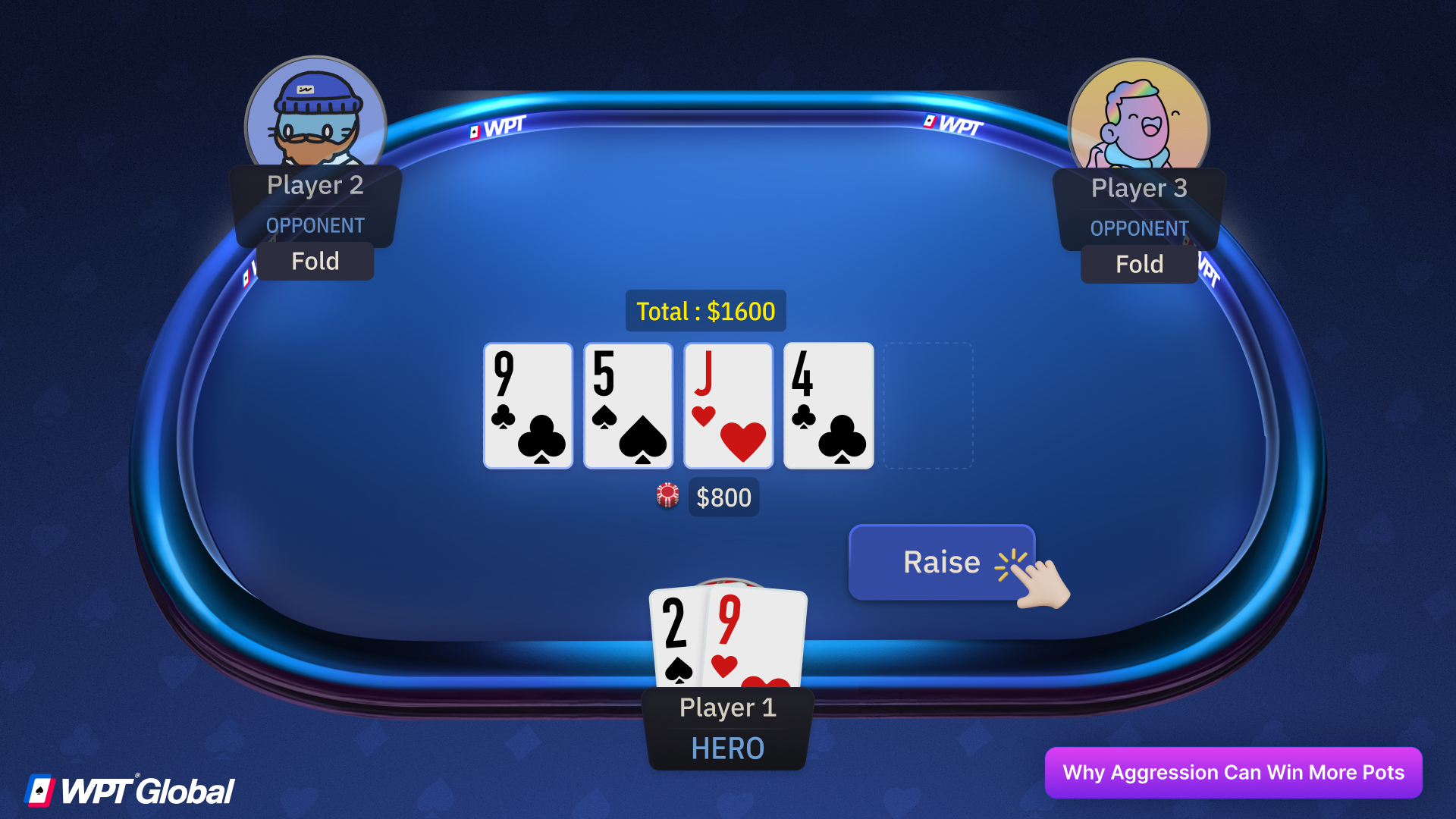
The Role of Aggression in Different Game Situations
Aggression is not the same in every single poker scenario. How and when you apply your pressure should change depending on the format of the game, along with the number of players and your position at the table:
- Preflop vs. Postflop:
Preflop aggression can help you take control early. By raising instead of calling, you can define ranges and thin the field, while often gaining positional advantage for the rest of the hand. Postflop aggression will build on that initiative. If you were the preflop raiser, continuing your aggression with well-timed bets can allow you to represent strength and win pots even when you miss the board. - Heads-Up Pots:
Aggression can become far more valuable and effective when you’re against just a single opponent. With fewer hands in play, the ranges are wider, and every bet is respected more often. In these spots, betting and raising will frequently force folds from your opponent and let you win pots with just medium-strength hands. - Multiway Pots:
Aggression must be more selective when multiple players are involved. While betting for value, of course, remains important, bluffing loses effectiveness because the chance that someone else connects with the board increases. In these situations, your aggression should be much tighter and way more value-focused. - In Position vs. Out of Position:
Aggression is always strongest when you act last. When you’re in position, you can apply that pressure after seeing how your opponents act, thus making your bets more informed and even harder to counter. Out of position, any reckless aggression can easily backfire, so your bets should be more purposeful and range-driven every time. - Tournament vs. Cash Games:
In tournaments, aggression can help you accumulate chips and apply pressure to players who are protecting their stack, especially when nearing pay jumps. In cash games, aggression is far more about long-term value and extracting maximum profit from strong hands without the unnecessary risk.
If used correctly, aggression can adapt to any situation rather than forcing the same approach every hand.
When You Should Show Controlled vs. Reckless Agression
While aggression can be a winning trait, it often works best when applied with discipline.
- Controlled Aggression means choosing your spots carefully and betting with strong ranges, raising with at least semi-bluffs (and not outright bluffs), and applying pressure selectively.
- Reckless Aggression means overbetting (and regularly), bluffing too often, and turning every hand into a battle, which strong opponents can quickly recognize and exploit.
The key is balance! Your aggression should be consistent enough to keep opponents guessing, but also measured enough to avoid giving away chips needlessly, especially to stronger players.
How to Become More Aggressive in Poker
If you tend to play passively, then shifting toward aggression can feel uncomfortable at first, but by making small and deliberate adjustments, you can build an assertive style without taking on reckless risk.
- Bet when checked to:
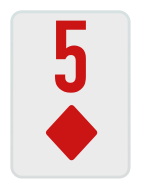
When an opponent checks, this often signals uncertainty or weakness. If you automatically check behind, you then give up a chance to win the pot. For example, if the flop isand your opponent checks, betting with hands such as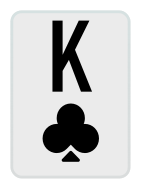
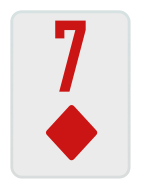
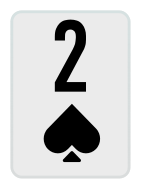 or
or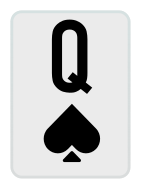
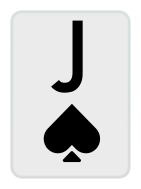 applies pressure and can immediately steal the pot. Even if you’re called, you will probably gain valuable information about their range.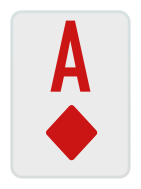
- Raise more often preflop:
Raising preflop sets the tone for the entire hand and puts you in control. If you limp with, you invite multiple players in and lose the initiative. By raising instead, you then narrow the field and build the pot with a strong hand, making postflop decisions easier because opponents must react to you.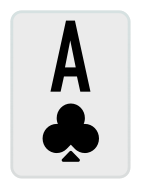
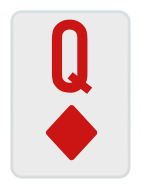
- Use semi-bluffs:
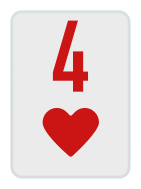
Semi-bluffs can be very powerful because they give you two ways to win. For example, when holdingon a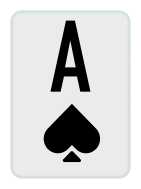 board, betting applies pressure, and if you’re called, you still have outs to make the nut flush. This makes semi-bluffing far more profitable in the long term than bluffing with absolutely no equity.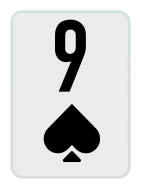
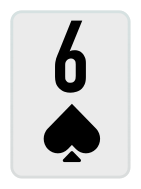
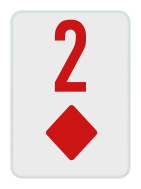
- Avoid autopilot calling:
Calling without a plan is one of the biggest leaks you can have in poker. Each time you face a bet, you need to pause and consider whether raising actually applies more pressure. For instance, if you holdon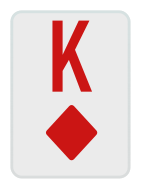 and your opponent bets small, raising can deny equity to draws and force weaker hands into mistakes instead of letting them realise their equity cheaply.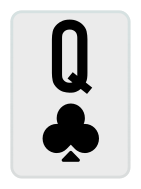
The more you practice these habits, the more naturally you’ll find that aggression becomes part of your game. This can help you seize control of pots and keep opponents on the defensive.
What to Do When Your Aggression Backfires
Aggression isn’t foolproof, though, and does come with risks, and overusing it can create problems of its own. Players who rely too heavily on constant betting and raising can often run into traps set by opponents. This is where opponents slow-play strong hands to exploit over-aggressive tendencies. Aggression can also backfire when you value-own yourself: betting strongly but having the second-best hand (range) and losing the pot.
By recognizing when opponents are setting traps and learning to slow down in spots where aggression no longer serves you well, you can help to maintain the benefits of aggression without walking into unnecessary losses.