
















 Customer Dispute Resolution Page
 Help Center
 Affiliate Program


How to Calculate Aggression Factor in Poker
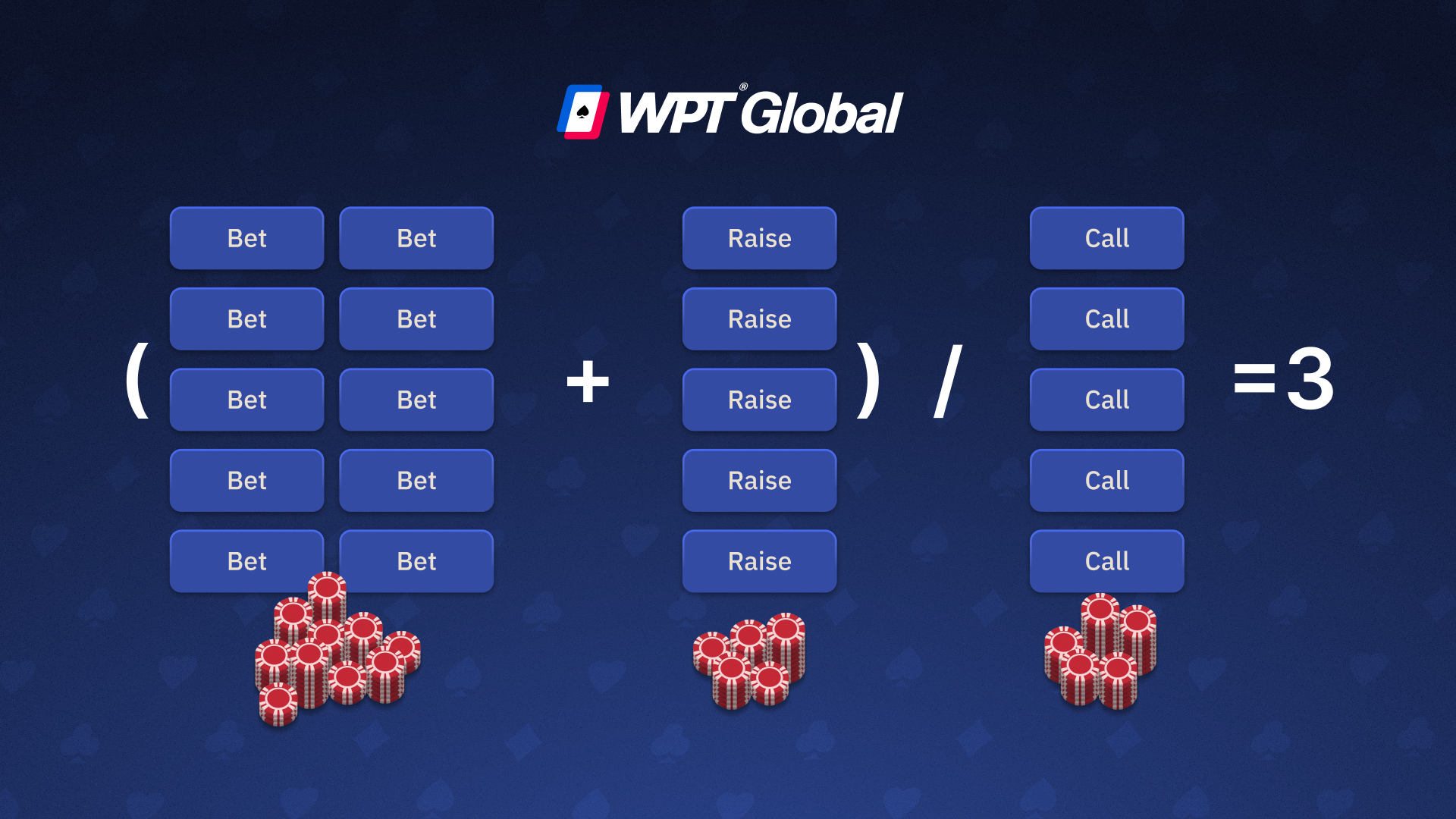
To understand an opponent’s AF, you only need a simple formula:
- Aggression Factor = (Bets + Raises) ÷ Calls
- Checks and folds are not included in the equation
- For example: If a player bets 10 times, raises 5 times, and calls 5 times → AF = (10+5)/5 = 3
An AF of 3 tells you that this player bets or raises three times as often as they call, which is a clear sign of aggressive tendencies. So once you understand how to calculate AF, the number becomes a quick read on someone’s table behavior, and you can adjust your play accordingly.
What Aggression Factor Reveals About Play Style
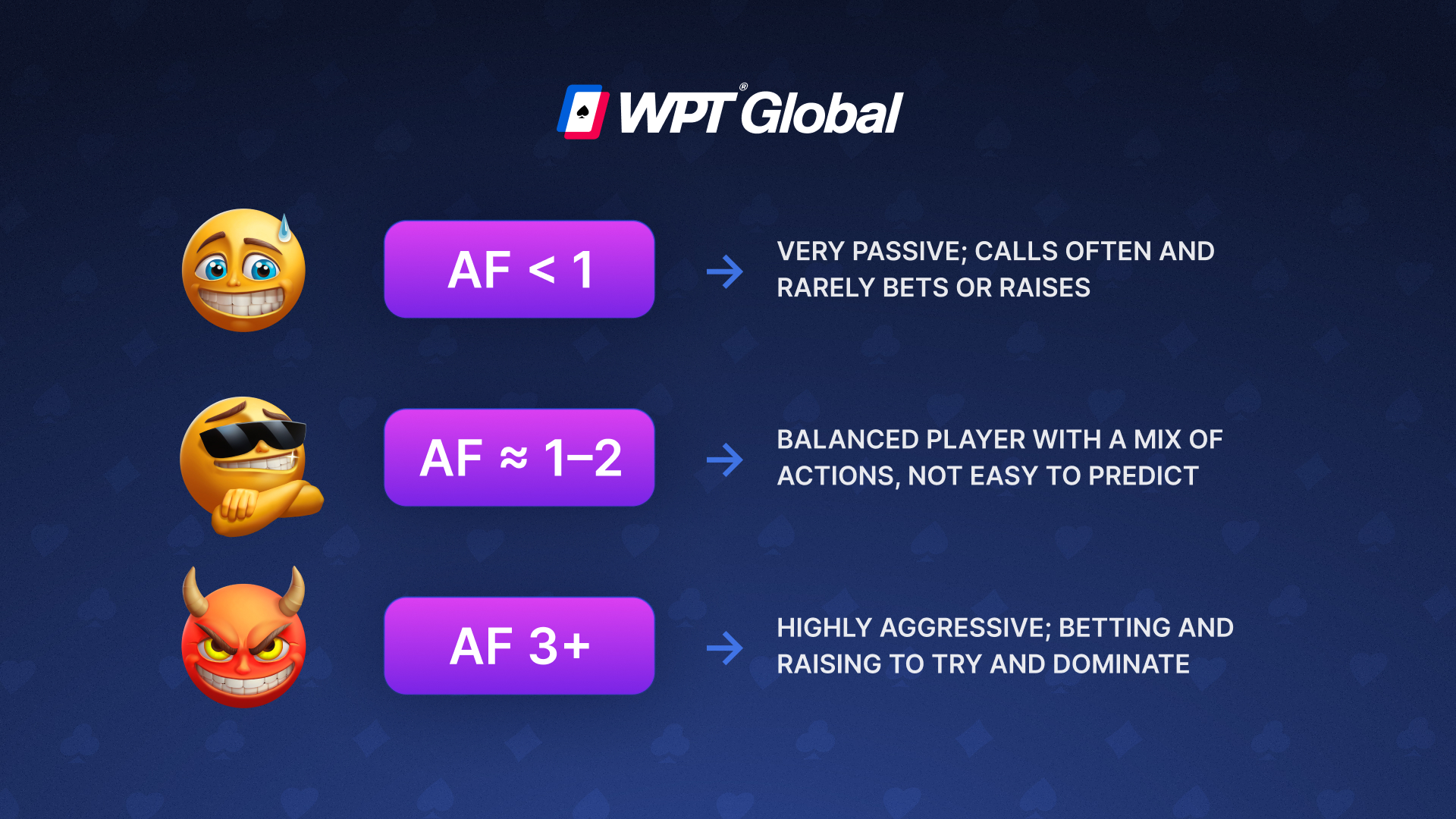
When you plug in the numbers, you can easily connect them to player archetypes:
- AF < 1 → Very passive; calls often and rarely bets or raises
- AF ≈ 1–2 → Balanced player with a mix of actions, not easy to predict
- AF 3+ → Highly aggressive; betting and raising to try and dominate
While AF is great for profiling opponents, it doesn’t tell the full story on its own. Sample size and game situation matter greatly. So treat AF as a strong signal, but not a standalone decisive factor.
Strategic Uses of Aggression Factor
Reading an opponent’s AF can help you decide how to respond in different matchups:
- Against low AF players: Bluff more frequently as they fold often and rarely apply pressure to you
- Against medium AF players: Expect a mix of play styles, so choose plays carefully
- Against high AF players: Trap them with strong hands, since they overbet and overraise, they may pay you well.
On its own, AF can give you a sharp edge in identifying tendencies and adapting your counter-strategy, but Aggression Factor is most effective when combined with other stats.
Aggression Factor vs. Aggression Frequency (AFq)
Although they sound similar, Aggression Factor (AF) and Aggression Frequency (AFq) measure two different things:
- Aggression Factor (AF): This is calculated as the ratio of a player's bets and raises to their calls.
- Aggression Frequency (AFq): This represents the percentage of opportunities in which a player takes an aggressive action.
A player can appear aggressive or passive depending on which statistic you look at. For example, imagine a player faces 20 post-flop decisions. They check or fold 16 times, and bet or raise 4 times, but never call. Because Aggression Factor only counts bets and raises versus calls, this player’s AF is considered extremely high.
However, Aggression Frequency tells us a different story. That same player only chose aggression 4 times out of 20 total opportunities, giving them a low AFq. This shows that while they are aggressive when they act, they act aggressively very rarely.
By comparing both stats, you can avoid misreading opponents. AF shows how skewed a player’s actions are once they enter a pot, while AFq shows how consistently they choose aggression across all their decision points. Without AFq, Aggression Factor alone can incorrectly label a selective, tight player as hyper-aggressive, even though their overall play style is actually cautious.