







 Customer Dispute Resolution Page
 Help Center
 Affiliate Program


Understanding 'Air' at the Poker Tables
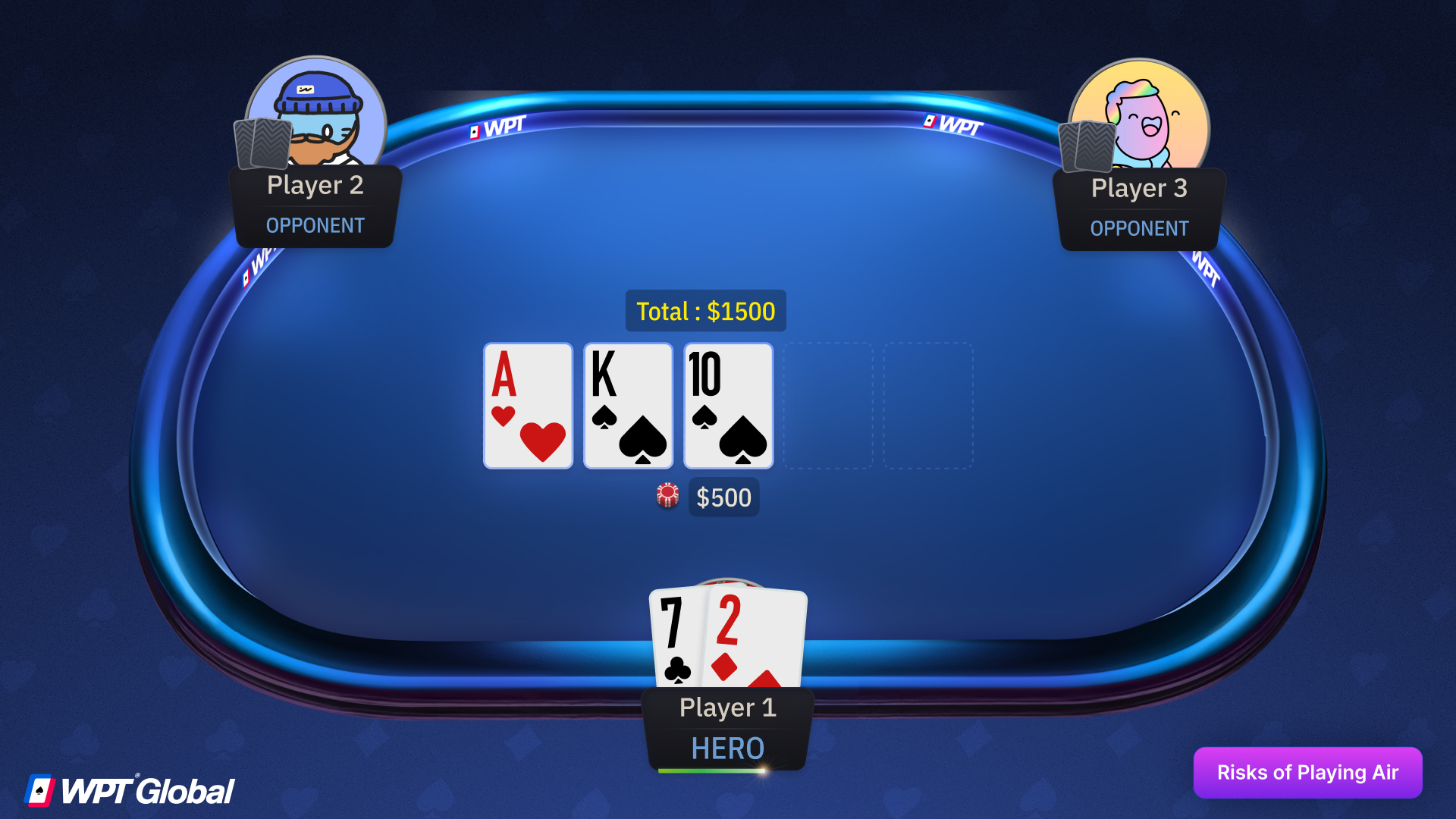
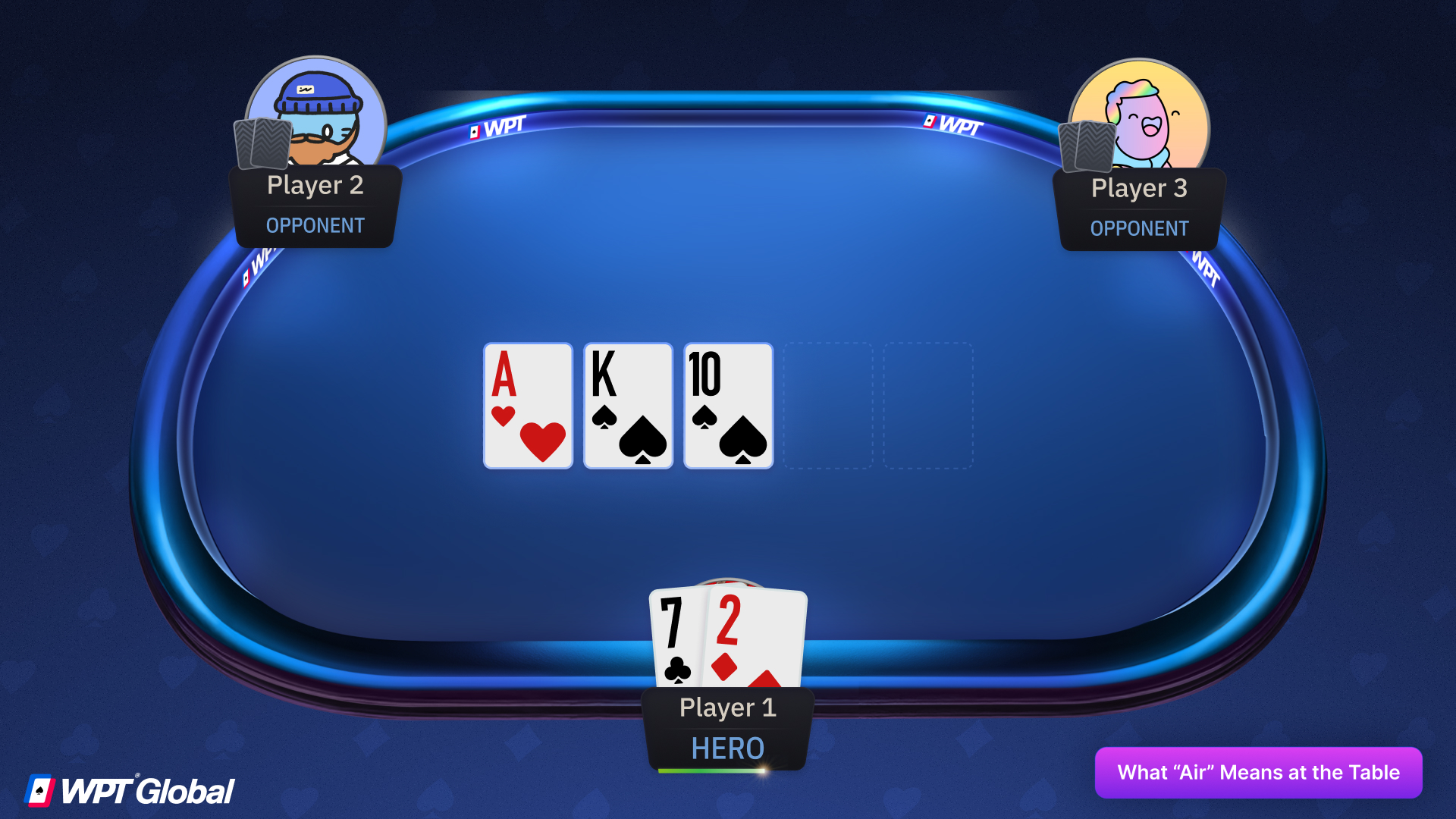
When you have air, you’re often holding cards that don’t connect with the board (or each other) in any meaningful way whatsoever.
- High card with no pair, straight, or flush draw
- Weak, unconnected cards that missed the board completely
- Hands with virtually zero showdown value
Air is the opposite of a value hand since it has no inherent strength, but in poker, a weakness can still be turned into an opportunity through bluffing.
How You Can Bluff with Air
Bluffing with air is one of the boldest plays in poker since you can only win if you can force your opponent to fold. Successful air bluffs usually rely on:
- Strong betting lines that tell a believable story:
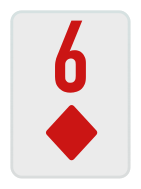
A bluff always works best when your betting matches what a strong hand would realistically do. For example, if the board comes in atand you raised preflop, betting the flop, turn, and river tells a consistent story that you flopped a straight or a strong made hand. If your bet sizes and timing mirror how you would play the nuts, opponents are far more likely to believe you and fold their hand.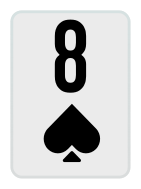
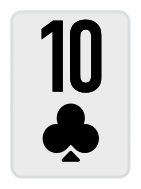
- Strong position to apply pressure after an opponent checks:
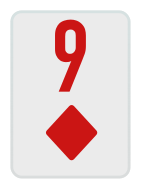
Position amplifies the power of a bluff. When you act after your opponent checks, you then gain control of the decision. For example, on a board such as, if your opponent checks from early position and you’re on the button, a bet represents a king or an overpair. Because you act last, opponents must then respond without knowing what you’ll do next, making your pressure even more effective.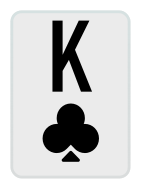
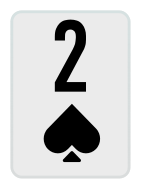
- A table image that supports your story:
Your past actions influence how opponents interpret your current bets. If you’ve shown down strong hands and avoided reckless bluffs, your bets will then carry credibility. For example, after previously betting big with top pair and showing your cards at showdown, a later river bet on a scary board will get more respect, even if you’re bluffing, because opponents associate your aggression with actual strength. - Understanding which opponents are capable of folding:
Not every player is a good bluff target. Some players call far too often, regardless of logic. If an opponent has already shown that they can fold medium-strength hands, a bluff therefore makes sense. For example, if a tight player folds their top pair earlier in the session, betting into them later on a coordinated board is more likely to succeed than bluffing a loose player who just hates folding.
When used correctly, bluffing with air keeps your play style balanced and prevents you from becoming too predictable to your opponents with only value bets.
Risks of Playing Air
Of course, betting with nothing carries a lot of risk. Bluffing with air too often makes you exploitable, since observant players will start calling you down lighter. Air is best used selectively and in spots where your opponent’s range is weak and your story makes sense.
By choosing your moments carefully, you can turn a worthless hand into a powerful bluffing tool, all while avoiding unnecessary chip losses.