
















 Customer Dispute Resolution Page
 Help Center
 Affiliate Program


What Does All-In Mean in Poker?
When a player declares they are “all-in,” every chip they have left in front of them will go into the pot.
- In cash games: An all-in risks your entire stack for that session. You may be able to buy in again.
- In tournaments: Going all-in can mean putting your entire tournament life on the line.
- Side pots: If multiple players go all-in with different amounts, side pots are created to balance the play, and each player’s pot will be adjusted accordingly.
When players go all-in, it instantly raises the stakes, creating immense pressure and forcing opponents into difficult decisions.

When Do Players Go All-In?
Players choose to shove all-in for different reasons; it all depends on the situation:
- Short stack play: With just a few chips left, an all-in can maximize fold equity.
- Premium hands: Strong starting hands likeor
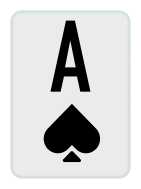
 often warrant full commitment to maximize winnings.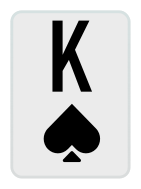
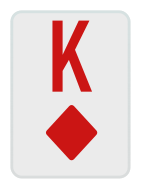
- Bluff shoves: Players risk everything to force folds and steal pots from opponents, a very risky but rewarding strategy.
- Tournament pressure: All-ins can be common in the later stages of tournaments, when blinds are high and stacks are shallow.
The all-in isn’t just a desperate move made by low-stack players; it’s often a carefully calculated one designed to maximize return.
Strategy Behind Going All-In
All-ins serve as both offensive and defensive weapons in poker:
- Apply maximum pressure: Opponents must risk their whole stack to call you.
- Simplify decisions: Shoving avoids difficult play on later streets or avoiding bad rivers or turns.
- Maximize value: Strong hands can get paid when opponents suspect a bluff. Maximizing the value of the play.
- Defend short stacks: With limited chips, going all-in is sometimes the only viable play.
Well-timed all-ins can shift the momentum of a game, but reckless ones can just as easily end your session at the table.

Examples of All-In Scenarios
All-ins can happen in countless poker situations, from desperate short-stack pushes to bold bluffs at the final table. Here are a few common examples:
- Short stack survival: You have just 10 big blinds left in the tournament and you have. Because you have few chips and strong equity, you move all-in preflop to either double up, or steal the blinds uncontested.
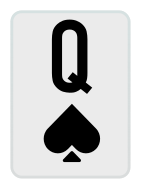
- Premium hand for value: You are in a cash game, you holdand are facing a large re-raise from your opponent. You shove all-in to get the maximum value from opponents who are holding weaker pairs or A-K.
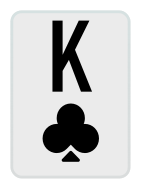
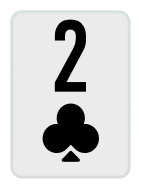
- Semi-bluff shove: You’re on the turn and you’re holdingon a board of
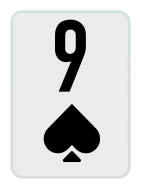
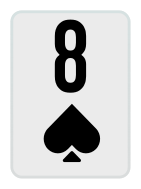 . You shove all-in with a straight draw and backdoor flush potential also, hoping for folds, but with outs if you are called.

These examples show how all-ins can be used aggressively or even defensively, but success depends on your timing, stack size, and opponent behavior.
Risks of Going All-In
Like every powerful tool, the all-in move has potentially severe downsides:
- Tournament elimination: If you lose, you’re out. You may be able to buy back in, but at a cost.
- Variance swings: Even strong favorites can lose once the chips are in. It is always a huge risk.
- Overuse: Constant shoving makes you predictable and exploitable. You may be called on a bluff.
Good players pick their spots wisely, always balancing aggression with patience to avoid unnecessary bust-outs and calls from opponents when they don’t want them.