








 Customer Dispute Resolution Page
 Help Center
 Affiliate Program


What Does Angle Mean in Poker?
An angle is any potential move designed to mislead or even manipulate an opponent without directly cheating or breaking any rules.
Common examples of angles can include:
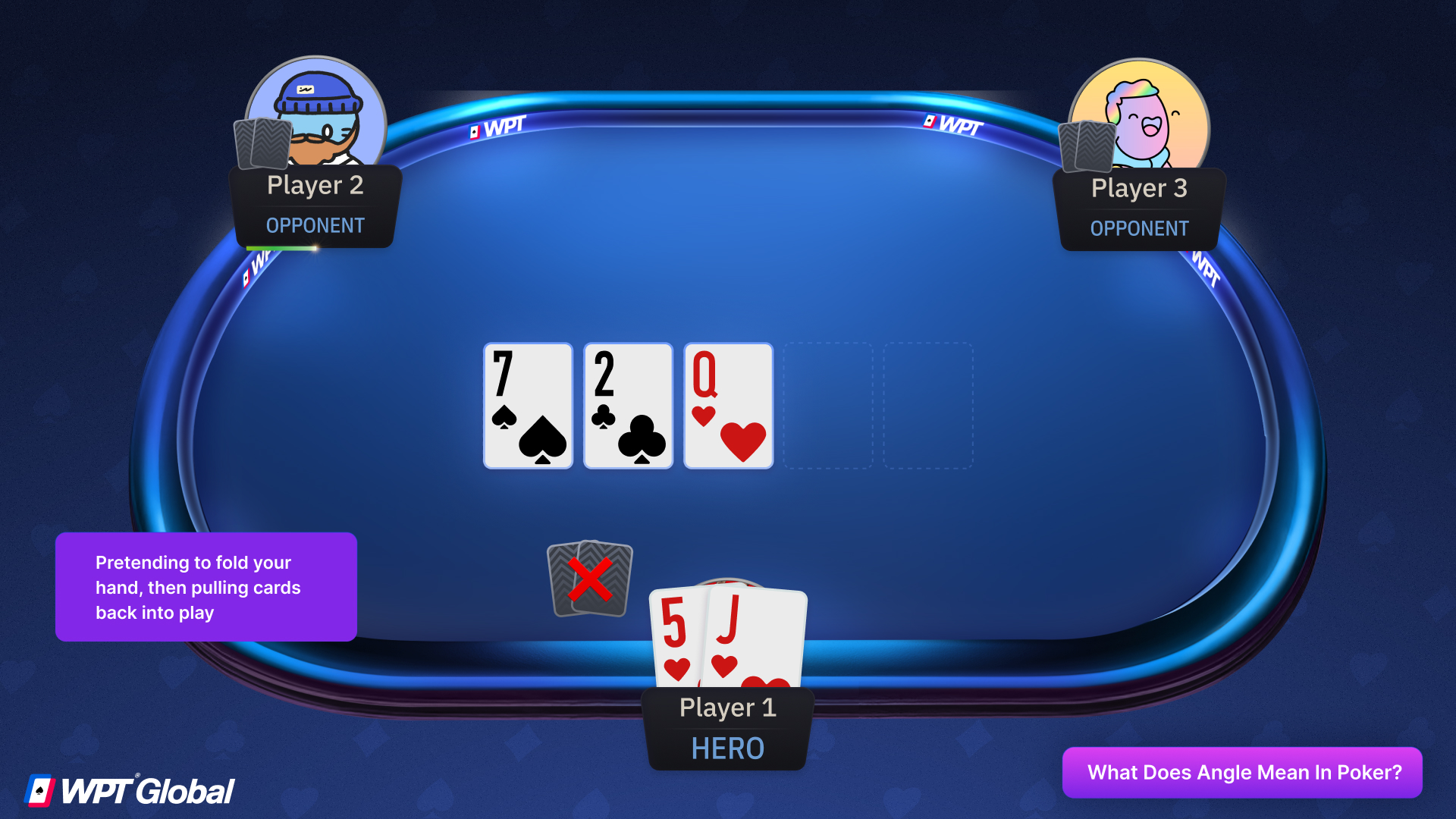
- Pretending to fold your hand, then pulling cards back into play
- Acting out of turn intentionally to gain information
- Misdeclaring (verbalizing) your hand strength to confuse and mislead opponents
- Making exaggerated physical gestures to imply the weakness or strength of your hand
Even though these tactics are not technically illegal under house rules, they are seen as unethical by most players because they rely on trickery and deception rather than skill.
Why Angles Are Frowned Upon
Angles can disrupt the integrity of the game by creating unfair advantages to players and also by frustrating the rest of the table.
- Damage trust: Players will lose respect for anyone caught using an angle
- Exploit etiquette: Angles abuse gray areas rather than utilizing skillful play
- Create disputes: Dealers and floor staff may need to intervene, which again disrupts the game
- Hurt reputation: Regulars known for using angles often get avoided or ostracized by the poker community
Poker is primarily a game of strategy and psychology. So it is generally considered that angles cross a line that most poker players believe shouldn’t be crossed.
Examples of Angles
Here are some real-world examples of angle plays you might see in your time at the felt. Look out for these moves.
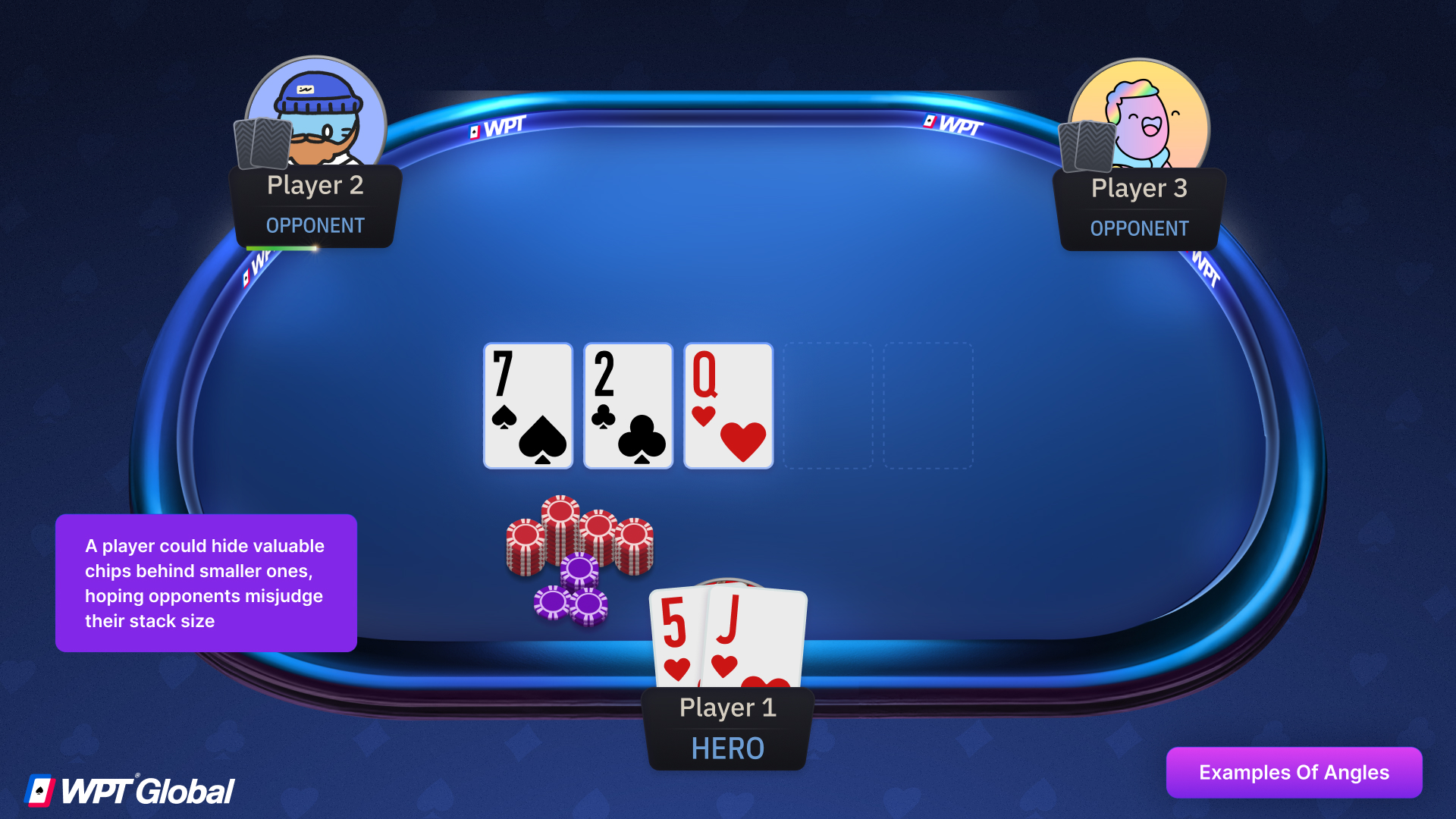
- A player could hide valuable chips behind smaller ones, hoping opponents misjudge their stack size
- A player could “call” softly, then claim they only meant to ask how much the bet was
- A player fakes mucking their cards to see if their opponents reveal their hands early
Each example shows how angles can blur the line between being clever and cheating. This is the core issue with angles, which is why the community strongly discourages this behaviour.