








 Customer Dispute Resolution Page
 Help Center
 Affiliate Program

What Is a Bad Beat Jackpot?
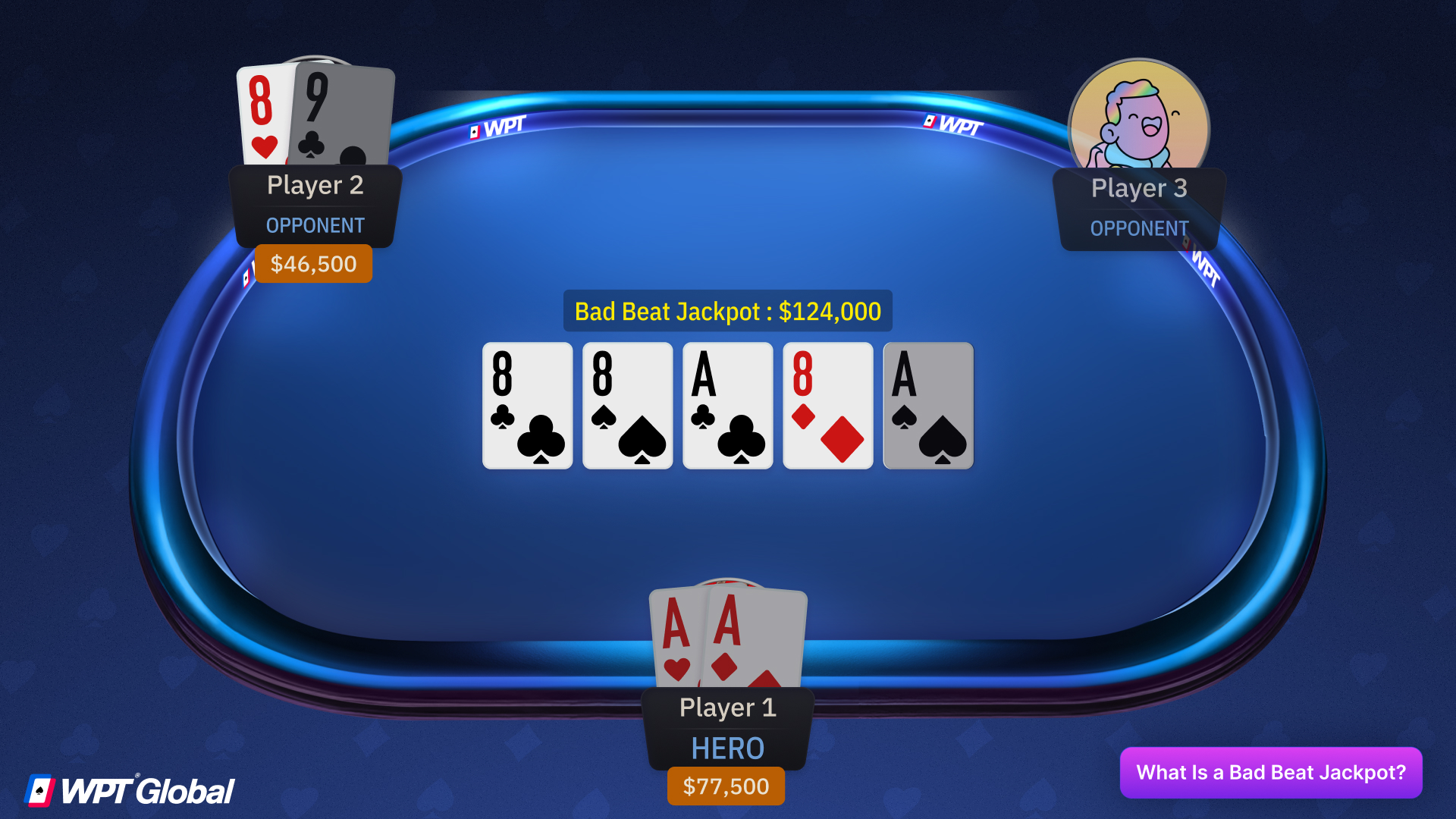
A bad beat jackpot is a shared prize pool that triggers when one of the rarest scenarios in poker happens: an extremely strong hand loses to an even stronger one. Here are the elements:
- Funded by rake: A small portion of each pot is set aside for the jackpot.
- Special criteria: Hands usually must be at least quads (e.g., aces full losing to quads).
- Shared payout: The loser, the winner, and all other players at the table will receive a share.
How Does a Bad Beat Jackpot Work?
Although the rules differ from casino to casino or site to site, the basic structure is usually the same:
- Losing hand (the “bad beat”): Gets the largest share of the jackpot.
- Winning hand: Receives a significant portion. Less than the loser.
- Other players at the table: Split the remainder as a reward for just being present.
This system softens the blow for the unlucky loser and rewards everyone involved at the felt.
Examples of Bad Beat Jackpots
Bad beat jackpots often make headlines because of the huge payouts involved:
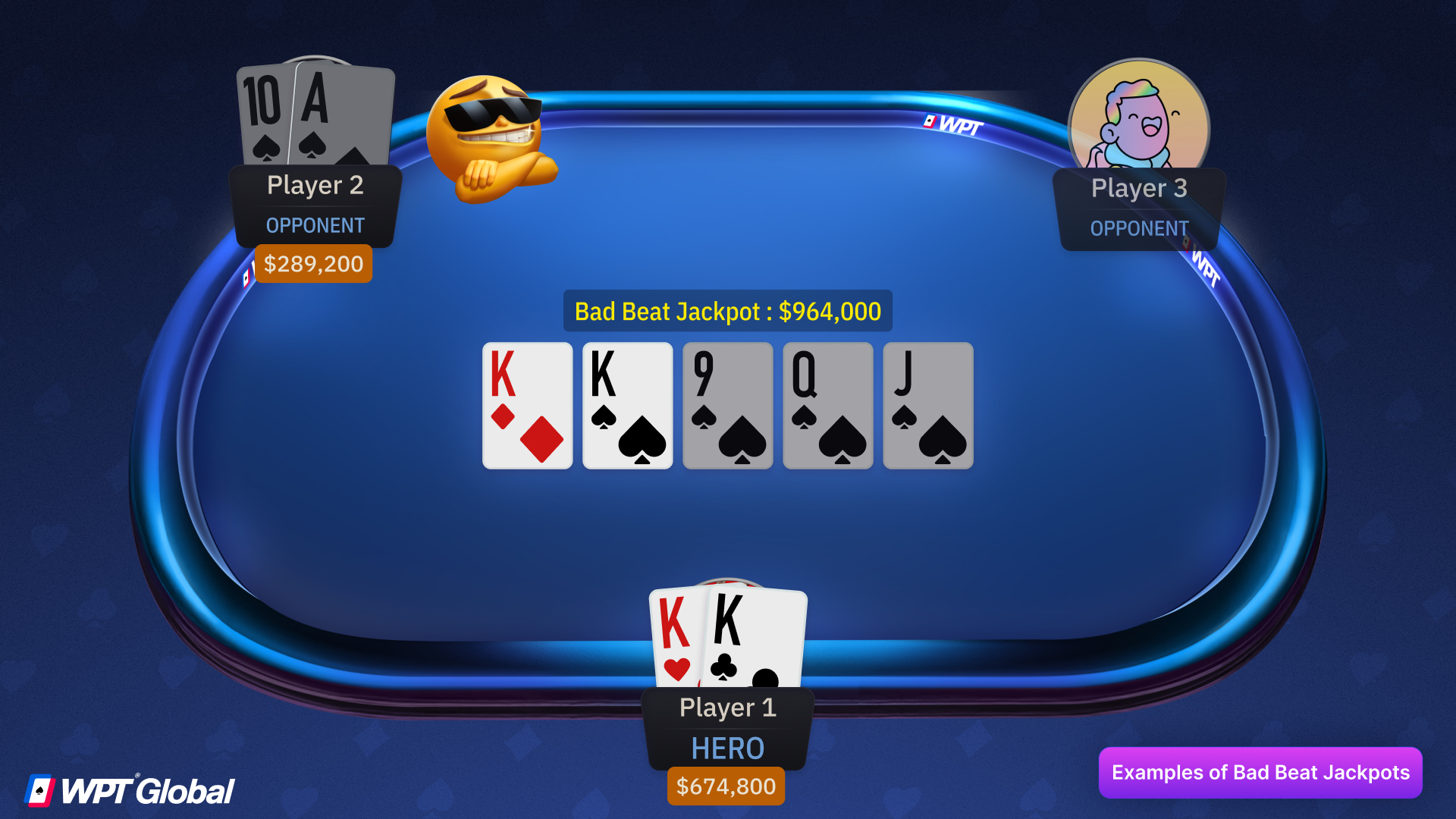
- A player loses with quad kings to a straight flush, triggering a six-figure jackpot for everyone at the table.
- Online poker rooms sometimes advertise jackpots worth over $1 million when the right hand clash occurs.
- At WPT Playground (2024), quad kings lost to a straight flush, with nearly $964,000 paid out among players.
These dramatic outcomes highlight why players love the excitement of bad beat jackpots.
Why Bad Beat Jackpots Are Popular
Bad beat jackpots add a layer of anticipation to every hand, especially in the later stages:
- Extra excitement: Any big clash could trigger a life-changing payout.
- Safety net: Losing with a monster hand doesn’t sting as badly, sometimes enabling less cautious betting.
- Community prize: Even players not in the hand can win, meaning everybody profits.
For many recreational players, jackpots are a major draw that keeps them coming back, since they add yet another layer of excitement to the table.