










 Customer Dispute Resolution Page
 Help Center
 Affiliate Program


What Does Behind Mean in Poker?
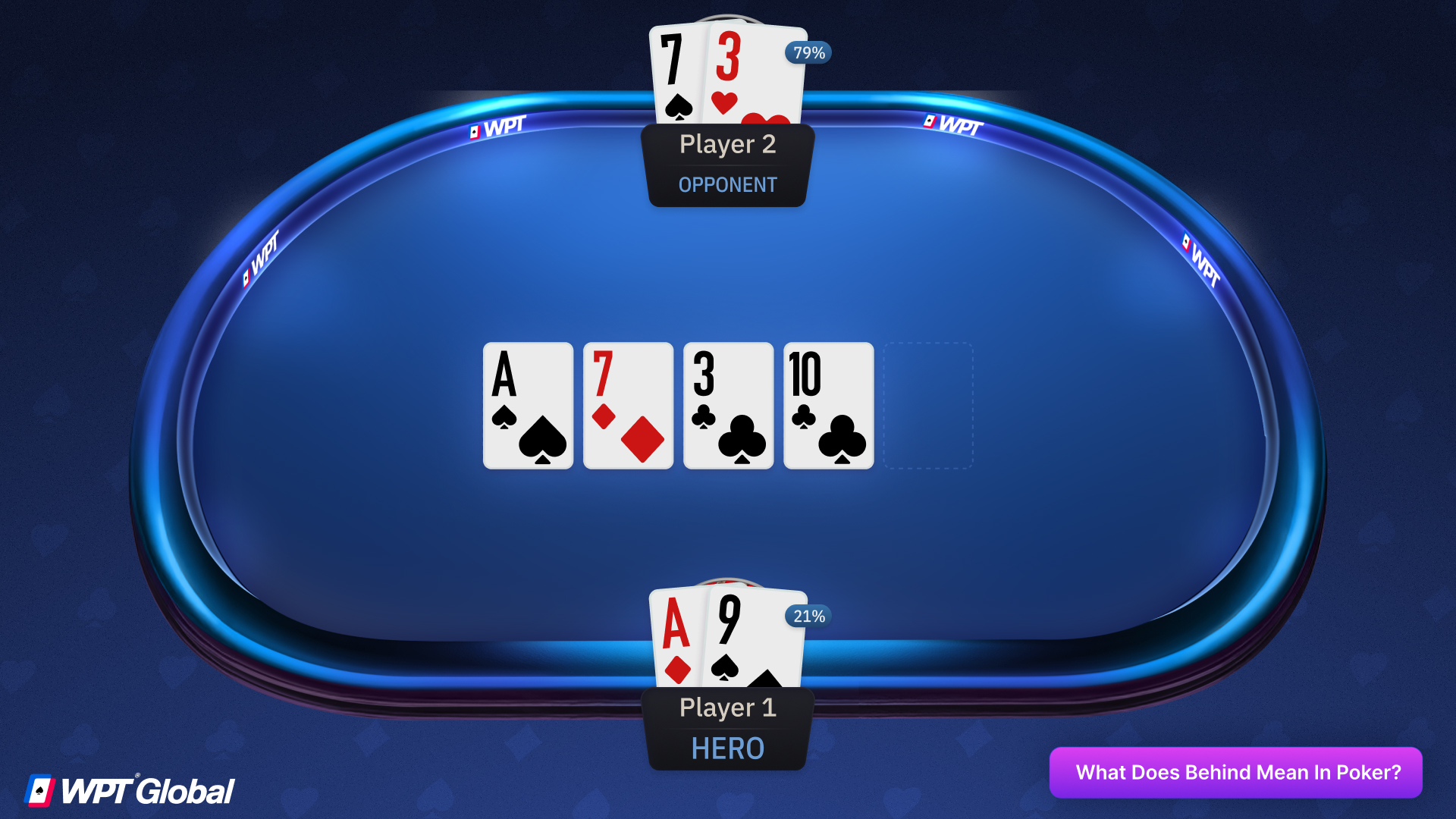
Being behind is a very simple concept:
- Weaker hand now: Your current holding is second-best or worse compared to your opponents.
- Chance to improve: You could still win if future cards help you.
- Risk of elimination: If you’re all-in and behind with no outs, the hand is over.
Recognizing when you’re behind is a crucial skill as it helps you decide whether to continue, bluff, or fold. Once you know where you stand, you can make smarter choices.
Why It Matters to You
Understanding when you’re behind can help you massively:
- Avoid costly mistakes: Don’t keep calling bets when you think you’re likely crushed.
- Spot bluff opportunities: If an opponent only appears ahead, you can still pressure them into raising the pot.
When you’re aware that you’re behind, you’re not just reacting; you’re managing risk, and that can be the difference between casual play and strategic, elite poker.
Example of Being Behind
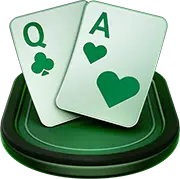
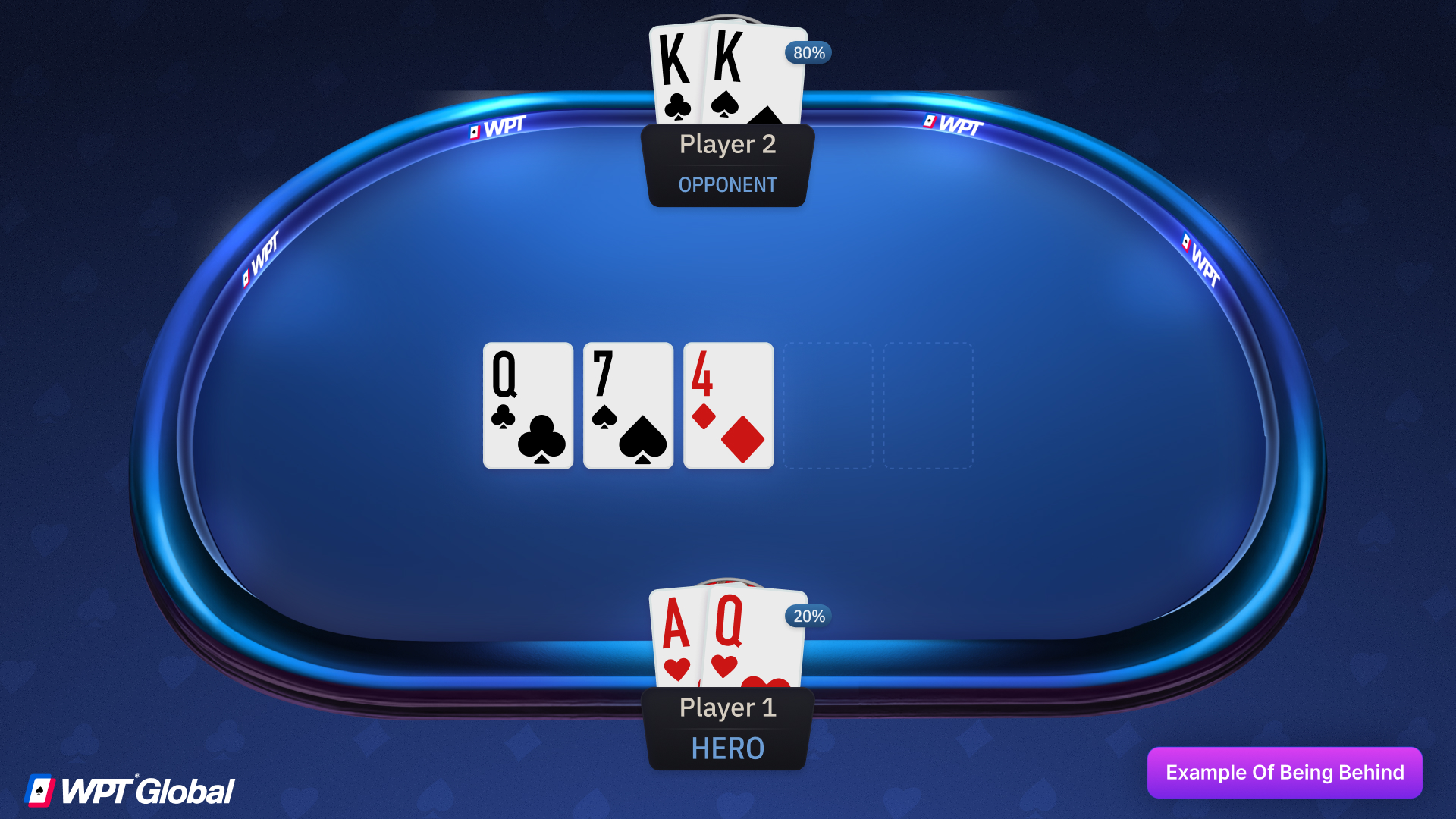
You hold A♥ Q♥, and the board is Q♣ 7♠ 4♦.
- You have top pair with top kicker.
- Your opponent flips over.
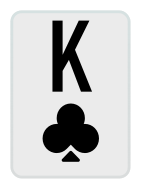
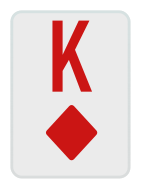
- You’re behind because your pair of queens is weaker than their pocket kings.
But if an ace falls on the turn or river, you’d move ahead with two pair. This example shows that being behind doesn’t always mean you’re drawing dead; it means you’re only trailing for now.
Share