














 Customer Dispute Resolution Page
 Help Center
 Affiliate Program


What Does Big Bet Mean in Poker?
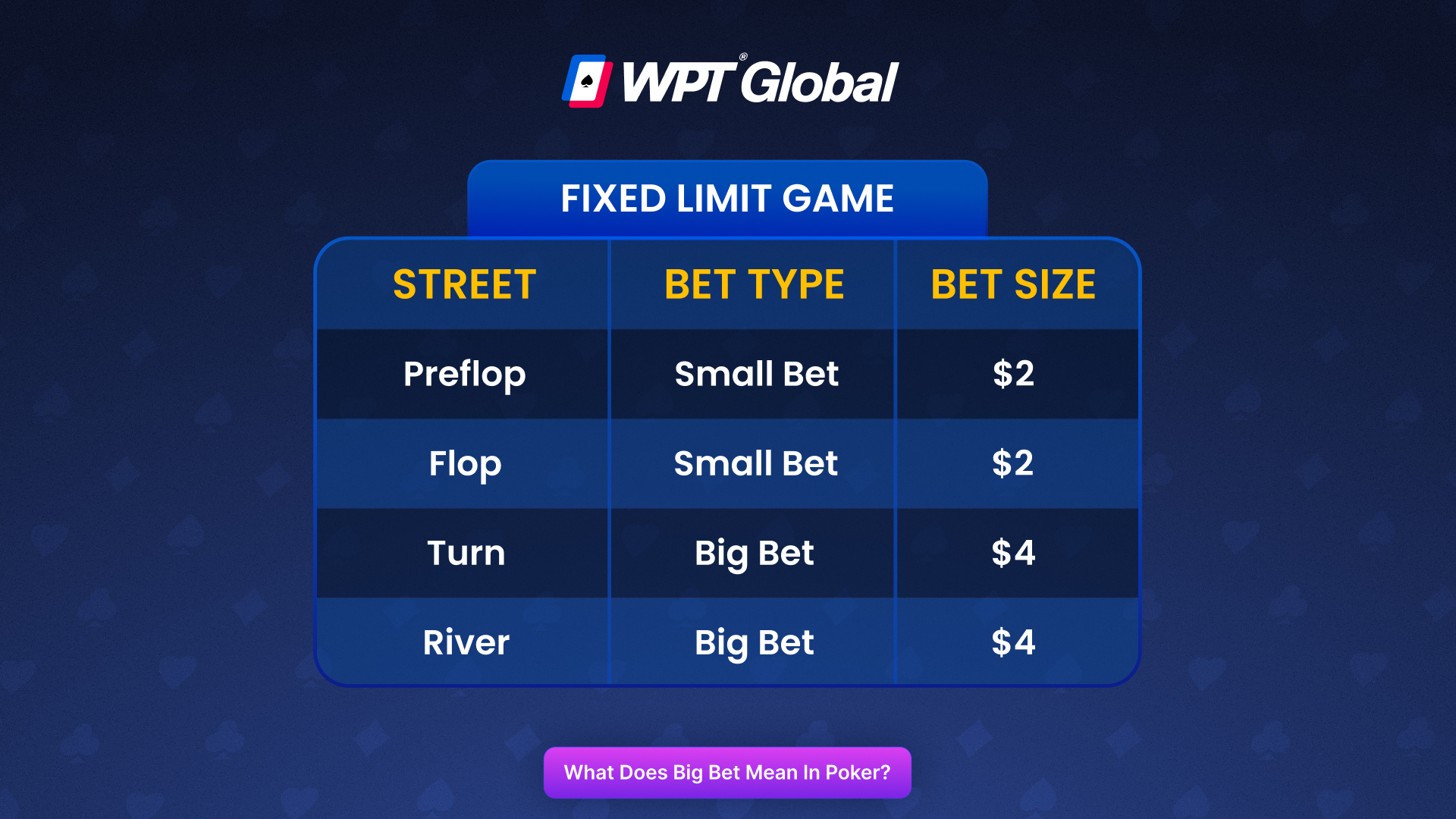
The big bet is a structural betting limit rule in Fixed Limit games that doubles the size of the small bet on later streets.
- Earlier streets: Players bet in increments of the small bet (e.g., $2).
- Later streets: Bets and raises switch to the big bet (e.g., $4).
- Consistent sizing: Every action must follow the set amount in every hand.
This fixed increase makes later betting rounds more expensive to participate in, and changes the strategy of when you commit chips and how you play your hand.
Why Big Bets Matter to You
Knowing when big bets apply and how to play them helps you prepare for how expensive later streets will be.
- Higher cost of calling: Defending weak hands becomes riskier. So consider your position and your opponent's tendencies in this scenario.
- More value with strong hands: Winning big pots depends on later streets, be prepared to bet.
- Pot odds shift: You must adjust your math as the bet size doubles.
By understanding big bets, you’ll know why fixed limit games build slowly at first, and then jump in intensity once the turn and river arrive.
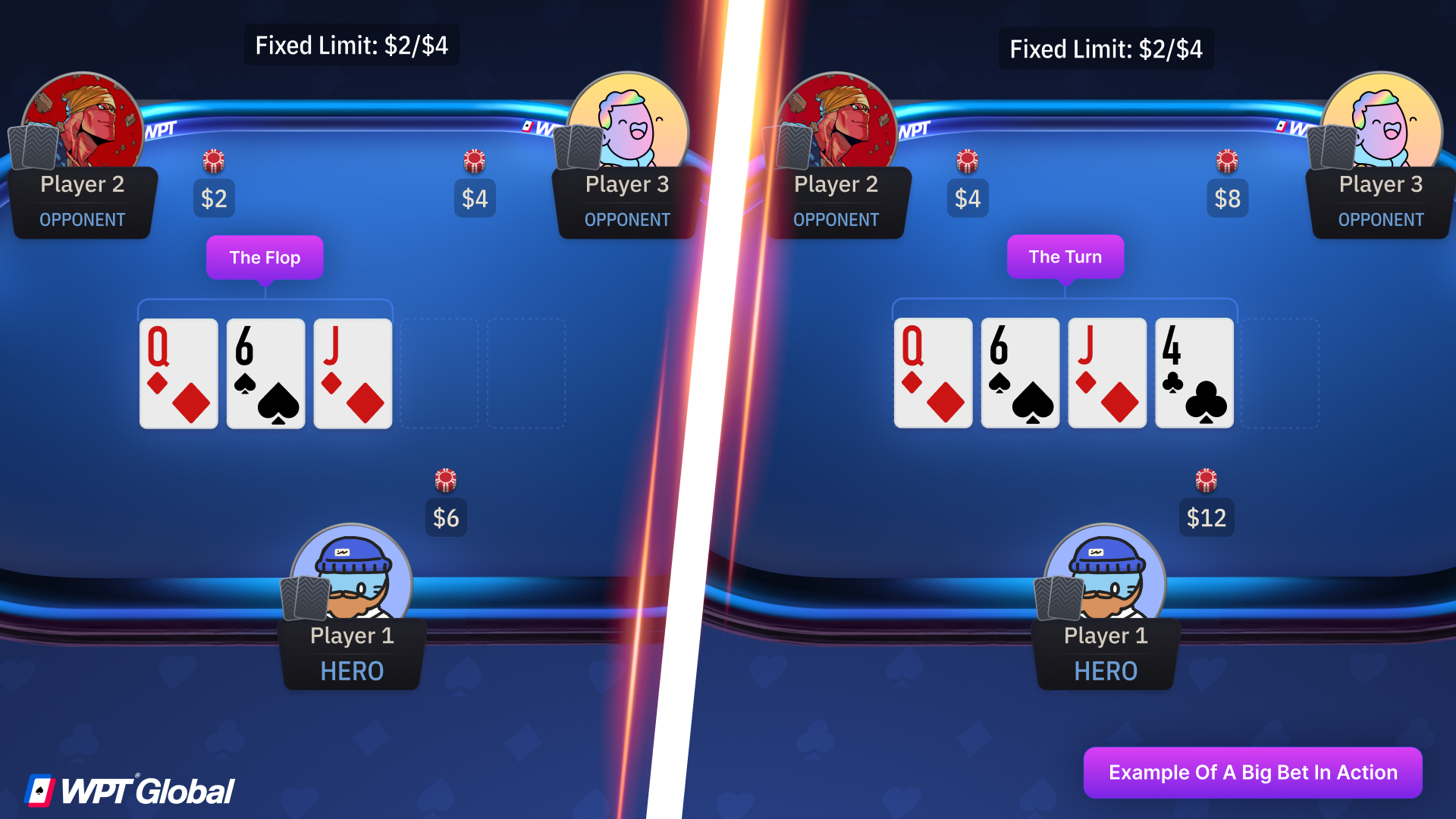
Example of a Big Bet in Action
You’re in a $2/$4 Fixed Limit Hold’em game:
- Preflop and flop: Bets and raises are locked at $2 each.
- Turn and river: Bets and raises increase to $4 each (the big bet).
This means calling down becomes more costly in the later stages, and you’ll often need stronger hands to continue your hand.
Share