











 Customer Dispute Resolution Page
 Help Center
 Affiliate Program


What Does Big Blind Mean in Poker?
The big blind is a built-in rule that forces money into the pot before the cards are even dealt, and you can recognize it through a few simple features:
- Forced bet: You must post it before you even see your cards.
- Rotates clockwise: Each player takes turns posting it as the dealer button moves around the table each hand.
- Sets minimum raise: Other players must at least match or raise the big blind to enter the pot and see the flop.
By understanding the role of the big blind and why it’s used, you’ll know how every poker hand begins and why this position matters.
Why Poker Uses a Big Blind
Poker uses the big blind to create action in every hand, and once you see why it exists, you’ll understand how it keeps games fair and competitive, but most of all, interesting.
- Creates action: Forces money into the pot, so players compete for chips each hand.
- Prevents stalling: Without blinds, players could fold endlessly, just waiting for premium hands to play.
- Balances contribution: Everyone has to post the blinds equally as the button rotates.
The big blind isn’t just tradition; it’s the system that makes poker flow, giving every player a reason to compete from the very first card.
Big Blind vs Small Blind
The small blind and big blind are similar and linked, but each plays a different role in seeding the pot and shaping the first round of action.
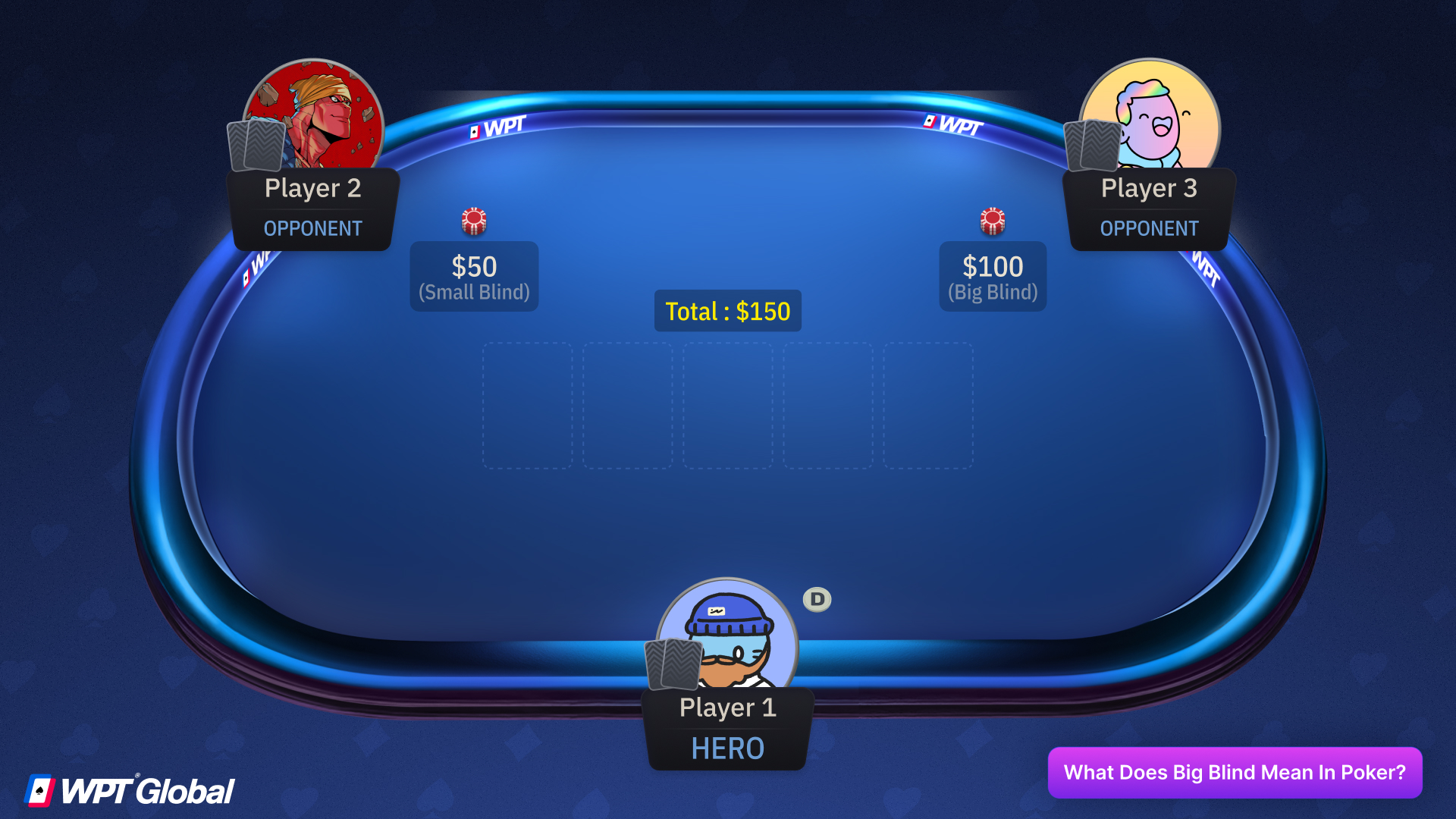
- Small blind: Usually half the size of the big blind, posted by the player to the dealer button’s immediate left. This player must call or raise on the big blind to enter the action.
- Big blind: Double the small blind, posted by the next player along on the table.
- Together: They seed the pot and force the first round of action.
The blinds complement each other, and together they drive the action in every poker game you play.
Example of Posting a Big Blind
To see the big blind in practice, let’s take a look at how it works in a simple $1/$2 cash game hand:
- The player to the left of the dealer button posts the $1 small blind.
- You, in the next seat, then post the $2 big blind.
- Other players must call at least $2 or raise to stay in the hand.
- The small blind must also call the $2 or raise to see action. Because they have already posted $1, they only need to post $1 more to call.
This very simple hand shows how posting the big blind affects the pot immediately and sets up the first key decisions you’ll face in every round of poker.