












 Customer Dispute Resolution Page
 Help Center
 Affiliate Program


Why Do Players Blind Off?
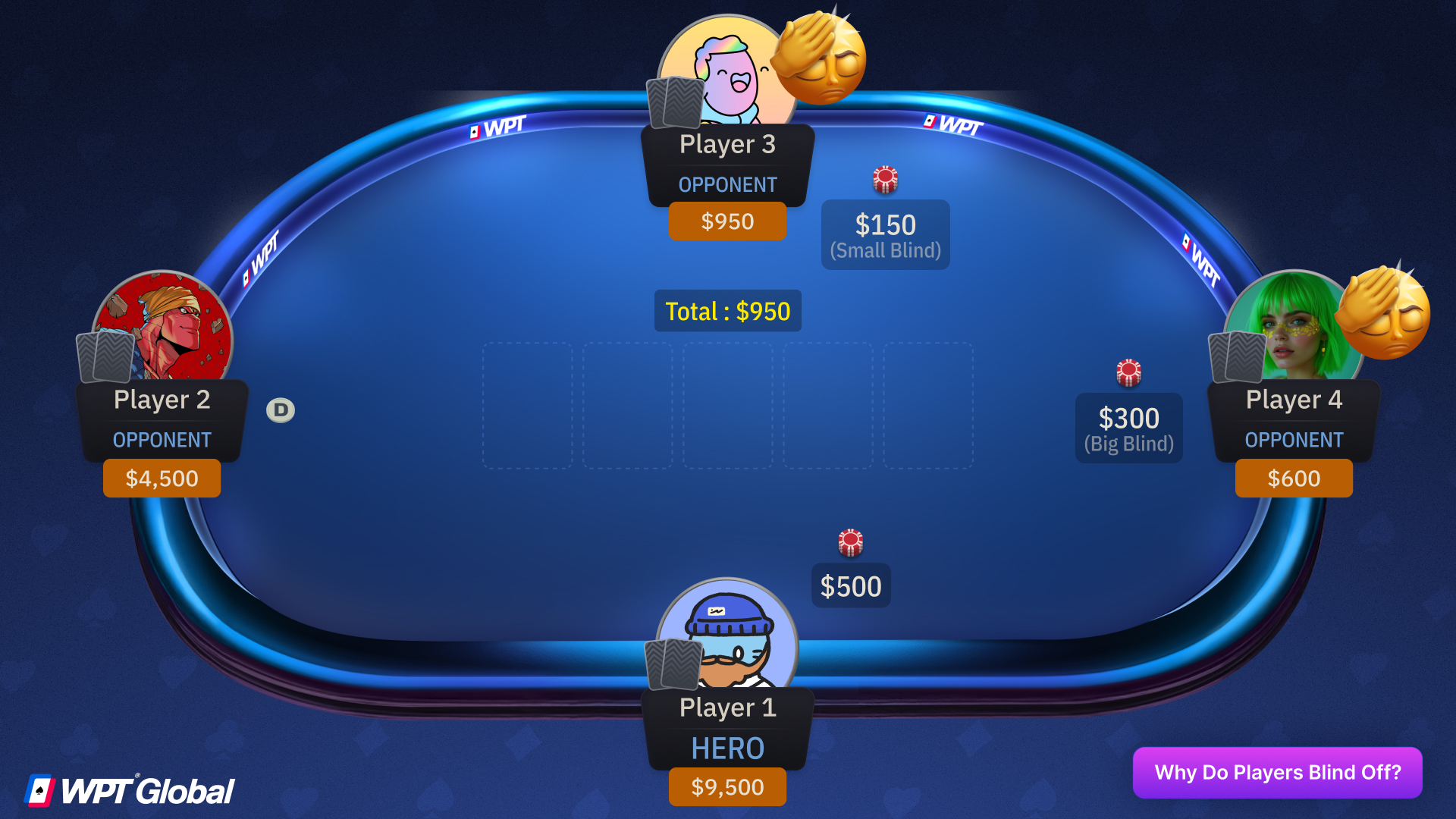
Blinding off happens when you wait too long for premium hands to come around, or stall without adjusting to rising blinds. Even though folding feels safe, the blinds can eat away at your stack until you’re forced to go all-in.
- Tournament blinds increase over time, pressuring shorter stacks into more action.
- Folding every hand allows blinds to drain your stack round by round.
- A fear of busting out can lead to over-tight play.
- Sitting out or being away from the table also causes blind off.
This steady loss is often more dangerous than losing one big pot; you may not realize how fast your stack is disappearing with blind off.
The Impact of Blinding Off
Blinding off doesn’t just shrink your stack, it changes your entire tournament experience:
- Reduces fold equity, since short stacks get called more often.
- Limits your options, leaving you with push-or-fold decisions only.
- It can increase ICM pressure near the bubble or pay jumps.
- Makes chip recovery almost impossible once your stack dips too low.
By the time you notice, blinding off often leaves you with too few chips to attempt a comeback. That’s why adjusting early is critical.
How to Avoid Blinding Off
Surviving tournaments requires more than waiting for good cards; you must balance patience with action.
- Open up your ranges as blinds rise to stay ahead of the tournament structure.
- Look to steal spots in late position when others fold.
- Defend your blinds selectively with playable hands, not with every hand.
- Don’t sit out unnecessarily; every orbit costs you chips.
Playing proactively can help stop you from bleeding out and gives you a real chance to rebuild your stack.