













 Customer Dispute Resolution Page
 Help Center
 Affiliate Program


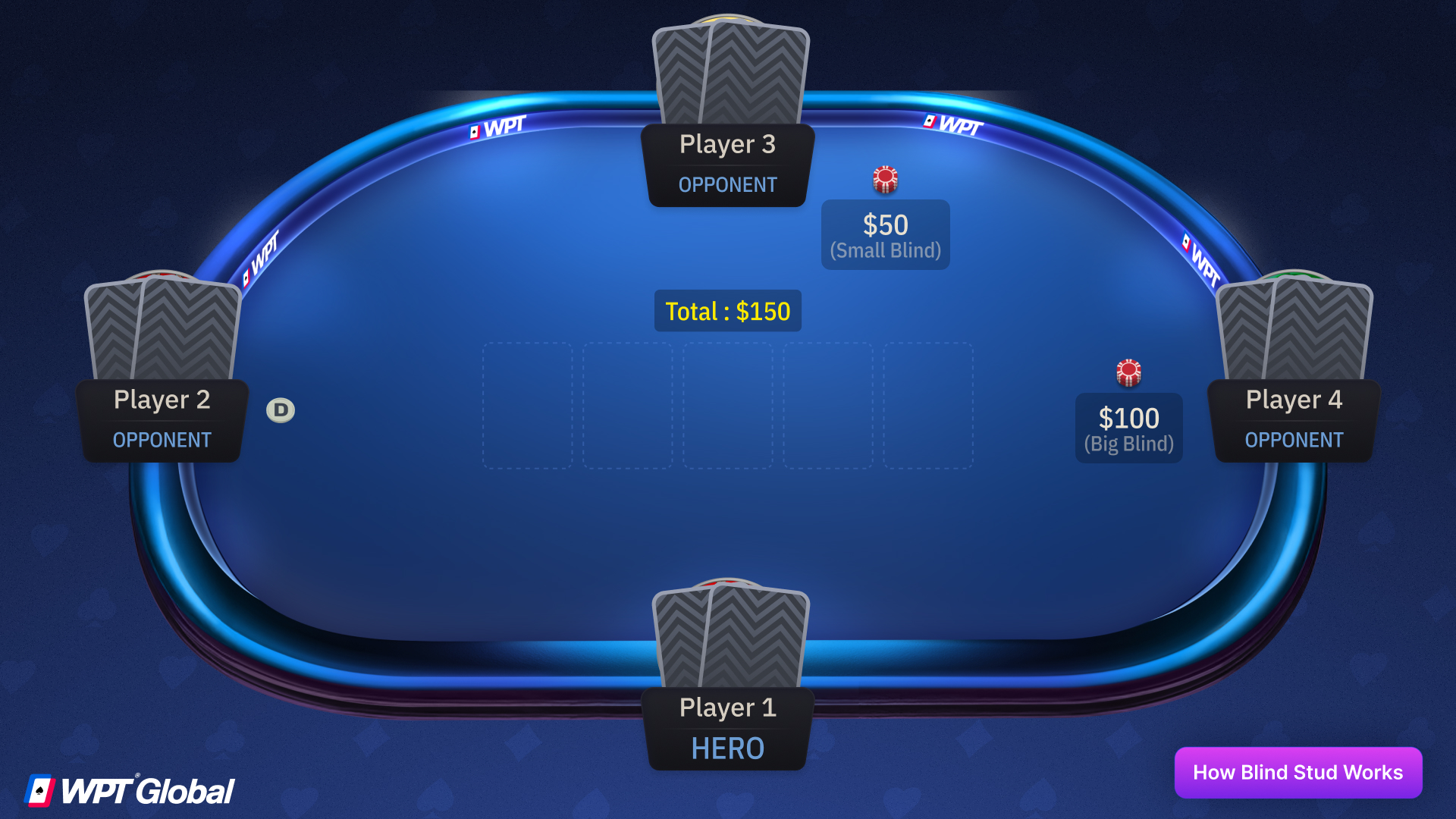
How Blind Stud Works
Blind Stud keeps the traditional structure of Stud but with one major twist: no face-up cards appear at any point until showdown after all betting is concluded. This creates a game that is faster, more emphatic, and completely luck-driven.
- Every player receives all cards face down.
- Players can still look at their own hole cards.
- Betting rounds then follow the normal Stud order.
- No visible information means reads of opponents are very difficult.
- The winner is revealed only at the showdown after bets are concluded.
This format removes the skill element of tracking any upcards, meaning Blind Stud is more heavily based around gambling and fun as opposed to the more strategic regular stud.
How Blind Stud Differs From Regular Stud
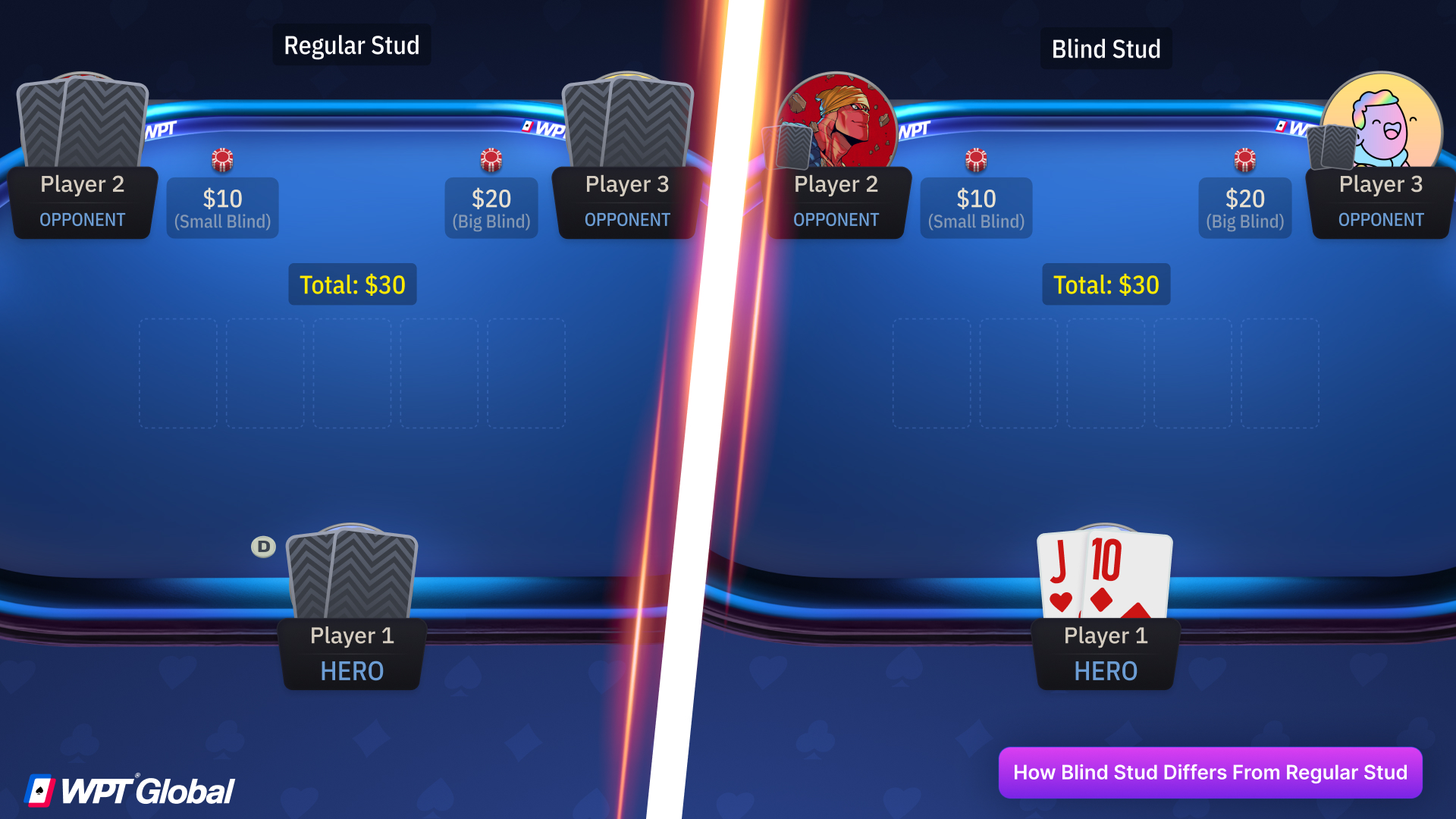
The absence of visible cards changes the entire nature of the game and is the key difference.
- Stud: Players receive a mix of face-up and face-down cards.
- Blind Stud: All cards are hidden, no face-up cards, meaning no board information.
- Strategy impact: Less focus on observation, more focus on betting patterns and luck.
- Game flow: Faster rounds since players cannot analyze any visible cards.
Blind Stud is less common in serious poker circles, but interesting as a novelty or home game twist. There is still, however, a certain level of strategy involved.
Strategy Considerations in Blind Stud
No cards are visible, so your decisions rely almost entirely on your own hole cards and your betting reads. That shifts the game from deep analysis to short-term gambles.
- Focus on your own hand strength rather than your opponent's cards.
- Pay attention to betting patterns, since there’s no card information.
- Expect higher variance; strong hands lose more often due to luck.
- Use Blind Stud for casual play as opposed to serious grinding.
Blind Stud may lack the skill of traditional poker games, but it can be fun as a novelty game when players want a quick, unpredictable format.