










 Customer Dispute Resolution Page
 Help Center
 Affiliate Program


At its core, bluffing is about telling a believable story to your opponents. Every bet you make can paint a picture of your hand strength, and a good bluff can convince your opponents that folding is their safest choice.
- Bluffing succeeds when your opponent’s perception of your range outweighs the reality of your cards.
- It works best when the board texture and previous action support your “story.”
- A bluff ultimately needs credibility.
Bluffing is not simply lying; it’s strategic storytelling. You’re using logic, timing, and a painted image to make your opponents believe something that isn’t true, at least not this time.

Why Bluffing Matters in Poker
Bluffing matters a lot in poker because it keeps your poker strategy balanced and unpredictable. If you only bet or raise when you have a strong hand, then attentive opponents will quickly adjust by folding whenever you show a little bit of aggression. Bluffing forces them to defend more often, which then allows your value hands to get paid.
Beyond balance, bluffing also lets you win pots that your cards alone would probably never earn. In many hands, especially when the board misses most ranges, the strongest play is not having the strongest hand but having the strongest story. This ability to apply pressure without showdown value is what can get you a lot of pots.
How to Bluff Effectively in Poker
Effective bluffing starts with having good logic, not just courage. Before you bluff, you should ask whether your betting line makes sense given the situation of the board, your position, and the action so far. If your story doesn’t align with what a strong hand would realistically do in that case, then observant opponents will call you down.
Good bluffs also use consistent sizing. When your bluff bets mirror your value bets, opponents will struggle to distinguish between the two. Also, successful bluffing always considers the opponent so keep that in mind. You’re not trying to force every single player to fold, only those capable of doing so.
Advanced Poker Bluffing Concepts
Advanced bluffing shifts the focus from individual hands to ranges. So instead of thinking “I’m bluffing with this hand,” you need to think in terms of how many strong hands and bluffs exist in your range overall. This makes your aggression much harder to exploit.
Blockers can play a major role at this level. Holding key cards that reduce the number of strong hands your opponent can have increases your chances of bluff success.
Advanced players also manage bluff frequency very carefully, ensuring their betting patterns remain balanced across different board textures and situations.
How to Know If Someone Is Bluffing in Poker
Spotting a bluff requires evaluating whether your opponent’s actions make sense as a whole. Strong hands usually follow logical betting sequences, while bluffs can often show inconsistencies.
Sudden aggression and unusual bet sizing, or lines that don’t match the board texture, are common warning signs.
You should also consider opponent tendencies. Some players bluff frequently when checked to, while others rarely bluff at all. Recognizing these patterns allows you to separate legitimate strength from attempted pressure and in turn make better calling decisions.
Common Bluffing Mistakes
One of the biggest bluffing mistakes is bluffing far too often. Even good bluffs lose value if they become predictable. Another common error is targeting the wrong opponents, for example, players who dislike folding will call you, regardless of how strong your story is.
Bluffing in multiway pots is also a frequent leak you should take care of. With more players involved, the chance that someone connects with the board increases sharply, so always consider this.
Successful bluffing relies on discipline, selectivity, and a clear understanding of why the bluff should work.
Bluffing Example for Beginners
You’re heads-up on the river holding Q♦ J♦ on a board of K♣ 8♦ 4♠ 2♥ 9♣. Your opponent checks after calling earlier streets, therefore signaling uncertainty.
By betting a reasonable amount, you represent a king or a strong made hand. Your opponent folds, not because your cards improved, but because your line made sense.
This example shows the core principle of bluffing: when your actions align with a believable story, you can win pots even without showdown value!
Types of Bluffs in Poker
Bluffs aren’t a one-size-fits-all process. The best players in the world can vary their bluff types depending on the situation, the stack sizes, and opponents.
- Pure Bluff:
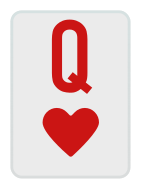
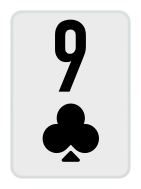
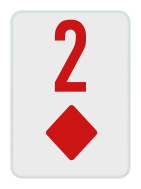
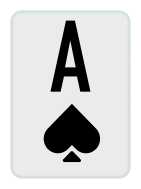
A pure bluff is when you bet or raise with a hand that has no realistic chance of improving. You rely entirely on fold equity to win the pot.
Example: You holdon a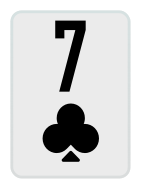
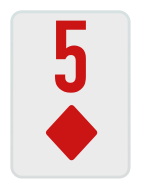 board. With no pair or draw option, you bet the river to represent an ace, hoping your opponent folds a marginal hand.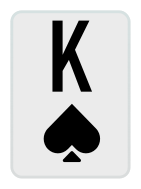
- Semi-Bluff:
A semi-bluff is made with a hand that is currently weak, but has the potential to improve into a much stronger hand. This gives you two ways to win: by forcing a fold or by hitting your draw.
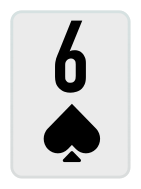
Example: You beton a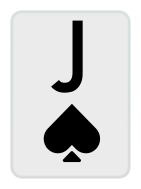 flop. If your opponent folds, you win immediately; if they call, you can still make the nut flush.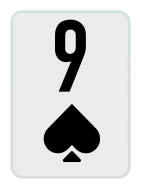
- Continuation Bet (C-Bet) Bluff:
A continuation-bet bluff occurs when you raise preflop and then also bet the flop even though you completely missed it. You are representing that strength from your preflop aggression.
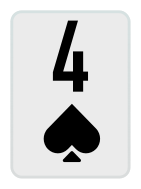
Example: You raise with, miss a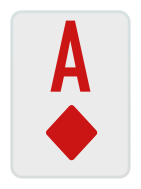
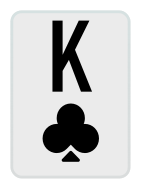 flop, but bet anyway to represent an overpair or strong ace.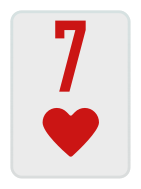
- Double or Triple Barrel Bluff:
This bluff continues across multiple betting rounds to maintain a consistent story of strength. Each bet reinforces the previous one in your story.
Example: You bet the flop, you bet the turn, and you fire the river on a board that completes obvious draws, representing a strong made hand your opponent is very unlikely to call. - Overbet Bluff:
An overbet bluff uses an unusually large bet to apply maximum pressure and force folds from medium-strength hands.
Example: On the river, you bet twice the size of the pot on a very scary board, representing the absolute nuts and pressuring hands such as top pair into folding. - Backdoor Bluff:
A backdoor bluff happens when your potential draws miss, but the final board allows you to represent a strong hand anyway.
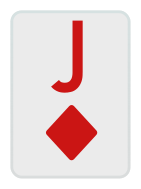
Example: You holdand miss your draw, but the river completes a flush or straight. You bet, representing the completed hand even though you don’t have it.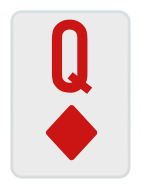
Each bluff type serves a purpose, and the best players know when to shift between them as the hand develops.

The more you understand which kind of bluff suits which situation, the more confident you’ll be when pressure is on both you and your opponent.
The Psychology Behind Bluffing
Every successful bluff relies on reading your opponents as much as reading the board. Knowing who to bluff and when can turn you from a reckless player to a strong one.
- Tight players fold more often, making them ideal bluff targets.
- Loose or curious players call too frequently; bluff them less.
- Your own table image determines credibility: if you’ve shown strong hands, your bluffs carry more weight going forward.
- Body language, timing, and betting rhythm often reveal nerves or strength to opponents.
Bluffing plays directly into human psychology: fear, ego, and the desire to be “right.” Once you understand these emotions in yourself and your opponent, bluffing becomes a weapon, not a gamble.
The next step is to turn that psychological edge into a strategic plan.
When to Bluff
Bluffing isn’t about being bold; it’s about being balanced. The best bluffs make sense within your overall strategy and the hand’s narrative that you have told.
- Bluff in positions where your range naturally includes strong hands.
- Choose board textures that don’t connect with your opponent’s range.
- Keep your bet sizing consistent with your other value hands.
- Don’t overdo it; the power of a bluff comes from the scarcity and unexpectedness.
You should balance your value bets and bluffs, roughly one bluff for every few value hands, to remain unpredictable. Remember this principle, but live reads and game flow are still important at the felt.
When your bluffs align with believable value lines, opponents can’t easily tell if your story is true.
When Not to Bluff
Bluffing well means knowing when not to bluff. Sometimes, folding or checking back is more profitable than forcing the issue. Especially in the long run.
- Don’t bluff opponents who never fold.
- Avoid bluffing in multi-way pots.
- Skip the action of bluffing when your hand has showdown value.
- Don’t bluff at random; always try to tell a believable story.
Pick your moments carefully. You can win more by bluffing strategically, not frequently.