What Makes Someone A Good Poker Player: Skills & Characteristics

What Makes Someone A Good Poker Player: Skills & Characteristics
Author
Harry Elliott
Reviewed by
Jeff Kimber
Updated Date
Oct 28, 2026
Read Time
9 Min Read

Key Takeaways

  • Discipline is the most important trait in poker, guiding consistent, controlled decision-making and preventing costly impulsive plays.

  • Emotional control helps players avoid tilt, stay rational after bad beats, and protect their bankroll from frustration-driven mistakes.

  • Patience allows strong poker players to fold weak hands and wait for high-probability situations instead of forcing unnecessary action.

  • Hand reading involves analysing betting patterns across multiple streets to estimate an opponent’s likely range of hands.

  • Bankroll management protects poker funds and ensures long-term sustainability by reducing the risk of going broke during variance.

  • Adaptability enables players to adjust their poker strategy based on opponent tendencies rather than using a fixed, predictable approach.

  • Understanding poker math and odds provides a measurable edge, reinforcing that poker is a skill-based game built on probability, not pure luck.

What makes someone a good poker player? The answer lies in a combination of mental resilience, strategic understanding, and the ability to remain calm during inevitable swings in variance. Consistent success at the table is not based on luck alone, but on a set of core skills that separate disciplined, profitable players from the rest.

In this article, you will learn the key characteristics that define a strong poker player, why each trait is essential for long-term success, and how you can begin developing these skills immediately. Whether you are playing your first hand or building on years of experience, these principles apply at every level of the game.

Disciplined poker player demonstrating focus and emotional control at the poker table

Discipline: The Foundation of Every Good Poker Player

Discipline is widely considered the most important trait a poker player can develop. It is often the defining factor between long-term profitability and consistent losses. Players who succeed over time rely on structured decision-making, while those who lack discipline tend to make impulsive choices that erode their bankroll.

In practical terms, discipline means making decisions based on logic, probability, and sound poker strategy rather than emotion or ego. It involves folding when the situation demands it, even if the fold feels uncomfortable. It also means avoiding the temptation to chase losses, play outside your bankroll limits, or remain in games that are not favorable. Maintaining consistency in your approach, even during downswings, is a hallmark of disciplined play.

Discipline acts as a safeguard against common mistakes such as tilt, revenge betting, and playing weak starting hands out of frustration. Without it, emotional decisions can quickly outweigh strategic ones, leading to avoidable losses. Strong discipline keeps your play controlled, rational, and aligned with long-term success.

Why Discipline Matters More Than Natural Talent

Natural talent may help you win individual hands, but discipline is what supports consistent success over an entire poker career. Long-term profitability depends far more on structured decision-making and self-control than on short-term luck.

Elite players such as Ben Sulsky, Ike Haxton, and Phil Ivey did not reach the top through luck alone. Their success is built on disciplined study, consistent self-improvement, and adherence to strong poker principles, even after achieving significant financial success. They step away from unfavorable games, manage frustration effectively, and continuously refine their strategy without allowing ego to dictate their decisions.

Discipline also requires honest self-evaluation. Regularly ask yourself whether your current decisions are maximizing your expected value and aligned with sound poker strategy. Objective analysis, even when uncomfortable, is essential for long-term growth. Studying how experienced professionals approach the game can further reinforce disciplined thinking and strategic consistency.

Emotional Control: Keeping Your Head When Cards Go Sideways

Emotions can significantly impact poker performance if left unchecked. A bad beat, a prolonged downswing, or losing with a strong hand can create frustration and impulsive decision-making. Without control, these emotional reactions can lead to costly mistakes and unnecessary losses.

This reaction is commonly known as tilt, and it is one of the primary reasons players damage their bankrolls. Tilt occurs when emotions override logic, causing players to abandon sound poker strategy in favor of reactive decisions.

Strong players are not emotionless; rather, they recognize their emotional responses and consciously choose not to let those emotions dictate their actions. They acknowledge frustration but continue to make decisions based on expected value and probability. The ability to stay consistent under pressure is a defining characteristic of long-term success.

Emotional control also means avoiding cognitive traps such as the sunk cost fallacy, where a player feels compelled to recover prior losses immediately. Each hand should be approached independently, based on current conditions and sound strategy, not on previous outcomes. Maintaining this mindset protects both decision quality and overall bankroll health.

How to Build Emotional Resilience

Begin by developing patience and emotional control away from the poker table. Strengthening these habits in everyday situations makes it easier to apply them when real money is involved. When practicing at the tables, especially in low-stakes games, focus on waiting for strong opportunities rather than forcing marginal spots.

If you notice tilt building during a session, take a structured break. Stepping away from the table for even 10 minutes can help reset your mindset and prevent emotionally driven decisions. Many experienced players emphasize that the discipline to end a losing session or pause during frustration is critical for long-term poker success.

Maintaining a poker journal can further improve emotional control and self-awareness. Record moments when you felt tilted, identify what triggered the reaction, and note how you could respond more effectively in the future. Over time, reviewing these patterns helps you anticipate emotional triggers and respond with a clear, strategic mindset rather than impulse.

Patience: The Hardest Skill Because It Looks Like Doing Nothing

Many new players believe poker success comes from making bold, dramatic plays. In reality, strong poker strategy is built on disciplined folding and selective aggression. It is common to fold repeatedly for extended periods while waiting for favorable positions and starting hands.

Patience in poker means recognizing that you do not need to participate in every hand to be profitable. Long-term success comes from capitalizing on high-quality opportunities rather than forcing action in marginal situations.

Bankroll management supports patience by removing financial pressure from decision-making. When your bankroll is properly managed, you can comfortably fold hands such as Ace-Queen in early position against a tight re-raise, knowing that better spots will arise. Financial stability enables strategic discipline.

Impatient players often enter too many pots and chase marginal edges, while patient players wait for strong situations and maximize value when the odds are in their favor. Over time, this selective approach creates a measurable advantage at the table.

Why Patience Separates Winners From Casual Players

In casual home games, players often enter too many pots and rely on short-term luck. In more competitive environments, however, patience creates a measurable edge. Selective hand participation is a core component of winning poker strategy.

From a mathematical perspective, tighter hand selection improves average hand strength. For example, if you choose to play approximately 25% of starting hands while an opponent plays 50%, your overall range will be stronger on average. Over hundreds or thousands of hands, this difference in starting hand quality compounds, leading to a long-term advantage in expected value.

Patience also applies to table selection. Skilled players evaluate game quality and look for tables with favorable dynamics and beatable opponents rather than simply taking the first available seat. Choosing the right environment can be just as important as playing tight, disciplined poker. Over time, strategic table selection significantly contributes to profitability.

Hand Reading: Knowing What Your Opponent Holds

Hand reading is a fundamental poker skill that can seem overwhelming for beginners. It may feel impossible to determine what an opponent is holding without seeing their cards, but effective hand reading is based on logical deduction rather than guesswork.

As your experience grows, you learn to analyze a hand in reverse by reconstructing your opponent’s decision-making process. Each betting action provides information about the range of hands they are likely to hold.

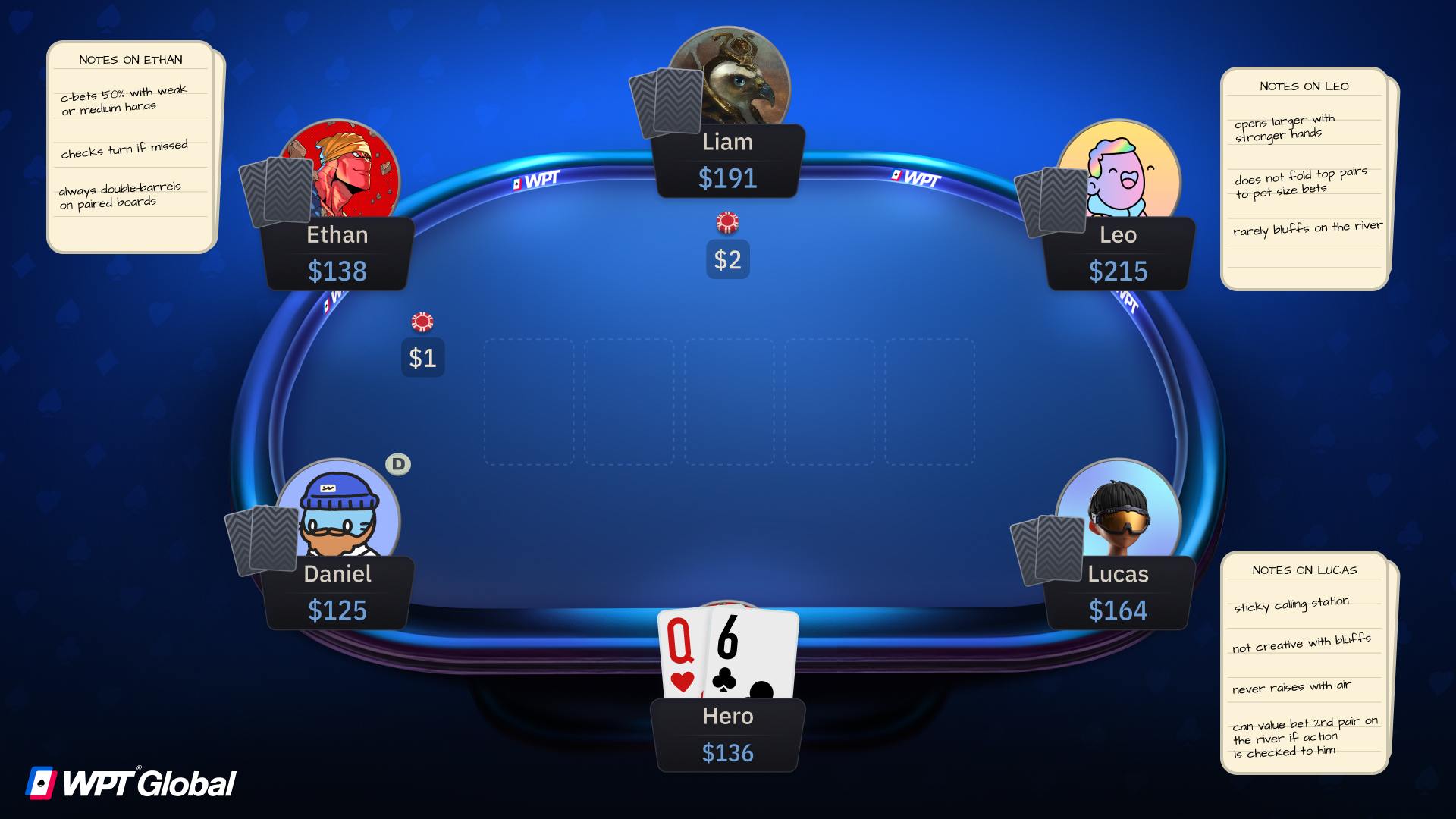
For example, if an opponent bets on the river, you should ask which hands would logically take that action. Strong value hands, such as two pair or sets, may bet for value, while missed draws may bet as bluffs. Weaker holdings that are unlikely to get called often check instead. By comparing this river action to their preflop range and subsequent betting patterns, you can narrow their possible holdings to a smaller, more defined range.

The more streets you analyze, preflop, flop, turn, and river, the more accurate your hand reading becomes. This process relies on deductive logic and range analysis, both of which distinguish advanced players from those who rely purely on instinct.

How Hand Reading Connects to Wins and Losses

When you can narrow an opponent’s range to two or three likely hands instead of a broad group of possibilities, decision-making becomes significantly more precise. You will identify marginal hands that are dominated and avoid costly calls, while confidently calling when your holding performs well against a bluff-heavy range. Over time, these small but consistent adjustments increase your overall win rate and expected value.

Hand reading improves through deliberate study as well as table experience. Reviewing poker strategy content, analyzing hand histories, and using poker solvers can strengthen your understanding of optimal decision-making in specific scenarios. Combining range analysis with a solid grasp of poker odds and probabilities allows you to recognize when disciplined folds are correct and when value calls are justified.

Poker hand reading: analyzing opponent betting patterns to determine their hand range.

Bankroll Management: Protecting the Money You've Won

A difficult but important reality is that even skilled poker players can go broke without proper bankroll management. Variance is an unavoidable part of the game, and short-term downswings can impact results regardless of skill level. Even with a measurable edge, such as winning 55% of the time in favorable spots, losses will still occur. If your entire bankroll is committed to a single game or buy-in level, a short run of negative results can eliminate your ability to continue playing.

Bankroll management involves setting aside dedicated poker funds and choosing stakes that protect against short-term variance. The goal is to ensure that losing sessions do not threaten your long-term participation in the game.

Many experienced players recommend entering games where each buy-in represents no more than 5–10% of your total poker bankroll. This guideline provides a buffer against variance and reduces financial pressure during downswings.

For example, if you have $5,000 allocated specifically for poker, appropriate stakes might include $50–$100 buy-in tournaments or $0.25/$0.50 cash games. Jumping into $1,000 buy-in events at that bankroll level introduces unnecessary risk. Sustainable bankroll management is a foundational element of long-term poker success and one of the primary differences between disciplined players and those who consistently go broke.

Why Bankroll Management Is Actually Psychological

Effective bankroll management is not only a mathematical framework but also a psychological advantage. While it relies on clear numerical guidelines, such as maintaining sufficient buy-ins for your chosen stakes, it also provides the confidence needed to handle variance without emotional decision-making.

With a properly structured poker bankroll, short-term losses become manageable rather than threatening. You are less likely to chase losses or move up in stakes prematurely, because your decisions are based on long-term planning rather than short-term results. This financial stability reduces stress and allows you to focus on an optimal strategy instead of monetary pressure.

In contrast, playing with an underfunded bankroll often creates fear and reactive decision-making. A single losing session can feel catastrophic, leading to overly cautious play, missed value opportunities, or reckless attempts to recover losses. Financial pressure frequently translates into strategic mistakes.

Choosing stakes that align with your bankroll reduces emotional strain and improves overall performance. When you are financially prepared for variance, you can play with clarity and discipline. Moving up in stakes should occur only when your bankroll and skill level both support the transition.

Adaptability: Adjusting Your Game Against Different Opponents

Poker is a dynamic game, and there is no single “perfect” way to play every hand. Optimal decisions depend heavily on opponent tendencies, table dynamics, and stack sizes. Successful players adjust their poker strategy based on the specific environment rather than relying on a fixed approach.

Different player types require different counter-strategies. A tight, disciplined opponent should be approached differently than a loose recreational player who enters too many pots. Similarly, a passive player who rarely bluffs presents different opportunities than an aggressive short-stacked player applying constant pressure. Recognizing these distinctions is essential for maximizing expected value.

Adaptability means evaluating opponents quickly and adjusting in real time. Identify whether a player is tight or loose, aggressive or passive, and observe any consistent betting patterns or behavioral tells. This ability to categorize opponents and modify your strategy accordingly is a key trait of a strong poker player.

While game theory optimal (GTO) poker provides a balanced and fundamentally sound framework, the most profitable players also identify exploitative opportunities. GTO minimizes vulnerability, but an exploitative strategy can generate higher returns against weaker opponents by targeting predictable mistakes. The ability to balance sound fundamentals with adaptive adjustments is what separates elite players from average competitors.

Why Rigidity Kills Your Winrate

Many intermediate players plateau because they rely on a single “correct” way to play specific hands and apply it uniformly across all opponents. In reality, the same hand can require different decisions depending on the situation. For example, a marginal holding might be folded against an aggressive opponent who frequently 3-bets light, yet become a profitable call against a passive player whose betting range is heavily weighted toward strong hands. Strategic flexibility is essential for long-term improvement.

Adaptability at the poker table means adjusting bet sizing, bluff frequency, and hand selection based on opponent tendencies and table dynamics. Smaller, balanced bluffs may work better against attentive and analytical players, while larger exploitative bluffs can be effective against distracted or inexperienced opponents. Similarly, tightening your range at a tough table and expanding it in softer lineups can significantly improve profitability. As your ability to recognize patterns and adjust in real time improves, your win rate can increase substantially.

Math and Odds: The Cold Logic That Beats Luck

Poker is fundamentally a game of mathematics applied in real time. Many casual players rely solely on instinct, which can lead to inconsistent results. Without understanding poker odds, probability, and expected value, decisions become closer to gambling than strategic play.

When you understand concepts such as pot odds, equity, and positive expected value (EV), poker becomes a structured skill game rather than a guessing exercise. Knowing the probability of completing a flush draw, calculating the price you are being offered by the pot, and comparing that price to your hand’s equity allows you to make consistently profitable decisions. Learning and memorizing key percentages, such as common draw odds and equity benchmarks, provides a measurable edge over opponents who rely purely on feel.

For example, suppose you hold a flush draw on the flop with nine outs. With two cards to come, your chance of completing the flush by the river is approximately 35%. If your opponent bets $20 into a $40 pot, the total pot becomes $60, and you must call $20 to win $60, giving you 3:1 pot odds (requiring about 25% equity to break even). Since your hand has roughly 35% equity, the call is profitable in the long run. However, if the pot were smaller relative to the bet, and the pot odds required more equity than your hand provides, the same call would become unprofitable. Consistently comparing equity to pot odds is what turns mathematical understanding into long-term profit.

How Odds Knowledge Compounds

You don’t need advanced mathematical training to understand poker odds. Most experienced players focus on learning and memorizing a small group of essential percentages, such as common draw odds and equity benchmarks. Even a basic grasp of these numbers provides a significant strategic advantage.

Every decision at the poker table, whether to call, fold, or raise, should be evaluated against pot odds and expected value. Players who rely solely on instinct make inconsistent decisions, while skilled players base their actions on probability and equity. Over time, consistently choosing mathematically sound options leads to stronger overall results.

Across large sample sizes, small improvements in decision accuracy compound significantly. Making the correct play 60% of the time instead of 50% may seem minor in isolation, but over hundreds or thousands of hands, that difference directly impacts your win rate. Understanding poker odds and probabilities is, therefore, essential for long-term profitability and consistent performance.

Reading People: Spotting Tells and Player Types

In live poker, players have access to additional information through physical and behavioral observations. While it is not mind-reading, recognizing consistent patterns in posture, timing, and chip handling can provide useful insight into opponent tendencies.

Some physical tells are noticeable, such as visible nervousness when holding a strong hand or unusual chip movements before a bluff. Certain players may become quieter or more rigid when they are confident in their holdings. However, physical tells should always be interpreted cautiously and in context.

More reliable than physical reactions are behavioral patterns. Observing how a player responds to aggression, whether they limp weaker hands and raise stronger ones, how long they take to make decisions, and how engaged they are at the table can reveal valuable tendencies. Betting patterns and timing decisions often provide stronger evidence than body language alone.

Over the course of several hours at the same table, these observations allow you to build a detailed profile of each opponent. Tracking how players act with specific hand types and how they respond to pressure creates actionable information. Consistently applying these insights can significantly improve decision-making and overall win rate.

Online Poker Reads (Different Skill)

In online poker, physical tells are absent, so analysis shifts to digital patterns and data. Players must focus on bet sizing, timing tendencies, positional awareness, and frequency patterns. For example, how quickly does an opponent act? Do they change bet sizes between the turn and the river? Do they consistently open-raise from specific positions? These patterns provide valuable insight into their overall strategy.

This information allows you to construct an opponent’s likely range and identify potential weaknesses to exploit. Although the tools differ between live and online poker, the core principles of opponent analysis remain the same. Whether observing physical behavior or analyzing betting data, the objective is identical: gather information, narrow ranges, and make strategically sound decisions based on evidence rather than assumption.

Online poker player analysis: reading bet patterns and timing tells in digital poker.

The Mental Game: Motivation and Long-Term Vision

The strongest poker players share a deep commitment to continuous improvement. Their motivation extends beyond short-term profit; they are genuinely engaged with the strategic depth of the game. Long-term success in poker typically comes from sustained study, discipline, and consistent refinement rather than the pursuit of quick financial gains.

This mindset is essential because poker involves variance, downswings, and frequent competitive challenges. Even well-played sessions can result in losses due to short-term randomness. Maintaining progress through these periods requires resilience and a genuine interest in improving strategic decision-making.

Many players quit after experiencing early setbacks. In contrast, successful players treat poker as a complex problem-solving exercise. They review hand histories, study strategy resources, participate in poker communities, and regularly evaluate their own performance. Developing this growth-oriented mindset is critical for long-term improvement and sustained profitability.

Final Thoughts: Becoming A Good Poker Player Takes Time

What makes someone a good poker player isn't talent or luck, it's a combination of discipline, emotional control and patience, and the willingness to study the game.

You don't need to master all seven skills at once. Start with discipline: just play solid, tight poker at stakes you can afford. Build your patience: fold more hands and wait for your spots. Learn emotional control: track your tilt triggers and take breaks when you need them.

Then layer in the math, the hand reading, and the adaptability. Before long, you'll look around the table and realize you're the best player there.

The real question isn't "what makes someone a good poker player?" It's "how bad do you want it?"

FAQs

How long does it take to become a good poker player?

Most serious students can see real improvement in 6-12 months of consistent study and play. But becoming great takes 2-5 years of grinding and continuous learning.

Do you need to be smart to be a good poker player?

Intelligence helps, but it's not the most important thing. Discipline and emotional control matter way more. Some of the best players ever weren't math geniuses; they were just patient and observant.

Can you become a good poker player without a big bankroll?

Yes, absolutely. Start with freerolls or just play money to learn. Build your skills first, then build your bankroll slowly with micro-stakes cash games or $2-$5 tournaments. Never play above your means, even if you're crushing it.

What's the difference between a good poker player and a great one?

Good players make +EV decisions most of the time. Great players know why they're making them, can explain the hand to someone else, and can adjust when their opponents change strategies.

Is bankroll management really that important for good poker players?

Yes. Full stop. You can be the best player at your table and still go broke if you're playing above your means. Variance is real. Bankroll management is what separates people who play poker as a hobby from people who play it as a business.