Ten years ago, you could play at a low- or mid-stakes game with a decent preflop chart and good instincts. Today a machine would exploit that same player inside an hour. The biggest pot ever seen online or in televsion hit $3.1 million. One man banked over $90 million in career cashes, and 900,000 people can now be online at once.
In short, poker has never been bigger, richer, or more visible. However, it has never been harder to beat. Here's what changed to get us to 2026, and the poker we have now.
Then: If you had sound fundamentals and feel for the game, this could well be enough to win.
Now: Solver work has raised the standard, the floor of competence.
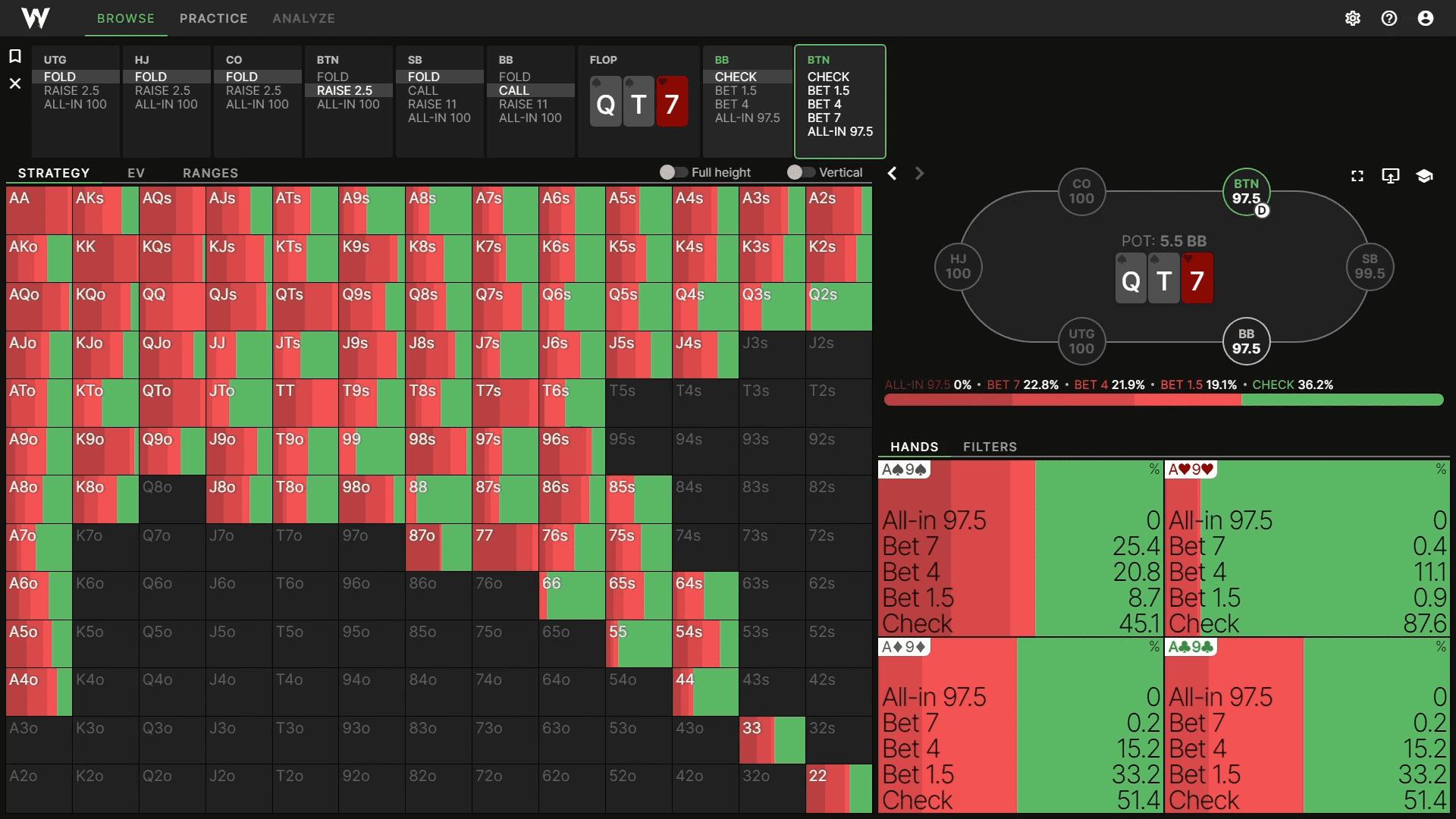
Game-theory-optimal study has grown from a niche bit of homework. It's become almost a necessity. For example, the cloud tools like GTO Wizard put what once needed a powerful PC and hours of simulations onto a phone.
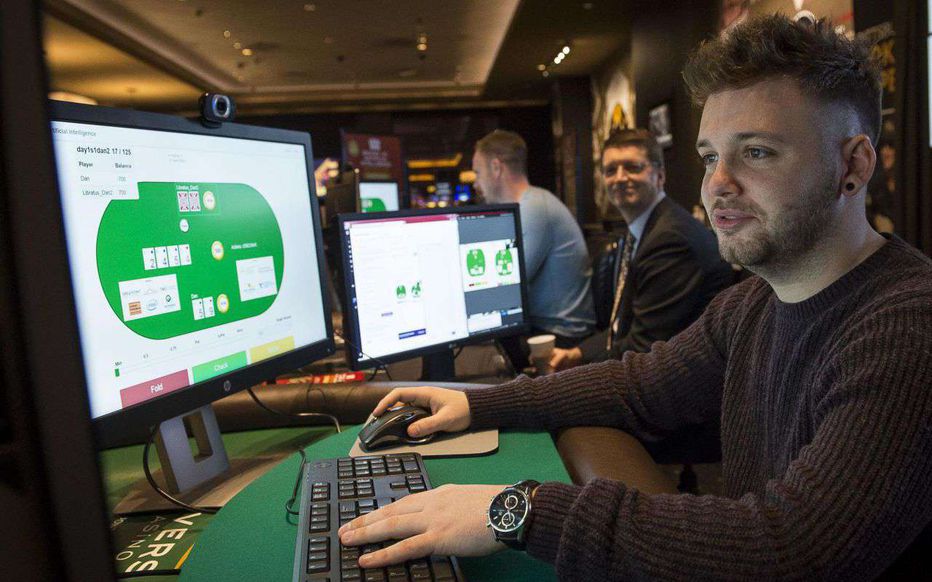
The proof that the machines worked didn't waste time showing up. Carnegie Mellon's Libratus beat top heads-up no-limit pros in January 2017. It did this by roughly 14 big blinds per 100 hands. A couple of years later in 2019, Pluribus became the first AI to beat professionals at six-handed play.
Which is the harder, multiplayer problem. (For the practical fallout, see our piece on when to deviate from the solver.)
Then: softer pools and fatter win rates.
Now: compressed edges, more studied regulars, and fewer soft seats.
Coaching analysts estimate that a typical winning ROI roughly halved over the decade. With a grain of salt, it's figure worth treating as one from sources that sell training.
It's not an audited number, but one that matches what grinders report. The short version, which our "is online poker getting harder?" feature digs into the same tools that made everyone better also shrank the easy money.
Then: Poker was mainly a TV product after the 2000s boom.
Now: Certain poker streamers, content creators and influencers are killing it online
Poker youtubers such as (Andrew Neeme, Brad Owen) and Twitch streams (Lex Veldhuis), have rebuilt poker's audience from the ground up. Streamed cash games are pulling in massive views. Hustler Casino Live launched on August 3, 2021, and exploded. Not to remember Tom Dwan–Wesley Fei pot of roughly $3.1 million, the largest in televised or streamed history.
Even TV-era icons crossed over, with Daniel Negreanu making his HCL debut in 2026.
Then: cheating meant superuser scandals and collusion rings.
Now: the threat is real-time assistance (RTA) and AI bots. These compare millions of hands to flag patterns no human could sustain.
Enforcement is getting harsher. A landmark ban of Fedor Kruse in 2020 saw around $250,000 seized. Cleaner games is the goal, but it's a battle that is likely far from over.
Then: a huge score was seven figures, and the all-time money list topped out far lower.
Now: the super-high-roller era, led by the rise of Triton Poker.
The 2019 Triton Million produced the largest single payday in history. Bryn Kenney's earned roughly $20.56 million as runner-up. Then, Kenney went on to become the first player past $90 million in career cashes in 2026.
Fields have also grown. We've seen championship's with 10,043 entries, and a 10,112 (a $94 million-plus prize pool) in 2024. Also, guarantees have hit new highs, like the WPT® World Championship's $20 million-plus in 2026. (More figures in our poker numbers piece.)
Then: tape-delayed, hole-card-cam TV shows on cable.
Now: subscription and free streaming, RFID cards as standard. Plus real-time solver analysis seen in broadcasts (GTO Wizard powers live GG Million$ coverage).
Viewers now see not the cards but whether the play was "correct," in real time.
Then: a Las Vegas- and Macau-centric circuit.
Now: a worldwide tour.
Triton built a global high-roller series (with stops in destinations like Jeju). WPT® expanded across Asia and beyond (Cambodia, Korea's new INSPIRE resort for WPT® Seoul. Cyprus emerged as a Mediterranean hub, and WPT®'s footprint now spans 48 countries.
Where you had to go to find a big game has now changed.
Then: characters, needling, and table talk as spectacle.
Now: headphones, hoodies, sunglasses, and solver-era stoicism at the tournament table.
Some people in the poker world have flagged that table talk may be disappearing. Whatever the truth may be, personality and talk remain booming on the livestreams. (Our "is conversation disappearing?" feature follows that shift in full.)
Half of these shifts can be drawn back to advances in technology. Computation. AI. Solvers reshaped strategy, study, and even broadcasts. AI became the cheating threat the operators now spend millions fighting.
The result is a game that is simultaneously bigger and richer (and harder to beat) than ever. The tools that obstensibly evened the playing field also drained away the soft money.
Through both eras runs a single connective thread: WPT®.
It helped build the television boom that made poker a phenomenon in the first place. It remains a staple in the modern game. There are festivals across dozens of countries, online play, and streamed final tables.
Indeed, the felt feels different from what it was ten years ago. The best seat in the house is still worth chasing, but it may take more to earn it now.















 Customer Dispute Resolution Page
 Help Center
 Affiliate Program