For a quick snapshot, you can map the cultural shift in a few steps:
Each step layered new audiences and new images on top of the same core game.
Long before the era of Twitch streams and online lobbies, poker lived in Westerns and crime flicks. The Cincinnati Kid (1965) and The Sting (1973) wrote the playbook: smoky rooms, back-room deals, and the dangerous mix of risk, ego, and the possibility of getting hustled.
On the music side, Kenny Rogers' “The Gambler” (1978) turned classic poker advice into a sermon for life. The chorus: "you got to know when to hold ’em, know when to fold ’em”—shoved poker lingo right into everyday speech.
Later, Motörhead’s “Ace of Spades” in the 1980s blasted gambling imagery into heavy metal. Music writers still treat it as one of the great anthems for taking a shot.
This era didn't fill the casinos overnight. However, a cultural identity began to emerge: in the eyes of pop culture, poker became the visual and lyrical shorthand for toughness, bluffing, and simply being cool.
That symbolism mattered the moment the game became easy to play at home.
Rounders dropped in 1998, a full five years before the Moneymaker win.
It followed Matt Damon and Edward Norton as grinders moving through New York's shadowy underground clubs. The film wasn't a smash hit at the box office, but it became cult viewing on DVD and late-night cable.
Rounders accomplished two key things that changed everything:
- It treated poker as a skill game, not a punchline.
- It showed a believable underground scene, complete with real Texas hold’em hands and table talk.
If you talk to pros who started grinding in the 2000s, almost all of them watched Rounders at some stage. Plenty of online players first saw a big pot on that film, not on a televised tournament.
Nobody can attach a dollar figure to how many WSOP entries came from Rounders. But we can say this with confidence: it gave internet-age viewers a modern, serious image of the game. Crucially, it established no-limit Texas hold’em as the format that would later dominate every TV broadcast and tour, including the WPT®.
By the end of the 1990s, poker had a credible film, a classic country anthem, and a rock hymn. What it still needed was a way for viewers to actually follow the strategy in real time.
Until the late 1990s, watching poker meant watching faces and chip stacks. Viewers had no idea who was bluffing, so the strategic suspense was lost.
The UK show Late Night Poker fixed this in 1999 with the hole-card camera. Cards were filmed through glass or sensors and displayed to the audience on a short delay. For the first time, the audience at home could sweat the exact same information as the commentators.
Two massive things happened fast:
- WPT® launched in 2002. Its first season aired on the Travel Channel in 2003 with hole-card cams, sharp editing, and sports-style graphics. The WPT® final-table stage and Mike Sexton’s legendary calls essentially standardised what "cards-up" poker should look like on TV.
- ESPN adopted hole-card coverage for the WSOP, including the pivotal 2003 Main Event.
Suddenly, viewers could watch full hands, spot a bluff in real-time, and hear analysis framed like a mainstream sport. WPT® and ESPN proved poker could be packaged and sold to the masses.
Then came the hero.
In 2003, Chris Moneymaker qualified for the WSOP Main Event through a cheap $86 online satellite and pocketed $2.5 million in front of ESPN's cameras.
The impact on Main Event entries was immediate and insane:
- 839 players in 2003
- 2,576 in 2004
- 5,619 in 2005
- 8,773 in 2006, the peak of the classic boom era
Poker media still credits the "Moneymaker effect" with tripling Main Event entries from 2003 to 2004 alone.
At the same time, online rooms saw a feeding frenzy. The global online poker market is valued around $3.86 billion in 2024, projected to hit nearly $7 billion by 2030. Pop culture didn't cause that growth on its own, but it gave everyone the perfect headline:
If a regular guy can qualify online and beat the pros, maybe I can too.
Rounders gave poker a modern script. WPT® and ESPN gave it a broadcast format. Moneymaker gave it a genuine hero’s journey tied directly to the internet.
Once poker became appointment television, the celebrities piled in.
Celebrity Poker Showdown and the “Safe, Fun” Image
From 2003 to 2006, Celebrity Poker Showdown ran on Bravo. Actors and comedians played charity sit-and-gos. The tone was light, the graphics were simple, and it was a hit, raising well over a million dollars for charity.
For the cable audience, the show radically changed poker’s image:
- It looked social, not seedy.
- It connected poker with charity and friendly trash talk.
- It put familiar faces like Ben Affleck, Jason Alexander, and Sarah Silverman at the table.
Around the same time, the media started naming serious celebrity players.
Jennifer Tilly, for instance, won a WSOP bracelet and has over a million dollars in live cashes. Affleck, Tobey Maguire, Shannon Elizabeth, and later athletes like Neymar Jr and Rafael Nadal kept poker in entertainment news.
The message was obvious: Poker was something famous people did on camera, without shame.
On the other side of the fence, you had the dark glamour of Molly Bloom’s Hollywood games. Her memoir, and the 2017 film Molly’s Game, describe private circuits where A-list actors and hedge-fund managers traded huge pots.
Reporting around those games makes two things clear. The details are messy – they come from memoirs and leaks, not full accounting. But the narrative completely shaped the public imagination, linking poker to high-society nightlife and real financial ruin.
When a modern poker scandal breaks, the press always jumps straight back to Ocean’s Eleven, Rounders, and Molly’s Game for context.
Celebrity culture pulled a double shift.
Charity TV made poker look friendly. Hollywood memoirs painted it as exclusive and dangerous. Both versions kept poker in the headlines.
Music never let poker language die, even for people who never touched a chip.
Kenny Rogers' “The Gambler” made table advice life advice, pushing lines about holding and folding into everyday speech. Motörhead’s “Ace of Spades” fixed gambling imagery in rock and metal.
Then, in 2008, Lady Gaga’s “Poker Face” arrived and added a new, modern layer. The track and video mixed casino styling and poker metaphors to talk about sex and performance. It topped charts in over 20 countries and snagged a Grammy.
These songs didn't move tournament entries on their own. They did something smarter: they turned "poker face," "ace of spades," and "the gambler" into quick cultural shorthand. When those listeners later saw WPT® or WSOP coverage, the game already felt familiar.
By the 2010s, fans wanted more than polished TV episodes. They wanted streams, hand breakdowns, and vlogs on demand.
An academic paper in 2025 describes this as a "new history of poker spectatorship," tracing the line from forums and cable TV straight to Twitch and YouTube. Live streaming and community chat now sit at the centre of how people watch.
A few shifts stand out:
- Early Twitch pioneers like Jason Somerville turned multi-table grinding into interactive shows.
- YouTube vloggers started filming life on tour, not only final tables.
- Strategy blurred with entertainment—viewers learned while they watched.
Twitch poker viewership exploded during the COVID-19 lockdowns. By 2024, the platform was averaging over 2.37 million concurrent viewers across all categories.
If WPT® and ESPN owned the early-2000s screen, shows like Hustler Casino Live own a huge slice of the 2020s.
The Los Angeles cash-game stream runs almost every weeknight and boasts over 400,000 YouTube subscribers and around 260 million views. Its biggest hands often feature creators and celebrities as much as pros:
- MrBeast, Ninja, xQc, and Alexandra Botez have sat in nosebleed games.
- Viral clips of six-figure pots are reaching audiences who would never search "poker strategy" on their own.
For a younger audience, this is often their first contact with the game. Not an ESPN replay, not a Rounders DVD, just a 30-second clip on TikTok or YouTube Shorts.
Platform rules still affect the scene—policy changes and viewbot crackdowns cause viewership swings. Even so, the balance is clear: poker is part of the wider creator economy now. Mid-stakes grinders can build real audiences.
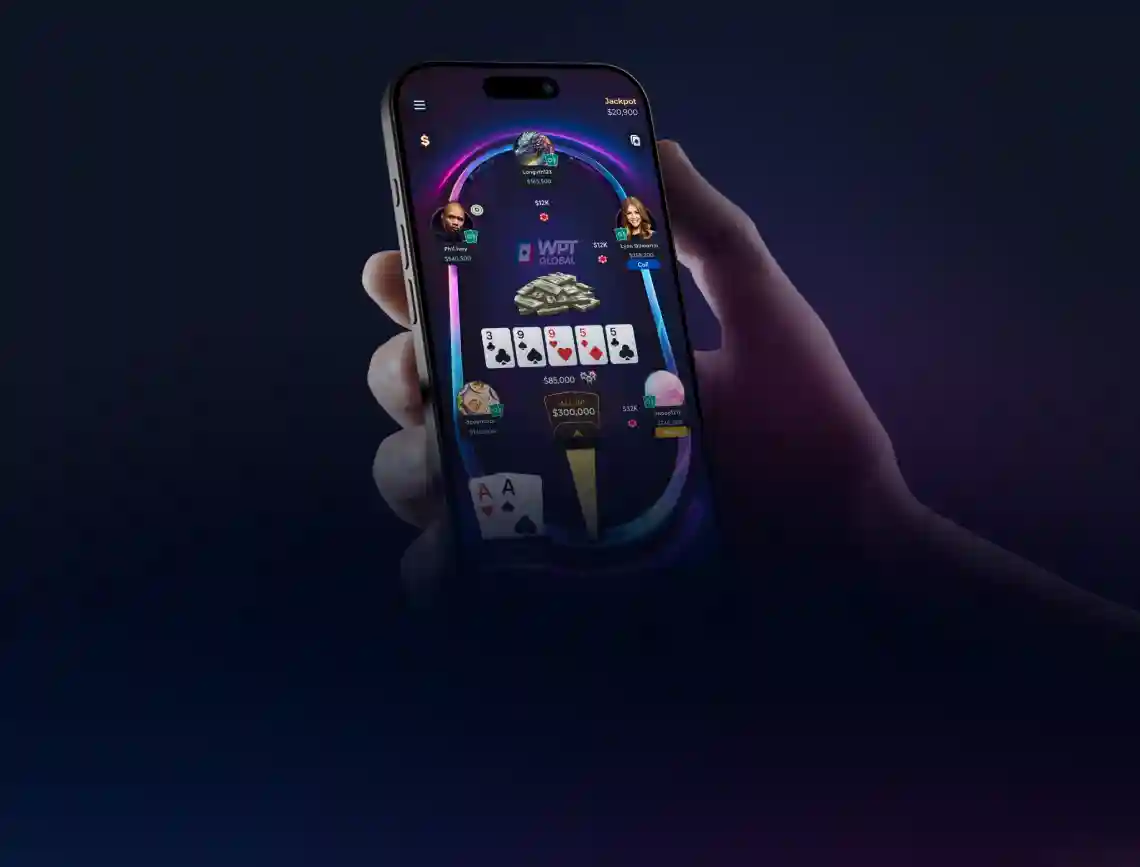
Operators like WPT® Global partner with ambassadors who matter as much on camera as they do in the chip count.
Modern celebrity poker breaks down into three loose groups that matter for different reasons.
Traditional Hollywood Names
Actors like Ben Affleck, Tobey Maguire, and Jennifer Tilly still make every "celebrity poker players" list. Tilly’s bracelet and seven-figure live cashes give her credibility that goes far beyond a red-carpet cameo.
These names matter most in long-form features, connecting current stories back to the era of Rounders and those exclusive Hollywood rings.
Athletes as Serious Regulars
Athletes have become some of the game’s best bridges:
- Neymar Jr has been serious about mixing poker with his football career for years, playing live events and special streams.
- Michael Phelps and other Olympians have shown up in WSOP fields and high-profile charity events.
For the casual fan, the message is simple: If poker is a serious competitive outlet for elite athletes, it’s more than just a casino diversion.
Content-Driven Pros and Ambassadors
The third group is comprised of poker players who became celebrities through content:
- Vloggers and streamers with six-figure subscriber counts.
- Pros who appear regularly on WPT® TV, WPT® Global streams, and cash game shows.
- Analysts whose hand breakdowns spread like wildfire on YouTube or TikTok.
These people sit in a new space.
Not only dropping into the game from the outside; the game turned them into public figures. For tours and platforms like WPT® and WPT® Global, this group is key. They sit exactly on the line between industry pro and mainstream influencer, which is precisely where many new players discover the game in 2025.
Everyone wants a clean answer. "Rounders and Moneymaker caused the boom." "MrBeast is saving poker." The reality, however, is a lot messier than a single soundbite.
On the culture side:
- Films like Rounders and Casino Royale made no-limit hold’em look tense and cinematic.
- TV formats with hole-card cams turned poker into an accessible spectator sport.
- Songs like “The Gambler,” “Ace of Spades,” and “Poker Face” kept the language in everyday use.
- Celebrity shows and creator games made poker look social, modern, and glamorous.
On the product and policy side:
- Online rooms and mobile apps made it trivially easy to play at any stake from your sofa.
- Payment tech and digital wallets lowered friction for deposits and withdrawals.
- Regulation in key markets often reshaped what was possible overnight.
The online poker market now sits in the mid-single-digit billions and keeps growing. That growth rests on licensing, liquidity, product design, and responsible gaming frameworks, not just on movies and memes. The honest answer is that poker’s rise came from both directions. Pop culture gave people the stories, the heroes, and the vocabulary. Product and regulation gave them a real way to sit down and prove they could play.
New headwinds keep hitting. Streaming platforms constantly adjust gambling rules. Governments focus more on tax and consumer protection. Any serious player still needs a clear bankroll plan, even if their first inspiration came from a film or a viral clip.
If the first wave was Rounders, the second was Moneymaker and TV, and the third is creator-driven streams, what’s the smart bet on what comes next?
A few things seem guaranteed:
- Short-form storytelling. More people will meet poker through 30-second clips than through full episodes.
- Hybrid shows. Expect more formats that mix tournaments, cash games, and influencer sit-and-gos under one broadcast.
- Data and storytelling. Researchers are now treating poker as a serious media subject, which will only lead to better, more compelling coverage.
For tours and platforms like WPT® and WPT® Global, the lesson is direct. The game itself matters, but the stories around it matter just as much: heroes from many backgrounds, clear visual formats that work on phones, and honest framing of the risk involved.
Film, TV, music, and celebrities certainly put poker on the screen for the masses.
However, it can also be argued they completely rewired how the wider world thinks about risk, competition, and chance. The next chapter will play out in live arenas, streams, and shorts, and in the next cult story that makes someone think, “I can do that,” then open a lobby to prove it.

















 Customer Dispute Resolution Page
 Help Center
 Affiliate Program